In the Berezdiv community of the Shepetivka district, Khmelnytskyi region, an initiative unique for Ukraine has been launched — a comprehensive media literacy program for the elderly, developed on the premises of a Docudays UA documentary film club.
Reprinted from Podillya NEWS.
Oksana Musiyuk, the head of the program, developed in cooperation with her team a long-term program for 2026–2027, which they are planning to submit for official approval by the village council, in order to protect elderly residents from fakes and scammers.
From scepticism to a television in the car trunk: How it all started
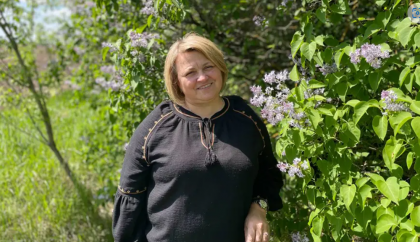
Oksana Musiyuk, who has been working for 23 years as a history teacher and an organizing pedagogue at the local school and has been managing the local Center for Social Services, has enough energy to “drive” the entire community. Quiet offices are not for her. In 2023, Oksana submitted an application to the DOCU/CLUB Network for opening of a Docudays UA documentary film club in Berezdiv.
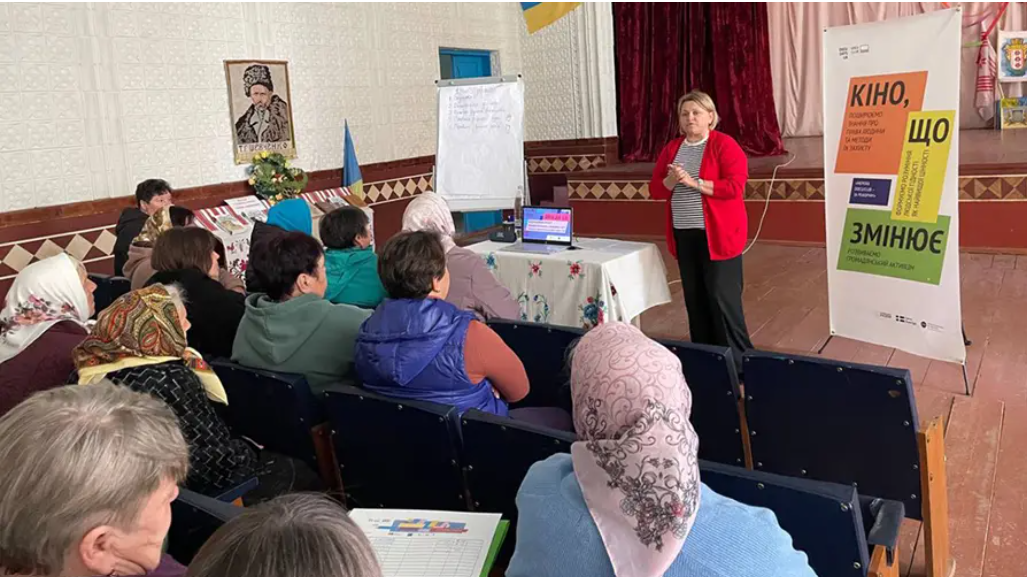
Film screening and subsequent discussion
At first, her fellow villagers received the idea sceptically, laughing and saying that no-one needed movies. However, the moderator did not give up. Eventually, Svitlana and Yulia, two young professionals from her team, have actively joined the work. The girls have even come up with their own technical lifehack: instead of setting up the video projector in different facilities, they brought a TV from home, and now it travels with them from village to village in the trunk of their car.
Against fakes and scammers: Why the community needs media literacy
Observing how the local residents discuss the news, Oksana Musiyuk noticed an alarming tendency: people, especially the elderly, often believe blatant lies and spread misinformation from the internet. This is how the idea for an advocacy campaign has emerged. Information vulnerability among the elderly is a serious challenge that leads to real financial losses due to the actions of scammers, unnecessary anxiety, social isolation, and a decline in the resilience of the entire community.
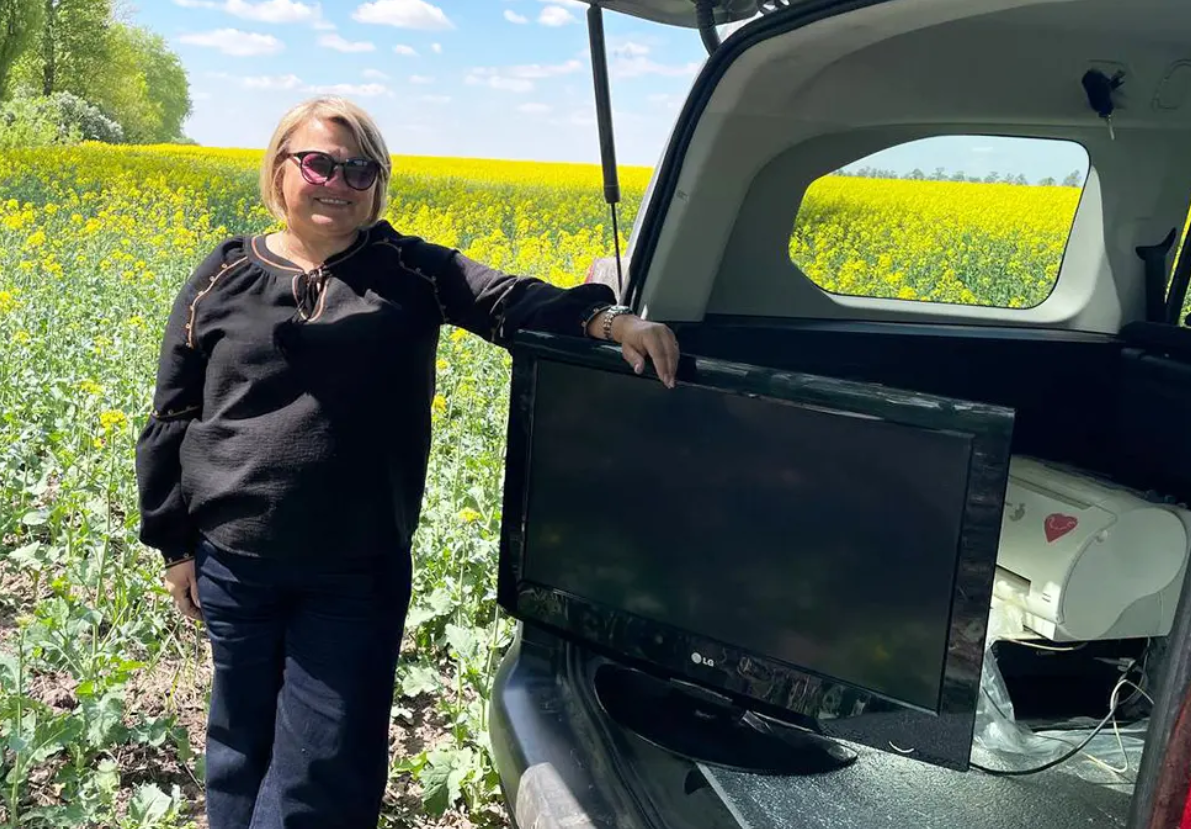
Instead of setting up the video projector in different facilities, they brought a TV from home, and now it travels with them from village to village in the trunk of their car. Photo by Oksana Musiyuk
“Real tragedies occur when an elderly person gives their entire savings to scammers because they believed a message on a messaging app, or when panic spreads throughout the community because of yet another ‘hoax’ on social media,” says Oksana Musiuk.
Despite the urgency of the issue, Ukraine still lacks a systematic media literacy program for older adults. The Berezdiv community decided to be the exception and create a sustainable mechanism instead of isolated campaigns. Currently, the team is preparing a draft resolution for the Berezdiv Village Council to approve the official program “Media Literacy Basics for the Older Generation.”
How documentaries teach information security
Participation in the project was a learning experience for the moderator herself: from social media management to the intricacies of teaching adults. Documentary films became the main education tool. Through the stories of the films’ protagonists, viewers can clearly see how fake news is spread and how it is used to manipulate people.
The program participants learn to:
-
recognize fake news;
-
use their smartphones safely;
-
carefully check sources of information;
-
understand how social media algorithms work.
The film club members themselves welcomed the idea of this “third age university” with great enthusiasm. Next on Oksana Musiyuk’s agenda is a presentation to the village council deputies. For any potentially critical questions about the cost effectiveness of the funding, she has a rock-solid argument: “Someday all of you will become my clients who want high-quality services. Therefore, I’m developing those services starting now.”
The media literacy program in the Berezdiv community is scheduled for 2026-2027. It includes training at the film club affiliated with the Social Services Center, as well as the engagement of local librarians and experts from Khmelnytskyi. The organizers are confident that, if every person is protected in the information sphere, the entire community becomes stronger, because its residents will no longer be misled by sensational headlines.
The project is implemented with the support of the DOCU/CLUB Network, funded by the Embassy of Sweden in Ukraine, Fondation de France, and the German Marshall Fund of the United States of America.
The opinions, conclusions, or recommendations are those of the authors and compilers of this publication and do not necessarily reflect the views of the governments or charitable organizations of these countries. The authors and compilers are solely responsible for the content of this publication.
All news