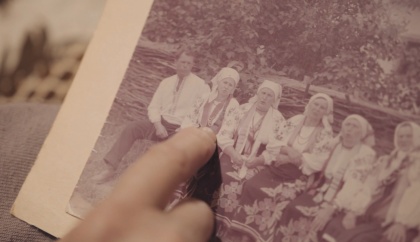
We chose this film for a good reason. In times when millions of Ukrainians are forced to seek refuge thousands of kilometers from home, the exploration and preservation of one’s roots has become essential for the survival of Ukrainians as a nation.
During the online screening of the documentary Lifelong Songs, viewers had the opportunity not only to watch the film, but also to communicate with the filmmaker in person. Director Ulyana Osovska visited the virtual cinema to help viewers decipher cultural codes embedded in the film. The meeting turned into a conversation about the way a song becomes a “portable home” a person can take along during evacuation, and the way it can heal shattered lives.
The ambience: warmth, longing, and anticipation
During the discussion, the chat of the online event resembled collective reflection. The viewers shared their associations: warmth, longing, continuity, and a treasure chest. Inna Kondratieva, the event’s moderator, noted: “When I hear these songs, I feel grounded and calm. We need these feelings more than ever.”
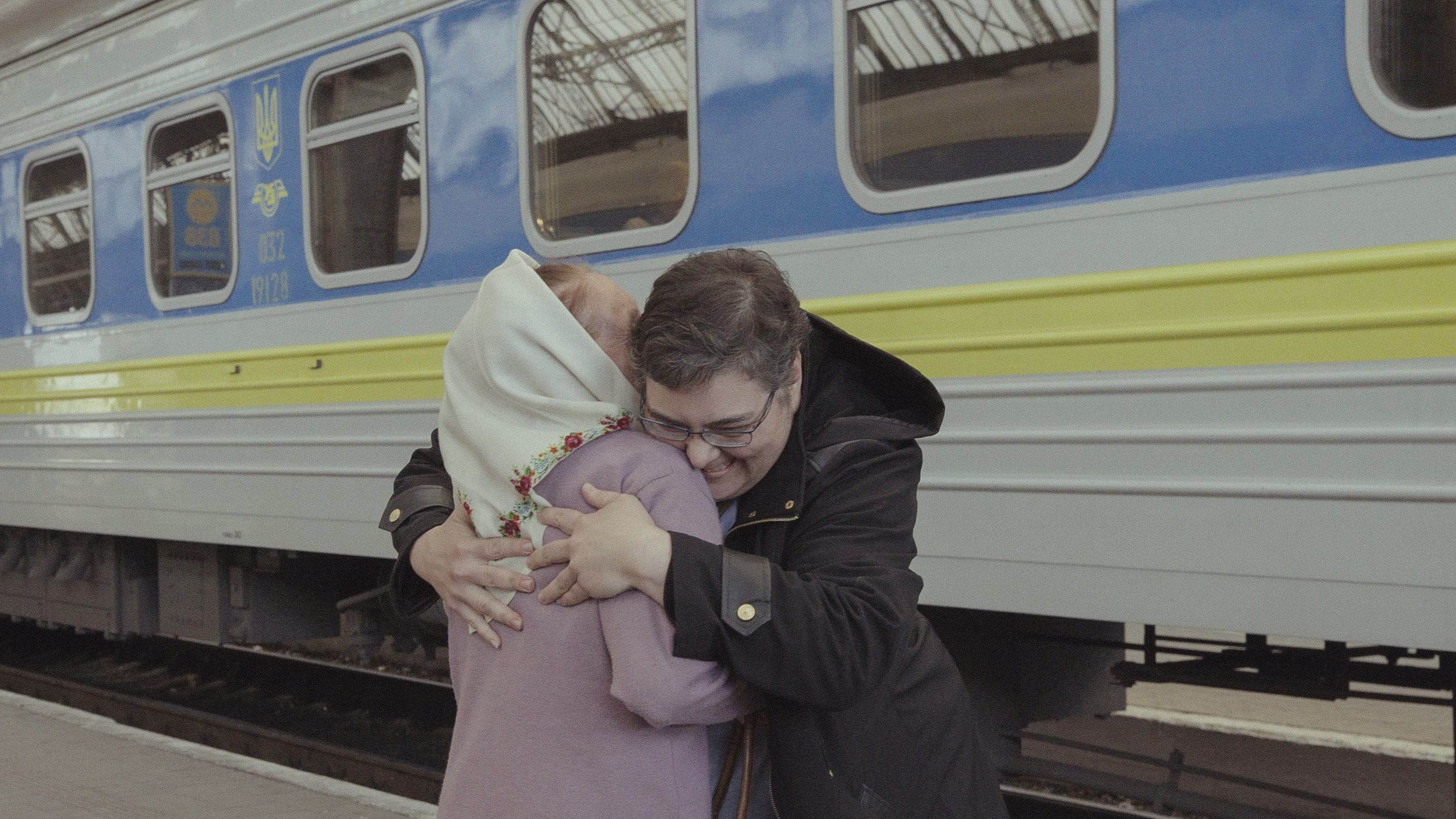 Photo from the film Lifelong Songs
The film tells about the meeting between two very different women: Nadiia Rozdabara, the 82-year-old legend from the “Drevo” folk ensemble from Poltava region, and Nadiia Tarnavska, a Ukrainian from the US diaspora who returned to Ukraine after 15 years in order to explore her own self. The crucial element of their connection is the polyphonic technique employed by “Drevo.” In this singing style, which is unique for the left bank of Ukraine, every voice follows its own independent melody, resulting in a complex and profound sound vertical. It is not a choir in the conventional sense, but a conversation of equal voices.
In fact, Ukrainian traditions comprise plenty of sounds that are perceived by a modern ear as pure magic. There is the “white voice” from Polissia, powerful and open like a yell in a wide field, where the sound is not held back, but released at full force. There are the Hutsul “perehuky” (“echoes”) that fly back and forth between the mountains like a living reverberation. Even a solo song is often “overgrown” with ornamentations of delicate vocal patterns. This resembles the lace of an embroidered shirt, where the singer seems to wrap the main note into hundreds of subtle threads of sound. These techniques turn our folklore into a living organism that resonates on a physical level.
Two lives — one hope for continuity
The director recalls her first trip to Kryachkivka in autumn 2017. The crew was really small, consisting of herself and the cameraman. Ulyana recorded the sound personally, trying to preserve the delicate quiescence of the village.
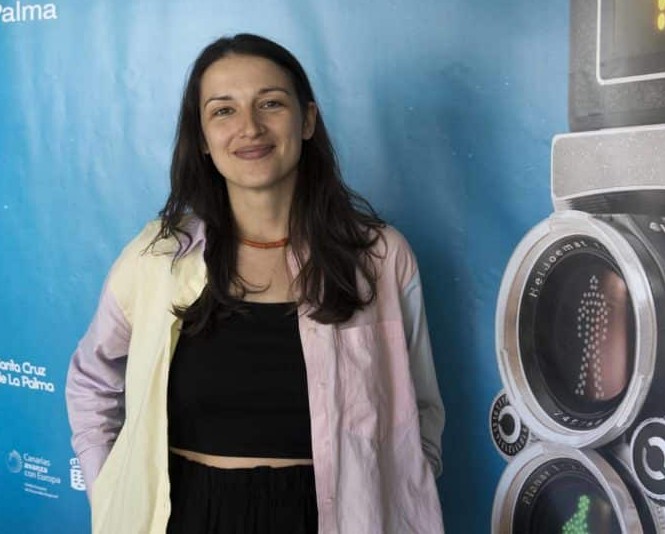
Photo: courtesy of Ulyana Osovska’s archive
“We were leaving the village with a question in mind: will this tradition be preserved? Does anyone need it anymore? Then, one Nadiia [hope in Ukrainian] travelled thousands of kilometers to meet another Nadiia. The title of the film has to do not only with their names, but also with our hope that this culture will sprout and continue growing,” says Ulyana Osovska.
For Nadiia Tarnavska, this experience became the inspiration for autobiographical performance “Shattered.” According to the director, Nadiia recounts in the film the real story of her family’s escape from the Soviet army to the USA via Hungary and Germany. This is a portrait of a person who spent her entire life looking for answers to the question: is she American or Ukrainian?
Photo from the film Lifelong Songs
Culture as resistance: Accordion vs authenticity
During the discussion of the film, a heated discussion arose: why did authentic polyphony remain on the margins for many decades? Ulyana Osovska attributes this to a deliberate policy of the Soviet Union. Genuine, complex songs were replaced by simplified “stage art.”
“The Soviet Union put accordions in everyone’s hands and herded them into cultural centers. It’s easy to sing along with an accordion, which keeps the harmony on its own. However, singing in polyphonic harmony requires incredible skill. Traditional art isn’t for the stage — it exists for ‘community life,’ when people come together and jointly create the world,” the director emphasizes.
Singing therapy: When hearts beat in unison
An interesting part of the discussion was dedicated to therapeutic effects of folk songs. It has been scientifically proven that, when a group of people sings in polyphony, their breathing and heartbeat synchronize. This is some sort of collective meditation. Nowadays, when millions of Ukrainians are scattered all over the world, they bring their language and songs with them as the only remaining roots. However, this is where the problem lies.
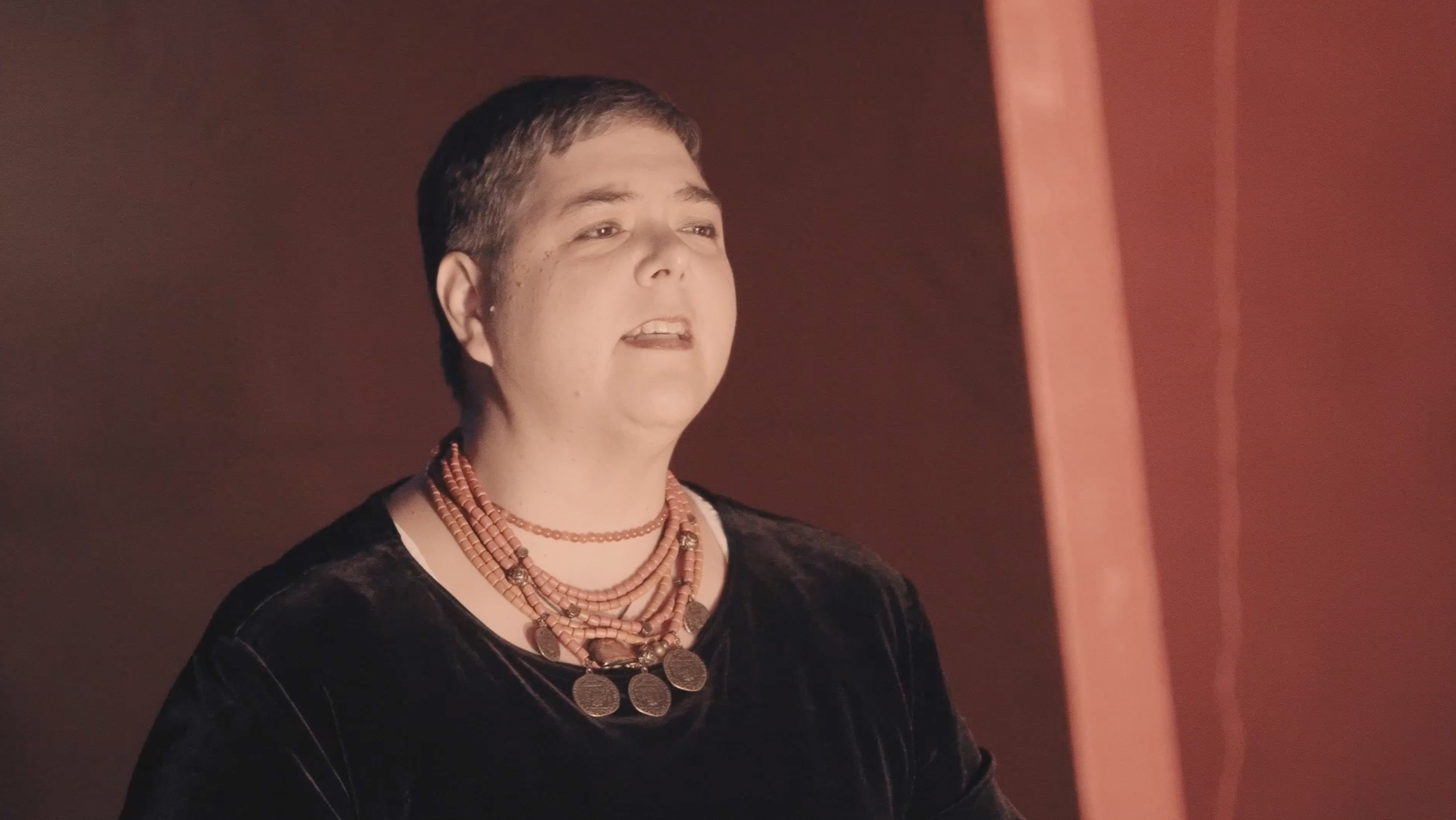
Photo from the film Lifelong Songs
“The tragedy of polyphonic singing is that one cannot sing it alone. It requires at least three people, all of whom know their parts. Nadiia Mykytivna often lacks people to sing with in her village. This is why, when the other Nadiia comes from the US and sings her part… Finding a person to create harmony together is incredibly valuable,” says Ulyana.
The art of holding to one’s roots
The film Lifelong Songs became the mirror, in which the viewers could see their own search. Ulyana Osovska’s art captures the mechanism of our resilience: a song is not merely ethnography; it is a remedy for stress and a means of self-awareness. As long as we sing our song together, we remain the protagonists of our own story, no matter where we are.
The Network team is preparing new sessions for the online film club! We look forward to seeing you on April 30, at 5:00 PM. We will watch and discuss the film 10 Years of Alienation by the outstanding Ukrainian director Serhiy Bukovsky. Join us and explore the pages of our history through the lens of the master of documentary filmmaking.
Please register here.
The project is implemented with the support of the DOCU/CLUB Network, funded by the Embassy of Sweden in Ukraine and Fondation de France.
The opinions, conclusions or recommendations are those of the authors and compilers of this publication and do not necessarily reflect the views of the governments or charitable organizations of these countries. The authors and compilers are solely responsible for the content of this publication.
Title photo: still image from the film Lifelong Songs
All news