

Cooperation with veterans and active military personnel is one of the Network’s strategic priorities. Documentary films provide a unique opportunity to engage in discussions on complex and sometimes quite sensitive issues, discuss topics that are important to the society, and reflect on challenging life situations. Within the friendly and supportive atmosphere of the film clubs, participants can collectively seek answers and explore possible solutions to shared problems. These opportunities give a significant advantage to the Docudays UA film clubs in working with individuals who have military experience, undergo hospital treatment, or are in the process of rehabilitation after injuries.
For many small towns and villages, film clubs have become one of the few, if not the only, platforms for cultural life. Yet their value extends far beyond that — they serve as a meeting place for like-minded individuals and a safe space for dialogue within the community.
Film clubs at probation centers open new opportunities for reintegration — they help veterans find common ground with local residents, overcome stereotypes, and put their personal experiences into a broader social context.
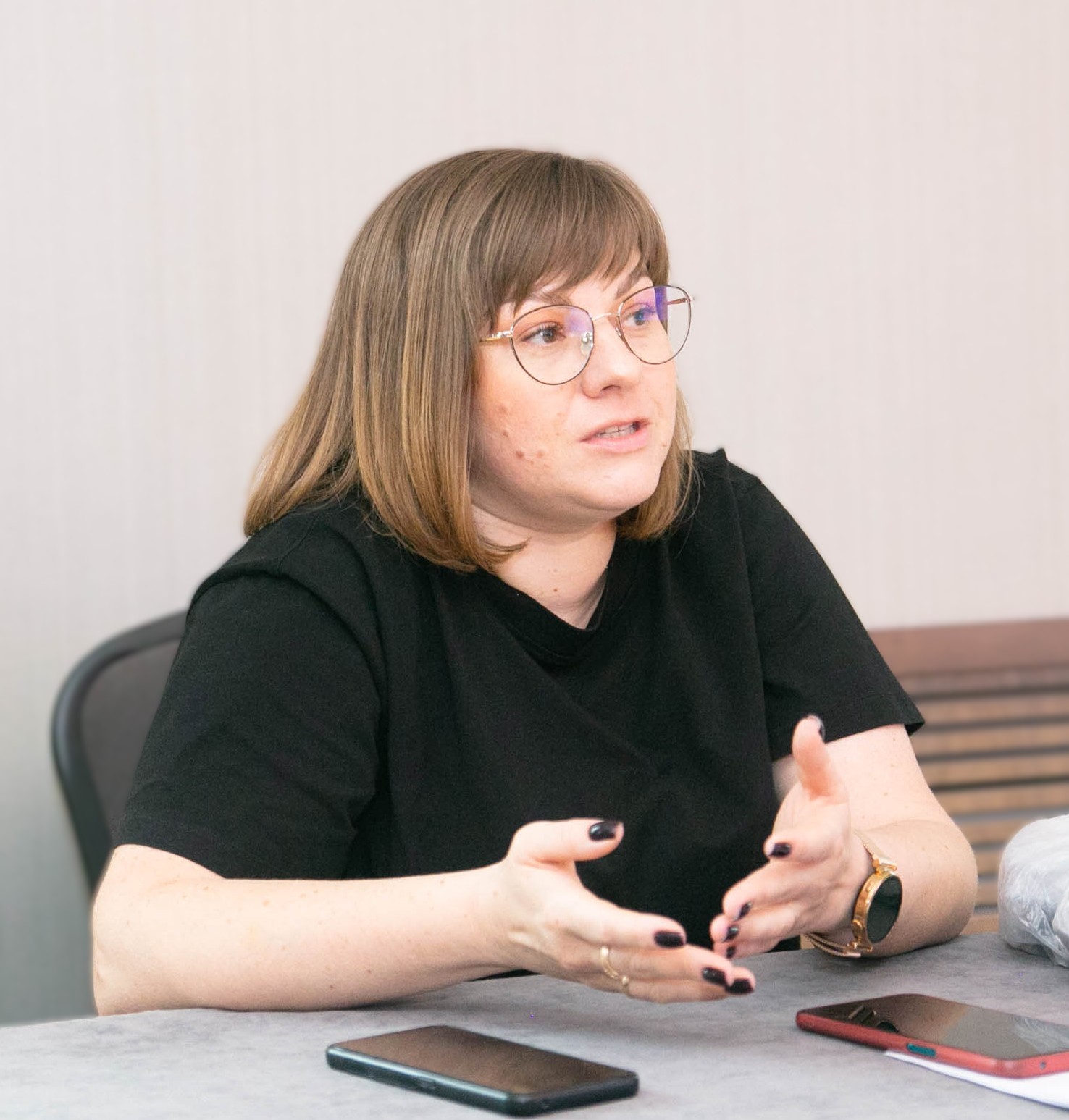
Lina Babych
“Documentary films help us talk about complex issues in a language that is accessible and relatable to people. They help people heal, foster dialogue, and build trust. For veterans of the communities, film clubs can become spaces where a genuine support network is formed,” noted Lina Babych, Coordinator of Film Clubs at Probation Centers and Correctional Institutions of the DOCU/CLUB Network and Coordinator of the DOCU/CLUB Network.
The training “A Bridge Home: Reintegration of Veterans into Civilian Life” was designed to inform moderators about the ways to integrate film clubs into social and educational work with war veterans who are clients of the probation system, as well as to explore possibilities of engaging the public and local authorities in this process.
The training was conducted by Natalya Mosentsova, Head of the Berestyn District Sector No. 2 of the State Institution “Probation Center” in the Kharkiv region and moderator of the Docudays UA film club operating at that branch.
“Since the beginning of the full-scale war in Ukraine, the number of military personnel and veterans has been steadily increasing. The number of probation clients with this status is also growing. Work with them should focus not only on preventing repeated offense but also on supporting their reintegration and adaptation to peaceful life. After all, service members and veterans went to war with varying backgrounds and returned from it with different experiences. Therefore, this work is crucial not only for our defenders but also for their families, communities, and every one of us,” emphasized Natalya Mosentsova.
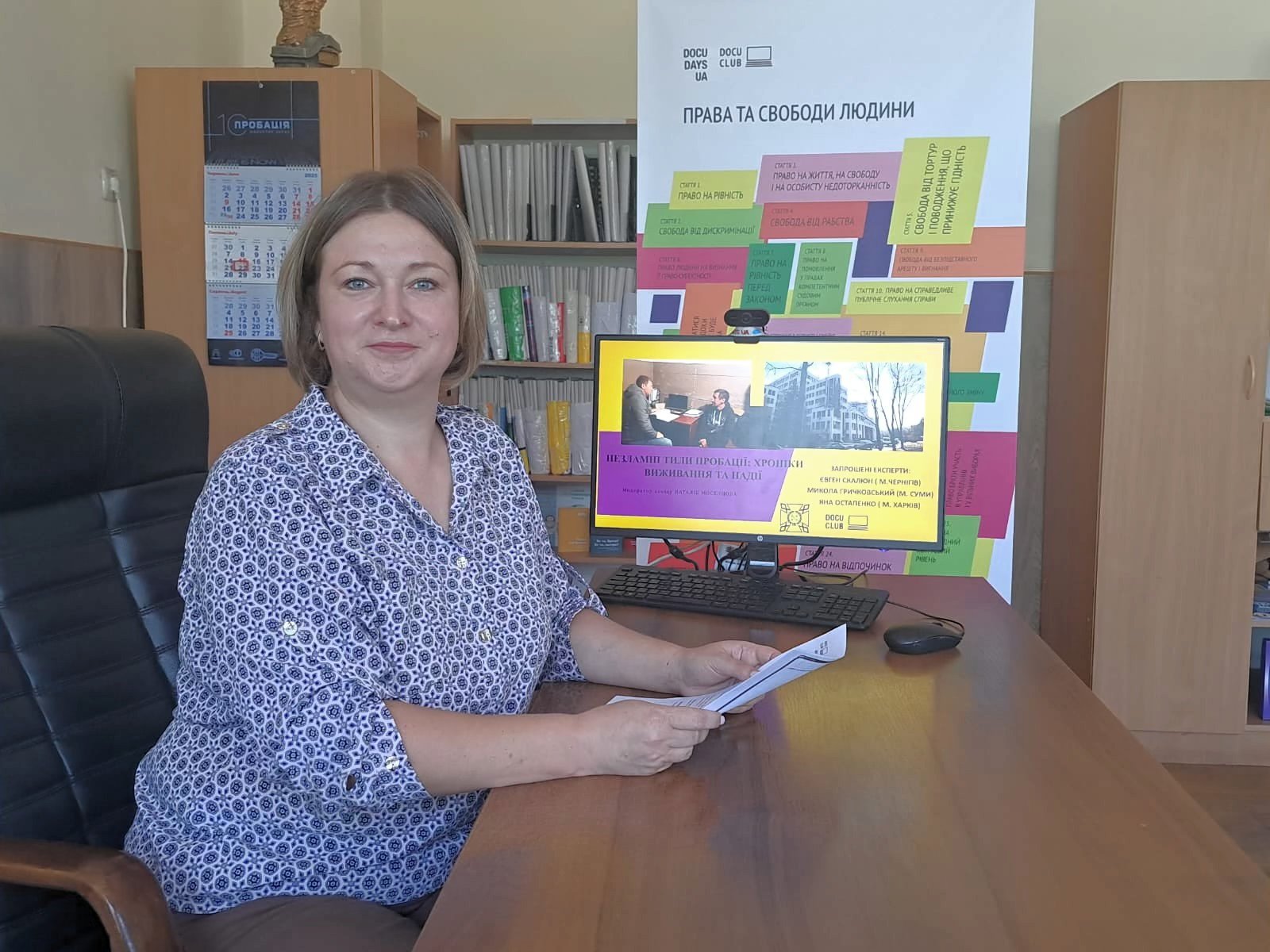 Natalya Mosentsova
The idea for this training emerged a long time ago. Ukraine urgently needs to train specialists who could use diverse methods for providing psychological support to veterans. “From my own experience, I know that some of my colleagues at probation centers are somewhat cautious when it comes to working with veterans, since our clients are not only war heroes but also people who have broken the law,” the trainer explained. “Due to the lack of proper methodological guidance, probation officers urgently need to explore new approaches to working with veterans, including documentary film screenings and discussions. These help to establish emotional contact and make it easier to address the challenges we face.”
Participants of the training discussed Alisa Kovalenko’s documentary No Obvious Signs. The story of the film’s protagonist, who is a female soldier returning home, provoked a profound conversation about the journey that military personnel must undertake from the beginning of rehabilitation to returning to work and reintegrating into peaceful life.
The interaction with invited experts Viktoriya Bohdan and Tetyana Mykhaliuk, specialists in supporting war veterans and demobilized service members from the Social Services Center of the Kehychivka Community in the Kharkiv region, proved to be extremely valuable for moderators of film clubs operating at probation centers. Although such specialists are available in most communities, veterans and their families are often unaware of their work or the types of assistance they can provide. The discussion of trauma-informed approaches and psychological safety principles when working with veterans was of particular importance to all participants.
Anzhela Kozlovets, Head of the Korosten District Sector No. 3 of the Probation Center in Zhytomyr region, shared with the training participants her own practices in working with veterans and the experience she gained through participation in international exchange programs with foreign colleagues.
Feedback received by the organizers further confirms both the urgency and the importance of this training.

Photo from the archive of the DOCU/CLUB Network
“We must try using different approaches when working with veterans, as it is not always easy to quickly find the right ‘key’ to connect with a person. Today I saw how documentary films can help establish contact and build interaction with veterans. I really hope to see tangible results,” shared a training participant from the Kharkiv region.
“Many initiatives are being carried out to support veterans, but not all of them are effective. This is a natural process, since we are all learning. Nowadays, a lot is being said about the importance of an individual approach, and it seems that documentary films can help ensure it. I believe their integration into our work is indeed a safe and effective method of supporting service members and veterans,” noted an employee of the Probation Center branch from the Vinnytsia region.
The DOCU/CLUB Network team will continue to conduct trainings for moderators on this topic, as psychological support for veterans and assistance in their resocialization are essential for building a safe society that cares for its citizens.
The development of the DOCU/CLUB Network is funded by the Embassy of Sweden in Ukraine, the National Endowment for Democracy (NED), and Fondation de France.
The opinions, conclusions, or recommendations are those of the authors and compilers of this publication and do not necessarily reflect the views of the governments or charitable organizations of these countries. The authors and compilers are solely responsible for the content of this publication.
All news