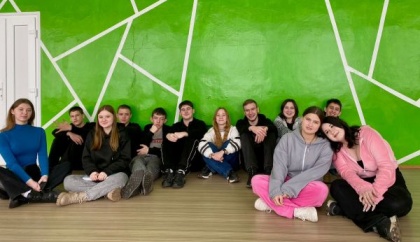
Until recently, the village council facility was perceived by teenagers of the Vosnesensk community in Cherkasy region as the place where “adults are doing serious business,” and the only pretext to visit is was to run an errand by parents or to fetch some papers for grandma. However, it is not the case anymore. In the session hall, the locals not only discuss land issues but also engage in heated debates about human rights, future projects, and what needs to be done to ensure the budget works for young people.
Reprinted from Procherk.
The advocacy project “Energy of change: Leadership lab for grades 9-10,” implemented by the Docudays UA human rights media literacy club at the Voznesensk Village Council, has sowed the seeds of activism where despair and detachment had previously reigned.
For three years now, the film club in Voznesensk has been welcoming local grown-ups and adolescents to screenings and discussions of documentaries from the DOCU/CLUB Network’s collection. Lyubov Novak, deputy head of the village council and the film club’s moderator, noticed during her meetings with schoolchildren that they have numerous needs and proposals for improvement of community youths’ lives, but they don’t know how to implement those and don’t believe the adults would listen to them. The film club moderator decided to change this situation – this is how the idea for the advocacy project “Energy of Change: Leadership lab for grades 9-10” came about.
When Lyubov Novak first approached the high school students with the idea for an advocacy project, she was met with silence and confusion. “We came to explain to them what advocacy is, how it works, what results we can achieve together, and how it will change their lives. The kids sat in silence for a while; they couldn’t believe this was a serious conversation and not just empty talk,” recalls Lyubov.
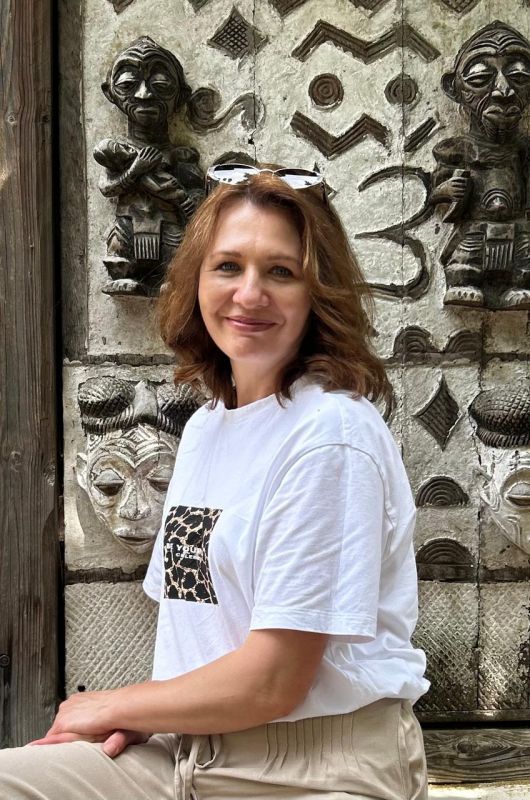
Photo from Lyubov Novak’s archive
Documentaries help break the ice. Human rights films became the bridge that helped students talk about complicated issues. “Documentaries inspired them,” says the moderator. “I showed children films The Champion and Gabriel Reports on the World Cup. These are stories about their peers who are pursuing their goals despite resistance and difficulties; they are real-life examples of struggle and change. We had really interesting discussions and debates about them! As the kids say, they ‘dig’ this format. Children realized that they, too, can influence decision-making.”
Due to a prolonged period of distance learning and air raid alerts, the children lack teamwork experience and often feel detached. The advocacy project brought them together to work as a team. Together, they generated ideas and made plans to implement them. When the teenagers first came to the village council session hall to present their projects, the attitude in the entire school changed as well. Students were convinced that they are being heard.
The main request from young people was for their own youth space. “When we asked what they were lacking, they replied, ‘Open a club.’ Our community center lacked heating in winter, and the teenagers were forced to gather on benches outside the store in the freezing cold,” says Lyubov Novak. Adults weren’t immediately on board with this initiative. But the facilitator stood her ground: they couldn’t break their promise, or the children would lose hope.
The result exceeded expectations. Even youths from the surrounding villages came to the very first meeting of the newly opened club. They now have a space for meetings, which has sent a message to the youths: they can make a difference.
However, the “Energy of Change” project isn’t limited to leisure activities. Lyubov Novak aims to bring about systemic changes in the community’s way of life. With her help, adolescents started to figure out how petitions to local authorities work and what are the responsibilities of the village council committees. “Many of the young people thought that the local self-government was something separated and distant from them: adults would just come there, go through the motions of a conversation, and leave. My task is to explain to them the mechanisms for influencing the government and communicating with it,” emphasizes the project manager.
Perhaps the most difficult part was explaining to high school students what a community budget is and how it works. Lyubov Novak chose to use visual imagery. She drew a “basket” of the budget for the teenagers, explaining what it consists of and where the funds are allocated.
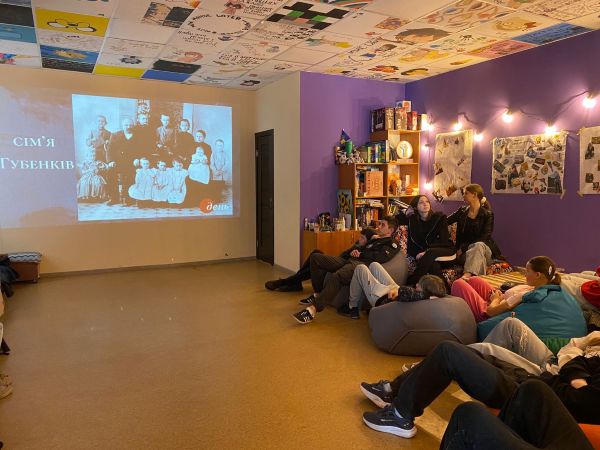
Photo from Lyubov Novak’s archive
Having joined their efforts, they developed amendments to the Participatory Budgeting Regulations, which Lyubov Novak calls a real breakthrough: from now on, teenagers from the age of 14 will have the right to submit projects and vote on them within the community. The mechanism for supporting youth projects is also being transformed, so that adolescents can compete on equal footing with projects proposed by adults.
Why teach children about budgeting and advocacy? Lyubov Novak is convinced that this is the best way to build relationships between the government and the community: “This fosters grassroots initiatives. Youths need to feel that their opinions matter in order to stay in the community and build their lives here. We all will benefit from this.”
The results are already evident. Even the most ‘troublesome’ teenagers are going through rapid changes. The moderator proudly recalls one of them, Dmytro, who seemed uninterested at the first meeting but now actively participates in discussions and gets involved in the work.
“The kids are transforming right before our eyes; I can see it in their attitude toward our sessions at the Leadership Lab,” says Lyubov. She believes that, even though not all ideas can be implemented quickly, adolescents should still know from experience that their work matters.
The advocacy project in the Voznesensk community has become a laboratory that cultivates not only leaders, but conscious citizens who know they have an impact on decision-making. These seeds will definitely sprout.
The project is implemented with the support of the DOCU/CLUB Network, funded by the Embassy of Sweden in Ukraine, Fondation de France, and the German Marshall Fund of the United States of America.
The opinions, conclusions, or recommendations are those of the authors and compilers of this publication and do not necessarily reflect the views of the governments or charitable organizations of these countries. The authors and compilers are solely responsible for the content of this publication.