An ordinary school hallway is filled with clamoring, laughter, and running. Adults often view this as “controlled chaos,” in which children are merely objects for education and parenting.
Reprinted from "Firtka" news agency.
However, upon closer look, school hallways give rise to ideas that could change the city. The only problem is, these ideas often run into an impenetrable wall of the adults’ misunderstanding, lack of financing, or the usual “you are still little, wait until you grow up.”
The residents of Kolomyia decided not to wait until their city’s youths “grow up.” As early as school age, children have the right to influence their lives. This is how the advocacy project “YOU ACT: Youth Participation in Decisionmaking” came into being, implemented by the Docudays UA film club “Gart” at the Unified Center for Social and Rehabilitation Services, with support from the DOCU/CLUB Network. This is a story about documentary films leading to real transformations in the city’s life.
Everything started from the screen rather than the offices. Ella Nemish, moderator of the “Gart” film club and a seasoned educator, recalls that she’s been looking for a tool for communicating with people in hard times. At first, these were meetings with the wives of the military. This is when she felt and acknowledged the magic of documentary cinema.
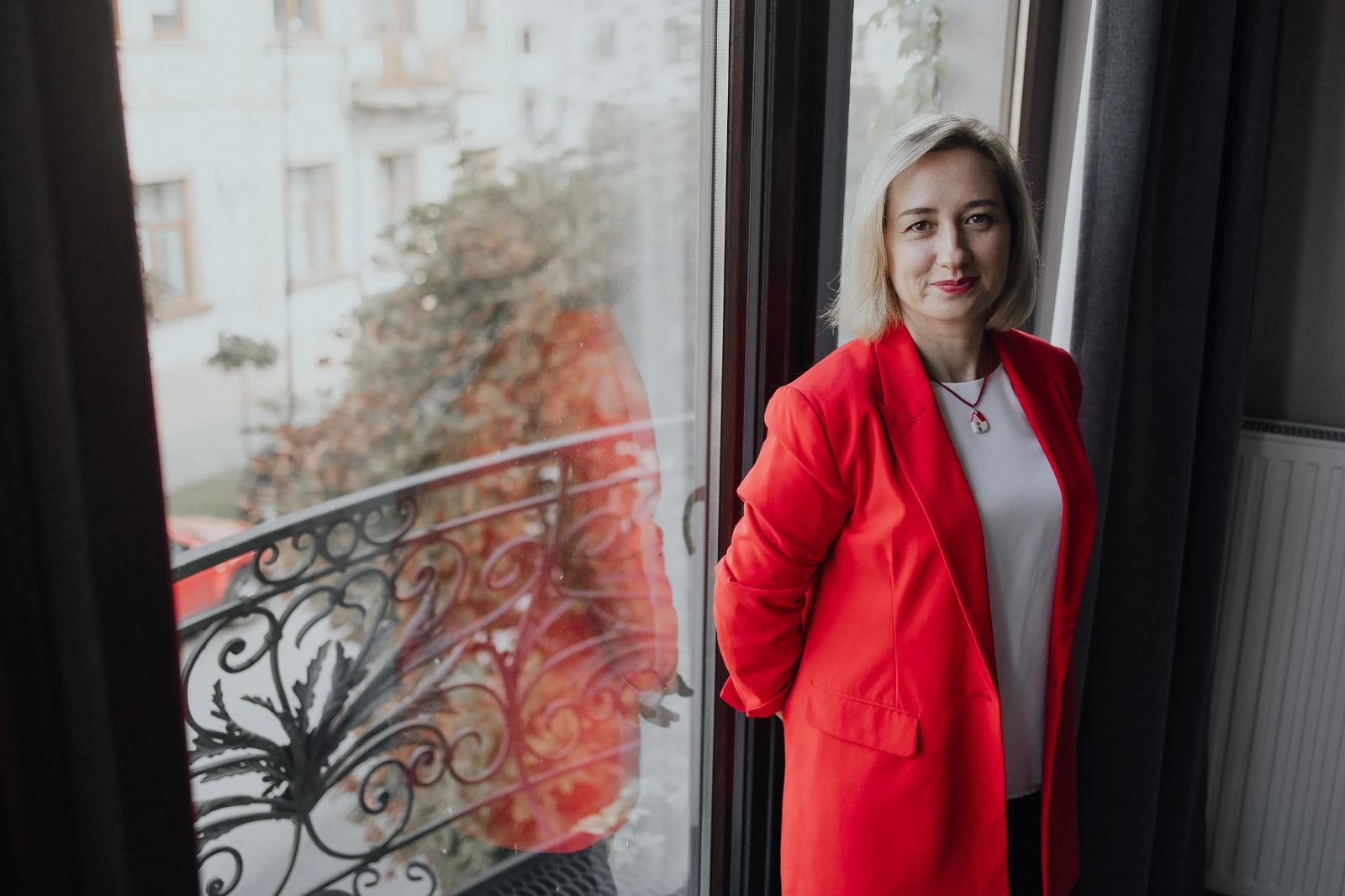
Ella Nemish
“I saw that documentary films, rather than fiction ones, create a space for dialogue that allows for discussing the most relevant viewers’ problems in detail, showing the real examples of real people. This creates a special atmosphere of trust,” says Ella.
When it came to showing documentaries from the DOCU/CLUB Network’s collection to teenagers, the effect was astounding. The screening of Gabriel Reports on the World Cup by Dutch filmmaker Els van Driel became the point of no return for the educator and her students. The story of a boy who fought for the right to be heard encouraged the children from Kolomyia to ask: “What are we capable of?” Apparently, teenagers rarely feel included in their community’s life. The full-scale war has widened this gap further: trust in institutions is declining, and young people sometimes don’t see opportunities for initiatives or impact because they don’t believe they will be heard.
The team of the “YOU ACT” Project, which includes, in addition to the film club moderator, some enthusiastic educators from the NGO “KolOsvita,” has objectively assessed the situation in Kolomyia. Their conclusion was disappointing: youth participation in the decision-making process exists mostly on paper. The city has not been implementing participatory budgeting since COVID-19. The practical mechanism of the School Participatory Budget has not been realized, and the student self-government often lacks both the resources and digital tools to influence school development.
Ella Nemish and the team believe that youth cannot be treated as part of the distant future: they already are part of the community. Adolescents are entitled not only to ask, but also to dispose of the resources. This is how the goal emerged to blaze the trail for the School Participatory Budget at the city level.
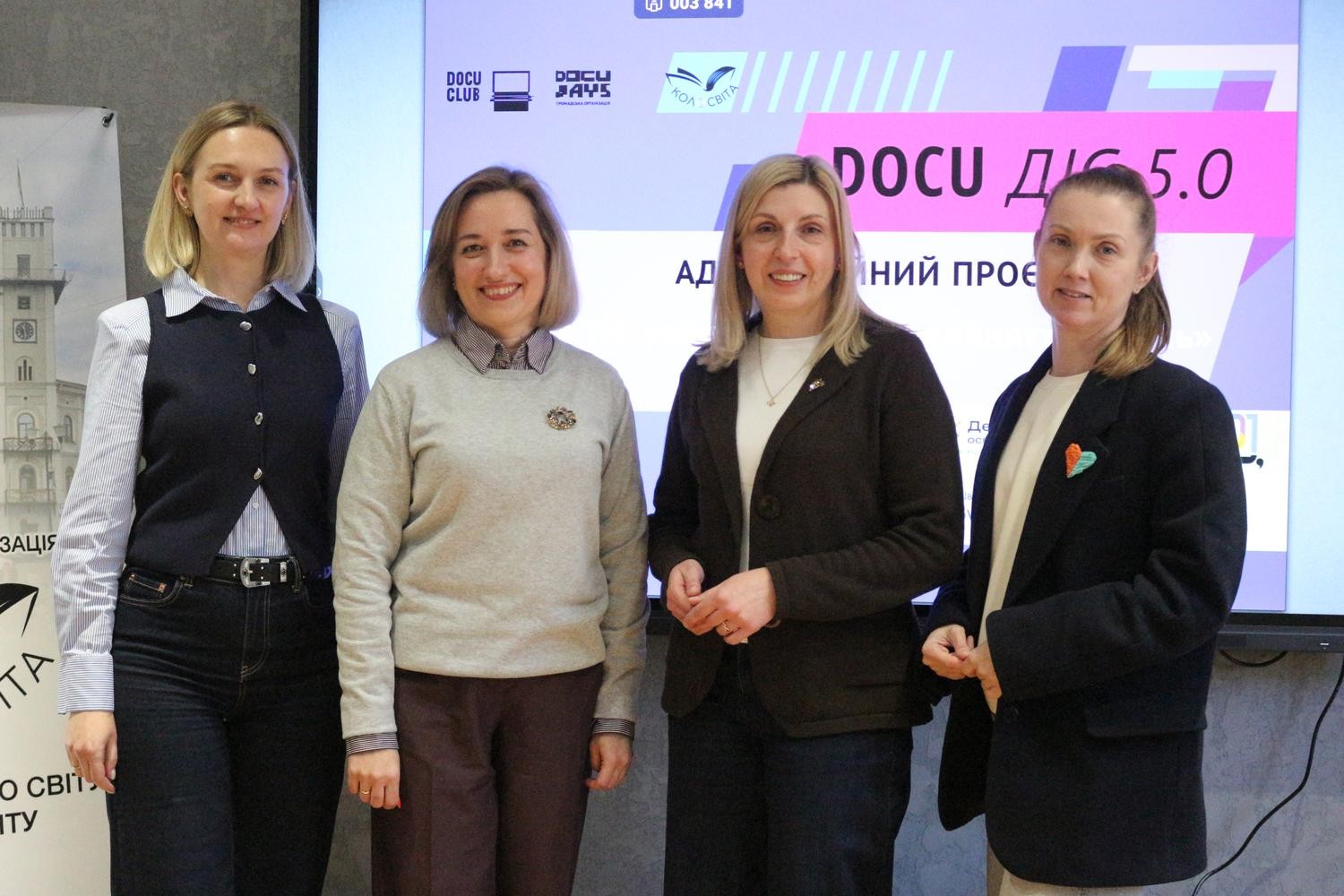
Photo from the archive of Ella Nemish
The initiators of the advocacy project “YOU ACT: Youth Participation in Decisionmaking” outlined a clear path to their goal. First, they explained to the students what the School Participatory Budget is and how they can implement their own projects.
“We started by watching and discussing human rights documentaries. You see, as long as the topic is relatable to children’s lives and there is a need to address a specific problem, children openly perceive the information in the film you show them. They learn to ask questions. Children learn to reflect on the characters’ behavior, empathize with them, and discuss possible solutions for the problems. All of this creates a space for dialogue,” Ella Nemish explains.
Schoolchildren took part in a series of interactive workshops on team building, project budgeting, idea planning, and the art of public presentation. Meanwhile, the advocacy project team organized meetings with local authorities – the mayor, the Department for Education and Culture, the Department for Economy, and the Center for Professional Training of Educators- and submitted a proposal to the city council regarding the integration of the “School Participatory Budget” module on the electronic democracy platform.
The film club moderator is convinced that real success can only be achieved when teenagers experience what it’s like to be real agents of influence in the decision-making process. Thus, while the city council was reviewing the proposal, the project team announced an open competition for schoolchildren’s ideas. The three best projects received 5,000 UAH each to implement their ideas. “I realize that the money isn’t much, but it’s a huge capital of trust for the children,” the educator emphasizes.
Ella Nemish admits she often hears skeptical comments: for example, that children will just want to put beanbag chairs in the school hallways or set up play zones. However, she is convinced that children are entitled to any choice.
“If children lack zones for relaxation or play at their school, they have a right to initiate their creation. Of course, I would also want some projects to be socially impactful, for instance, dedicated to veterans, active military, or the memorialization of the fallen. I am also excited about the idea of social entrepreneurship at school, so that children can launch their own startups. I am sure their ideas will surprise us,” says Ella.
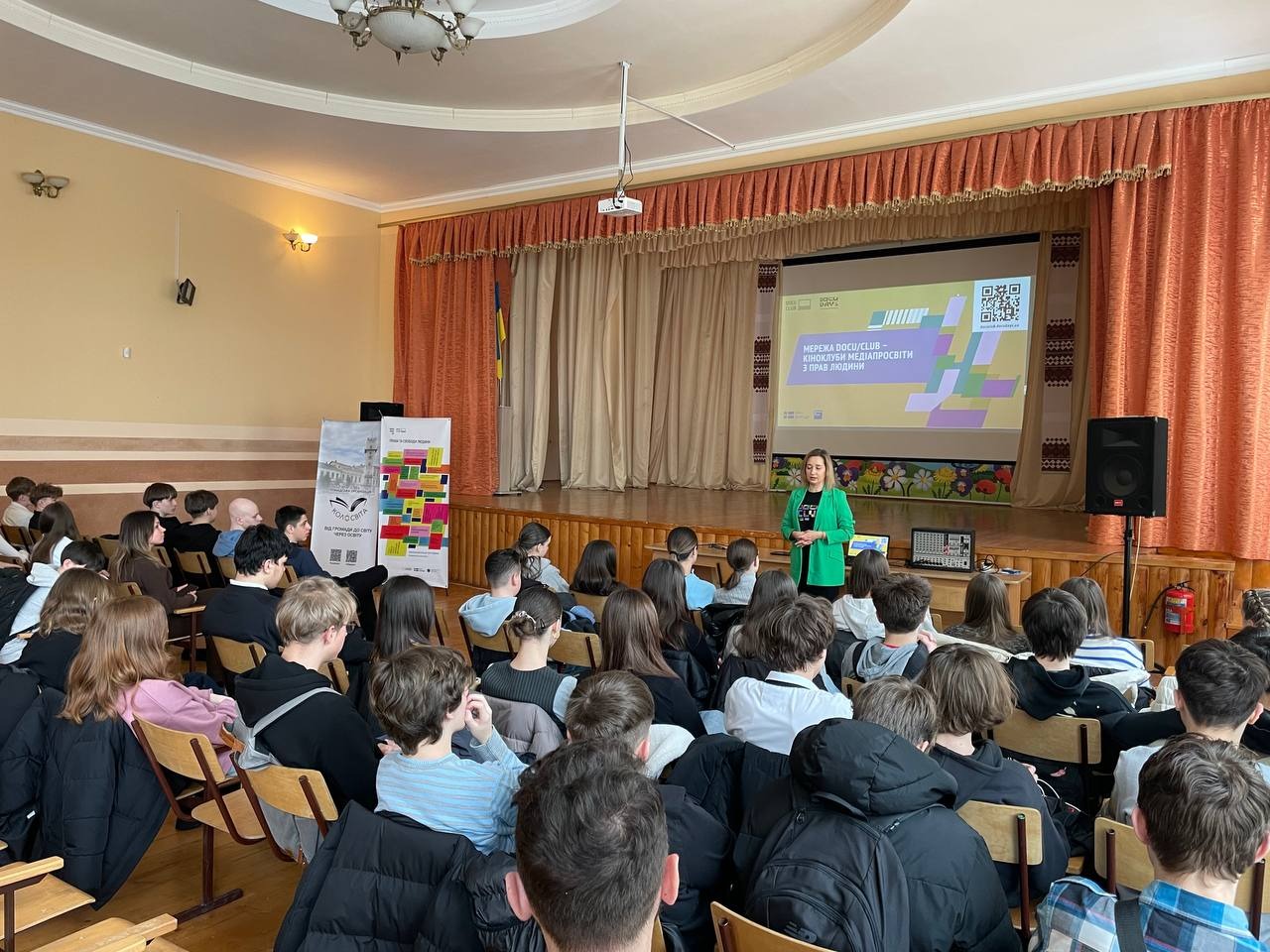
Photo from the archive of Ella Nemish
The activist believes in the power of youth and proudly shares the story of one student who, while running for the important position of Head of the Youth City Council’s Financial Department, cited the School Participatory Budget as a tool for change. This is precisely the outcome she wanted to achieve with her work; through such means, the tools of democracy become part of a young person’s mindset and worldview.
Why is the experience of the educator’s film club important for the entire community?
This project is a ready-made algorithm for action, which is suitable for any school or city. The “YOU ACT” team handled the most difficult part: communicating with the authorities, mentoring schoolchildren, and providing expert support to educational establishments, so that teachers wouldn’t have to “drown” in bureaucracy.
The benefits for the community are clear as well: the electronic platform eliminates any manipulation of decisions about project support; schoolchildren bond through collaboration on their ideas; and adolescents learn to propose solutions and take responsibility for the results.
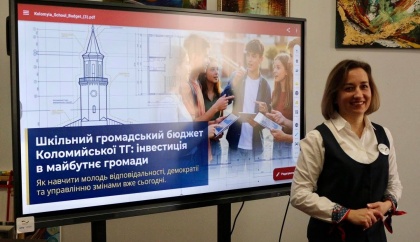
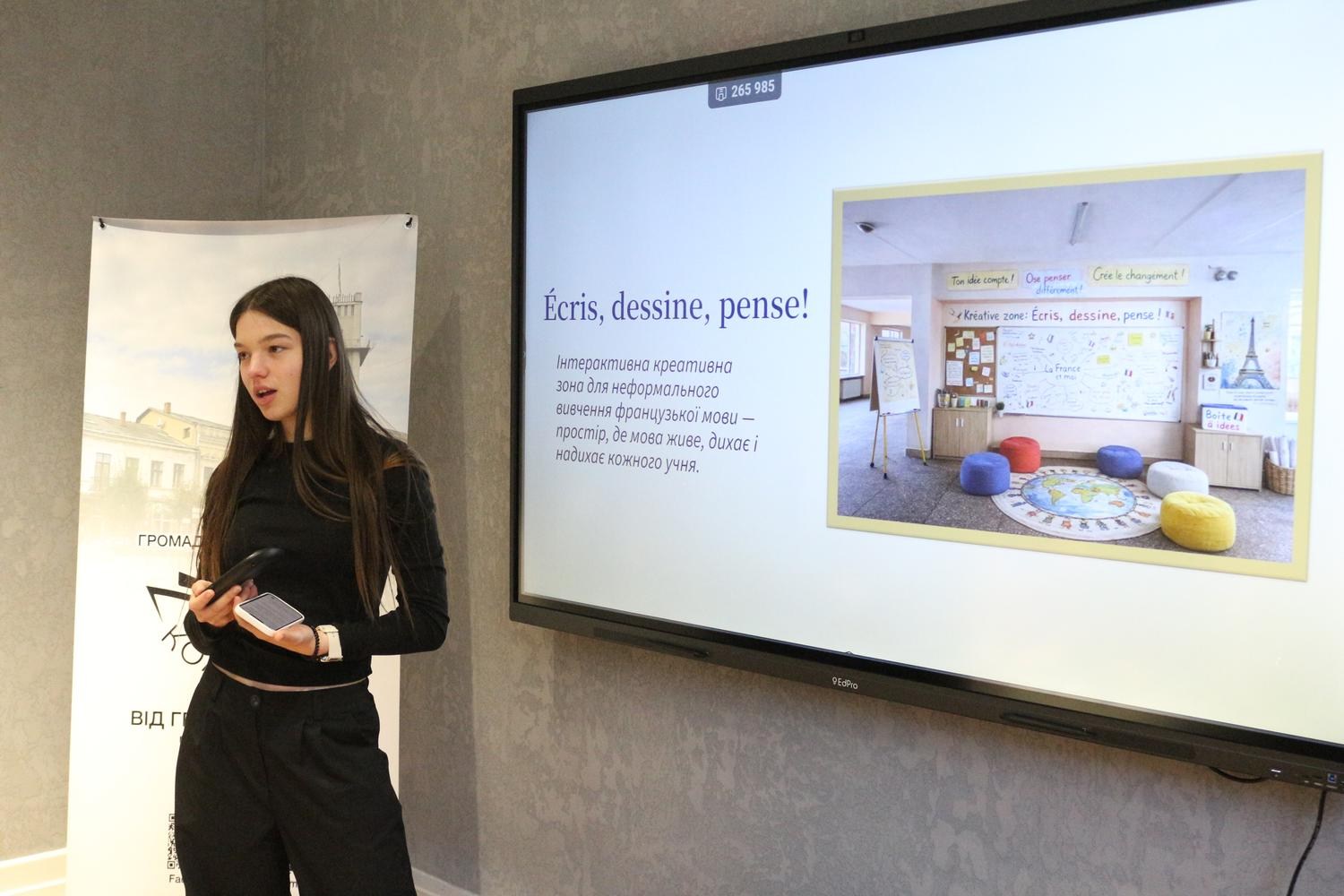 Presentation of the student projects
Ella Nemish, who brought together enthusiastic educators and student activists around the advocacy project, views it as her mission.
“It would be wonderful if children knew that every year, they can come up with ideas and receive financial awards to make the school space exactly as they want it to be. Today, we are forming the future generation that will rebuild Ukraine,” the activist concludes.
The “YOU ACT” advocacy project reminds all adults that, for a child to become a responsible citizen, they must have a say in certain decisions right now, in their classroom, school, or city. Ella Nemish admits, “I am happy that our film club helped see and ‘light’ this path with the Docudays UA documentary films. I am looking forward to the students’ projects.”
The project is implemented with the support of the DOCU/CLUB Network, funded by the Embassy of Sweden in Ukraine, Fondation de France, and the German Marshall Fund of the United States of America.