
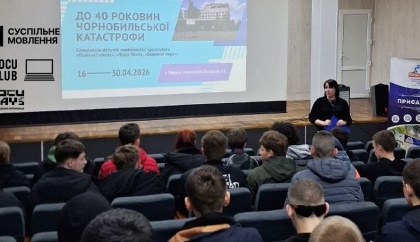
Commemorating the 40th anniversary of the Chornobyl nuclear plant disaster, Suspilne Broadcasting and the DOCU/CLUB Network of film clubs have joined their efforts to organize special screenings of documentaries produced by Suspilne at film clubs. About 70 film clubs in Ukraine and 6 abroad have joined the initiative.
Reprinted from Suspilne Broadcasting.
“This is not the first occasion of our cooperation with Suspilne, and we value this partnership deeply,” says Nina Khoma, Head of the DOCU/CLUB Network. “The Suspilne team creates content that aligns with our mission of legal awareness through documentary stories about real people. At our special screenings, film club viewers had a chance to watch films that are effective tools for fostering critical thinking and responsibility, especially among youths.”
Selecting films for the special events, the Suspilne team intended to highlight unknown aspects of the Chornobyl disaster, introduce people still living in the exclusion zone to the film club audience, and reconstruct the timeline of the Russian army's occupation of the Chornobyl zone at the beginning of the full-scale war in Ukraine.
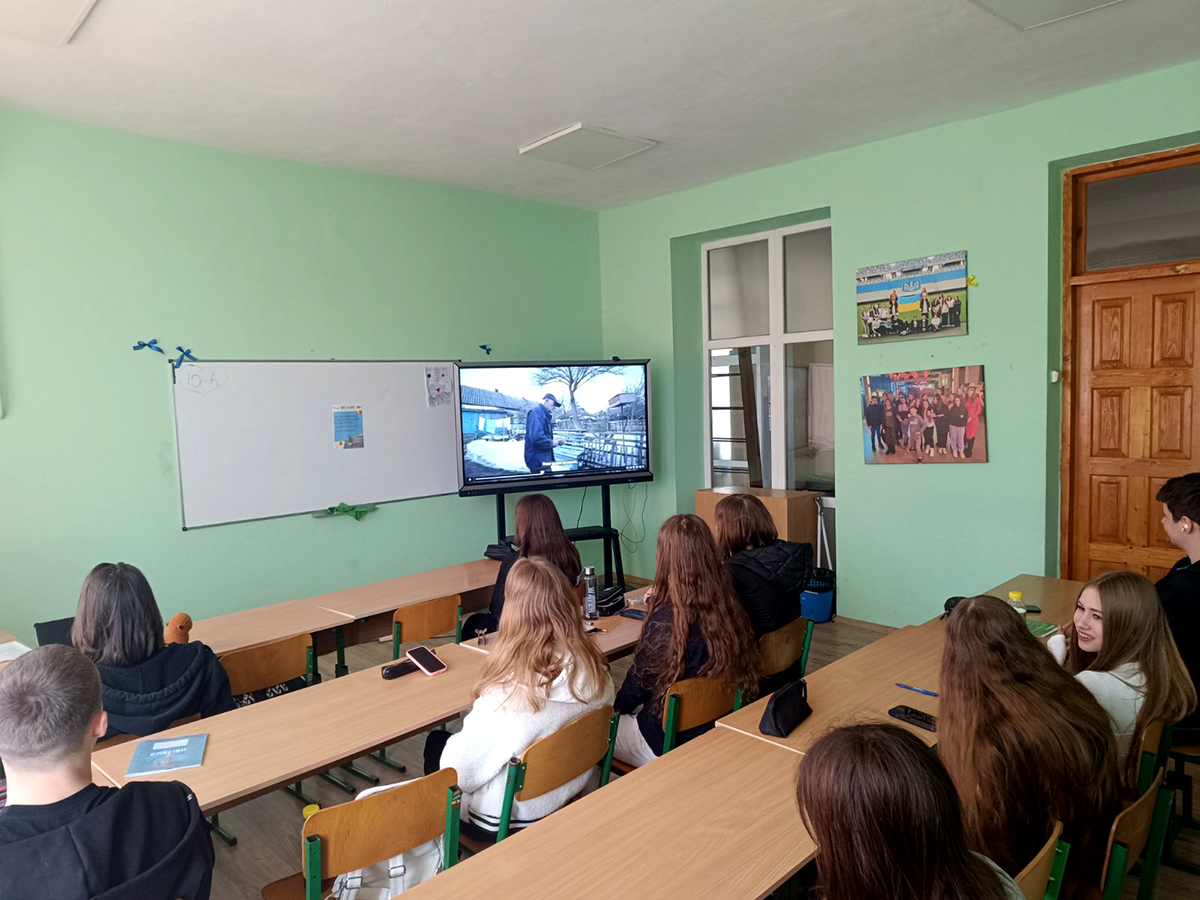
Special screening in Lviv
“For Suspilne, it is the task of utmost importance to bring Chornobyl back from the realm of a distant catastrophe to its human dimension through personal stories, experiences, and memories of people living side by side with this reality. These films portray the Zone not merely as a site of tragedy, but as a space of responsibility, science, and quiet, everyday resilience. Special screenings at the film clubs present the viewers with an opportunity not just to watch a documentary, but to live through it together, ask questions, and feel that Chornobyl is something more than a thing in the past — it is a part of our present that shapes our attitudes toward safety, memory, and the future,” noted Kateryna Felenyuk, Executive Producer at the Department of External Production of Socially Impactful Content and Co-productions at Suspilne.
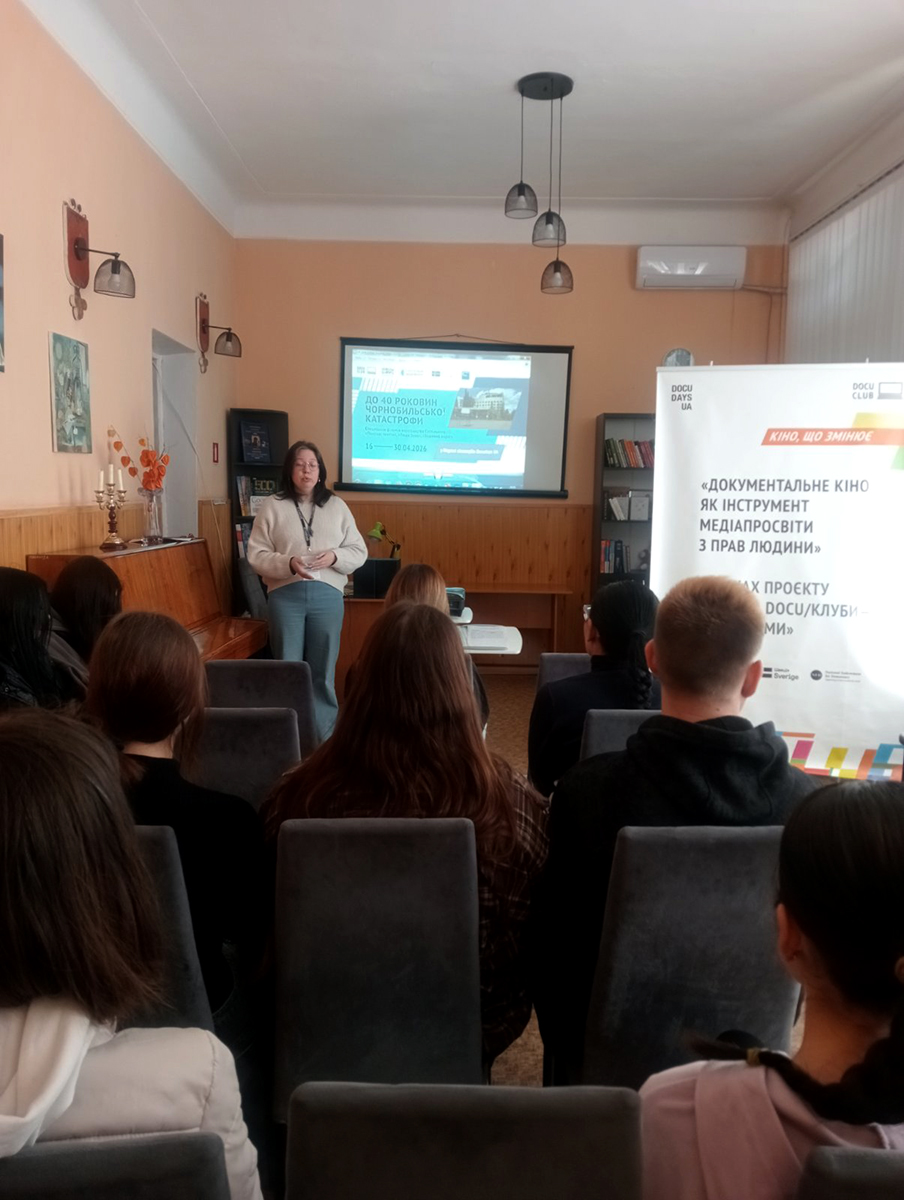
Special screening in Kamyanske, Dnipropetrovsk region
Documentary film People of the Zone, directed by Oleksiy Mulyavin and project creator Yevheniya Podobna, tells the story of the people who view Chornobyl not only as a place of disaster but also as a unique location for scientific research. “This film became a real discovery for me. We are used to viewing Chornobyl through the lens of numbers and facts; here, we see living eyes. I was impressed with the way scientists and locals treat the Zone with immense respect rather than fear,” Natalia, librarian from Kamyanske, shares her impressions.
“I only knew about the disaster from school books, but People of the Zone showed another side of the tragedy. I was captivated by the idea that the Zone is not a wasteland but a place of power for those who explore it. After the screening and discussion, I realized that Chornobyl calls for us to reflect on our responsibility for the future,” says Hanna, a student from Lviv.
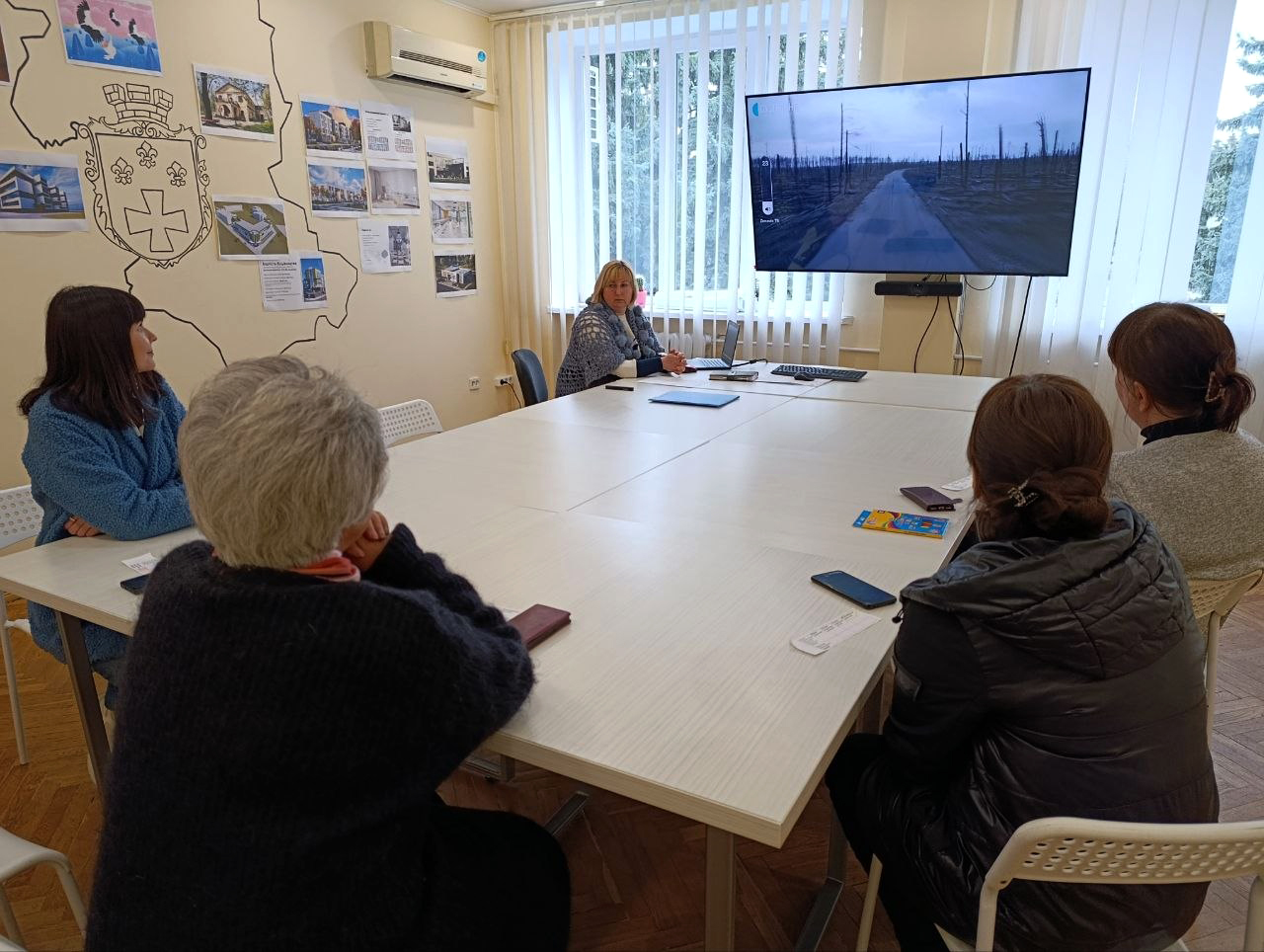
Special screening in the village of Hoshcha, Rivne region
The film Deadfalls of Poliske by Serhiy Malyarchuk, Kostyantyn Klyatskin, and Pavlo Lypa immerses viewers in nostalgia for the childhood home and the pain of the impossibility of returning there. The film is especially significant for residents of the districts affected by the Chornobyl disaster, such as Korosten. Serhiy, one of the viewers, said during the discussion: “The film tells the story of a single village. In fact, there are dozens of such villages and towns in the Kyiv and Zhytomyr regions. After the disaster, people started their lives afresh, but a part of their souls remained forever on this land contaminated with radiation.”
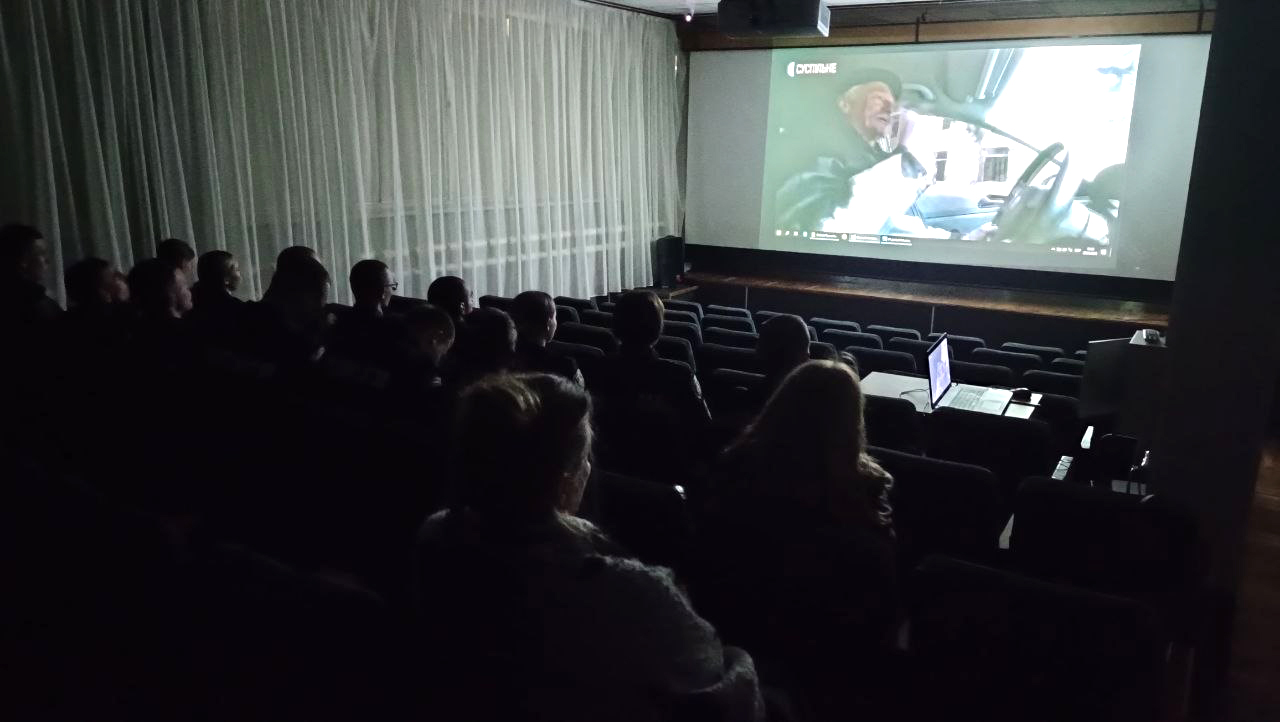
Special screening in Kropyvnytskyi
The geography of special screenings goes far beyond Ukraine’s borders. Six film clubs abroad became platforms for spreading Ukraine’s history worldwide. Docudays UA film clubs in Leipzig (Germany), Wroclaw (Poland), Paris (France), Rotterdam and Zaandam (the Netherlands), and Gaborone (Botswana) allowed Ukrainians abroad and foreign audiences to discuss the consequences of the tragedy. With Suspilne's approval, the film club at the Embassy of Ukraine in France made these films available for several days on the RAZOMUA.fr digital platform, engaging an even broader audience in reflections on the 40th anniversary of the Chornobyl disaster.
Film club viewers particularly appreciated the opportunity to communicate with the filmmakers and directors, especially since all of them are either active-duty military or veterans of the Armed Forces of Ukraine.
Special screening of Suspilne films at the DOCU/CLUB Network’s film clubs, dedicated to the anniversary of the Chornobyl disaster, once again confirmed just how powerful the synergy of high-quality documentary filmmaking and civic dialogue can be.
Suspilne Broadcasting is an independent media company with an extensive presence across all platforms: TV channels Pershyi, Suspilne Kultura, and Suspilne Sport, as well as a nationwide network of local channels and radio stations Ukrainske Radio, Radio Promin, Radio Kultura, and Radiotochka. Only verified news is available on the suspilne.media website, as well as national and local digital platforms. We broadcast in the national minorities' languages, represent Ukraine at Eurovision, develop the children’s resource “Brobak,” and train the media community at the Suspilne Broadcasting Academy. We also feature the Suspilne Media Library — a platform that hosts unique video and audio content from Suspilne dating from the 1920s to the present. We are defending freedoms in Ukraine.
The project is implemented with the support of the DOCU/CLUB Network, funded by the Embassy of Sweden in Ukraine and Fondation de France.
The opinions, conclusions, or recommendations are those of the authors and compilers of this publication and do not necessarily reflect the views of the governments or charitable organizations of these countries. The authors and compilers are solely responsible for the content of this publication.
All news