For parents of children with autism spectrum disorder (ASD), the world splits into “before” and “after” once they hear the diagnosis. In a bustling city, surrounded by hundreds of people, they often feel completely lost: they don’t know where to go, who to call, or how to help their little one.
Reprinted from Zhytomyr.info.
This was the experience of Maria Tyshchuk, moderator of the Docudays UA film club from Zhytomyr. Her personal story became the foundation for the advocacy project “I See. I Know. I Act,” which has already become a real “lifeline” for dozens of families in the Zhytomyr region.
It all started with a simple yet poignant question. When Maria’s son Dmytro was just one year and seven months old, his family learned about the diagnosis. “There was no information, and I had no idea where to turn for help. The doctors would just shrug and offer me to seek advice from more experienced parents. There was no established route for families like ours. This is why I wondered why there wasn’t a guidebook for parents of children with autism on how to get assistance,” Maria recalls.
Instead of getting a clear plan of action, parents were forced to look for information on their own, knock on closed doors, and go through endless cycles of questions without answers. It was precisely this lack of information and guidelines for help that inspired the creation of the advocacy project. Maria realized that, if the guidebook doesn’t exist, it has to be created.
However, advocacy is something more than appealing to the officials. First and foremost, public perception of the issue has to be transformed. The Docudays UA media literacy film club moderated by Maria Tyshchuk played the crucial role in this transformation. Documentaries became the tool that helped bring the topic of autism out of the “family walls” and into the public sphere.
Screenings and discussions of documentary films allowed Maria to organize the community around her. The film club brought together parents and experts who work with children. The project “I See. I Know. I Act,” supported by the DOCU/CLUB Network, lives up to its name: it encourages the community to see the problem, know how to work with it, and act jointly.
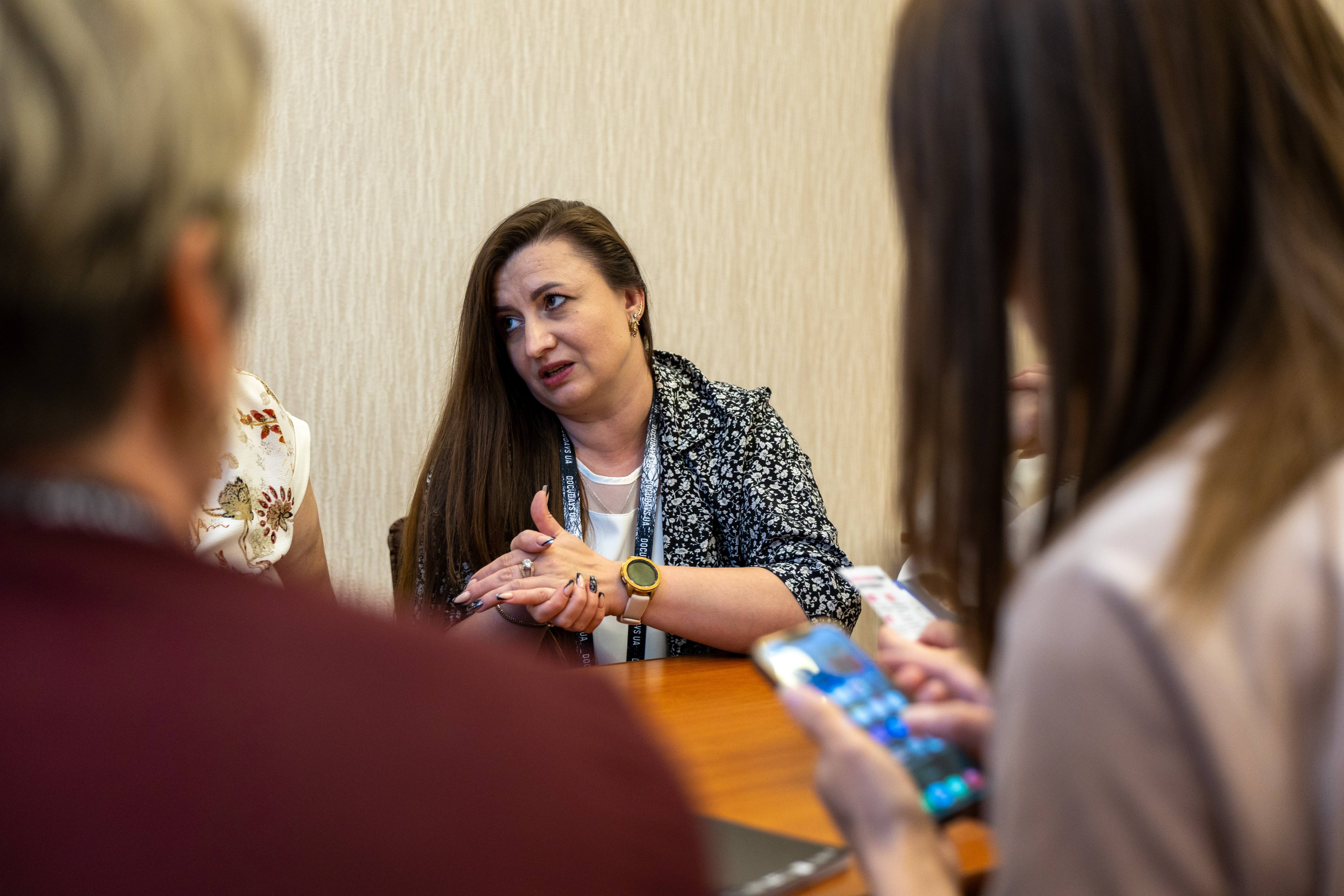
Maria Tyshchuk is telling about the project realization
“On average, children in Europe are diagnosed with ASD at 3 years old. In Ukraine, the diagnosis is typically delayed until the age of 6, which is too late for early intervention. The child should receive support from a multidisciplinary team of specialists and rehabilitation therapists as early as possible – this increases their chances of successful intervention and avoiding disability in the future. Moreover, this reduces the strain on families and parents,” explains Maria.
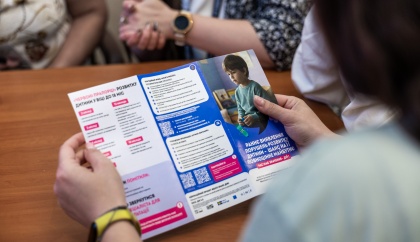
Due to the project “I See. I Know. I Act,” medical facilities of Zhytomyr now feature informational materials on “red flags” in children’s development and pathways for helping children with autism. Parents have access to a step-by-step algorithm of medical and psychological assistance and rehabilitation for their children. This has provided an answer to an important question: “Where should I turn today to make life easier for my child tomorrow?”.
“Starting this advocacy project, I wanted to summarize all the crucial information and make it available at pediatric clinics, since pediatricians are the first line of healthcare providers who examine children and communicate with their parents,” says Maria. “Early medical intervention is crucial for high-quality rehabilitation of children. Therefore, parents have to be informed and aware of what they should do, without wasting time searching for information. Especially given that not all parents know where to look for it. This is a huge problem.”
The advocacy project initiators created an algorithm for helping children, having collected information about all the medical facilities, rehabilitation centers, charity foundations, and organizations of the Zhytomyr region through which the state guarantees rehabilitation and assistance for children.
“It’s not quite right to say that the state does nothing to ensure early intervention. However, this service is mostly available in bigger cities. A lot of transformations in this sphere started due to the efforts of parents and experts who launched local initiatives. The state has supported these efforts and is gradually expanding opportunities for their implementation, but it’s important that families know where to get specific help. Collecting papers and documents is time-consuming, but we have to do this to help children. If parents don’t know about the availability of assistance and don’t use it, these services may be discontinued. This is why parents need to be proactive in order for the government to develop these activities,” Maria emphasizes.
The experience of the “I See. I Know. I Act” advocacy project can and should be replicated in other regions of Ukraine. Indeed, there are parents in every city now holding a doctor’s diagnosis in their hands and feeling the same sense of emptiness that Maria once felt.
“Pediatricians follow a specific protocol established by the Ministry of Health titled “Integrated Management of Childhood Diseases.” However, the autism spectum is not included into this protocol. I want to highlight that a child’s diagnosis can only be made by a psychiatrist. But if pediatricians could conduct an initial assessment and, if necessary, refer the child to neurologists, psychologists, and other specialists, this would have a positive impact on the child’s overall development and future,” explains the project initiator.
Therefore, Maria Tyshchuk submitted a petition to the Ministry of Health requesting that “red flags” in children’s development be included in the integrated protocol that all pediatricians would follow. The project team is currently awaiting a response to its petition.
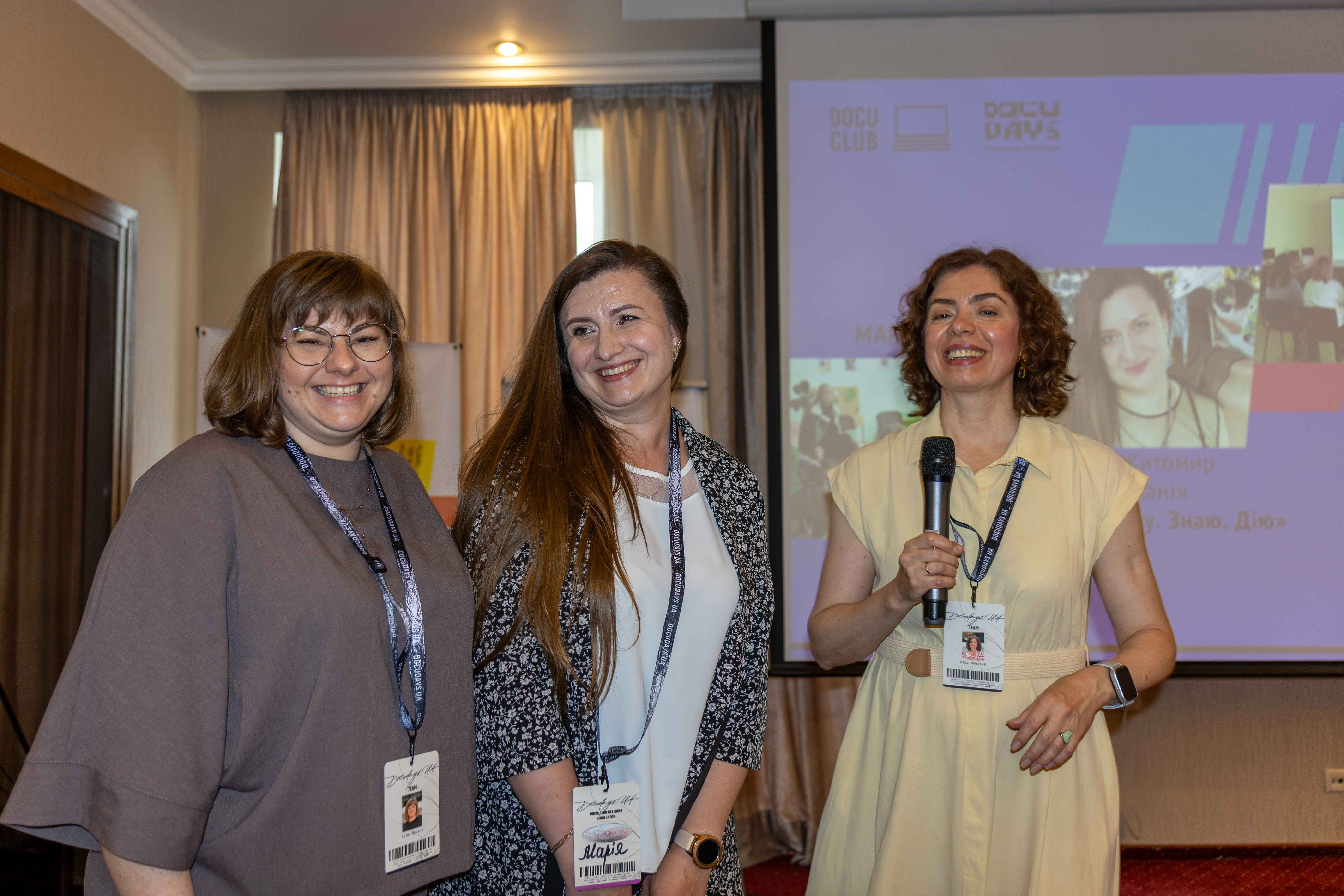
Maria is accepting the award for the successful realization of the project
Maria Tyshchuk has no illusions that all problems can be solved in one day. The social welfare sphere includes a vast number of challenges that require resources, time, and political will. However, her philosophy is simple and unwavering: “Of course, not all problems can be solved quickly or in the near future, but if we don’t try, nothing will change at all.”
Work on the advocacy project has highlighted another important issue: once they turn 18, children with ASD often “disappear” from the radar of social services. “Before children reach adulthood, certain services and forms of support are still available, but afterward, there is a sudden break and a complete lack of a clear government support pathway for most families. Many of these families are left on their own with their adult children in isolation at home, without access to day care, employment, or supported living.
This isn’t about isolated challenging cases — it’s a systemic reality in which the responsibility is shifted entirely on to the family. We will join forces with parents and work on the next project to change this situation and secure real, continuous support for children with ASD after they turn 18,” says Maria.
The “I See. I Know. I Act” project by the Zhytomyr Docudays UA film club proves that collective efforts can transform fear and despair into action that breaks the cycle of isolation.
The project is implemented with the support of the DOCU/CLUB Network, funded by the Embassy of Sweden in Ukraine, Fondation de France, and the German Marshall Fund of the United States of America.
The opinions, conclusions, or recommendations are those of the authors and compilers of this publication and do not necessarily reflect the views of the governments or charitable organizations of these countries. The authors and compilers are solely responsible for the content of this publication.
All news