The “Bari” Docudays UA film club was named one of the best community clubs within the Network of the Docudays UA International Human Rights Documentary Film Festival, which comprises more than 600 film clubs in Ukraine. Over the course of six months, the team held 10 main program screenings and four educational screenings, attended by people aged 9 to 70. Without administrative resources, government funding, grants, or an established audience, the club has become one of the most active cultural venues in the Bar community, attracting well-known Ukrainian and international documentary filmmakers for participation in its events.
Reprinted from BarNews.City.
Before launching the screenings, Iryna Storozhenko set quite a modest goal for herself. If, in six months, at least twenty people would show up to the screenings, ten of whom would be regular viewers, that would already be considered a success.
At the time, it was hard to imagine that in less than six months, the Docudays UA “Bari” film club would not only build a loyal community but also become one of the best community clubs in the network, and that its moderators, Iryna Storozhenko and Maryna Koval, would be invited to Kyiv for the annual Docudays UA moderators’ conference.
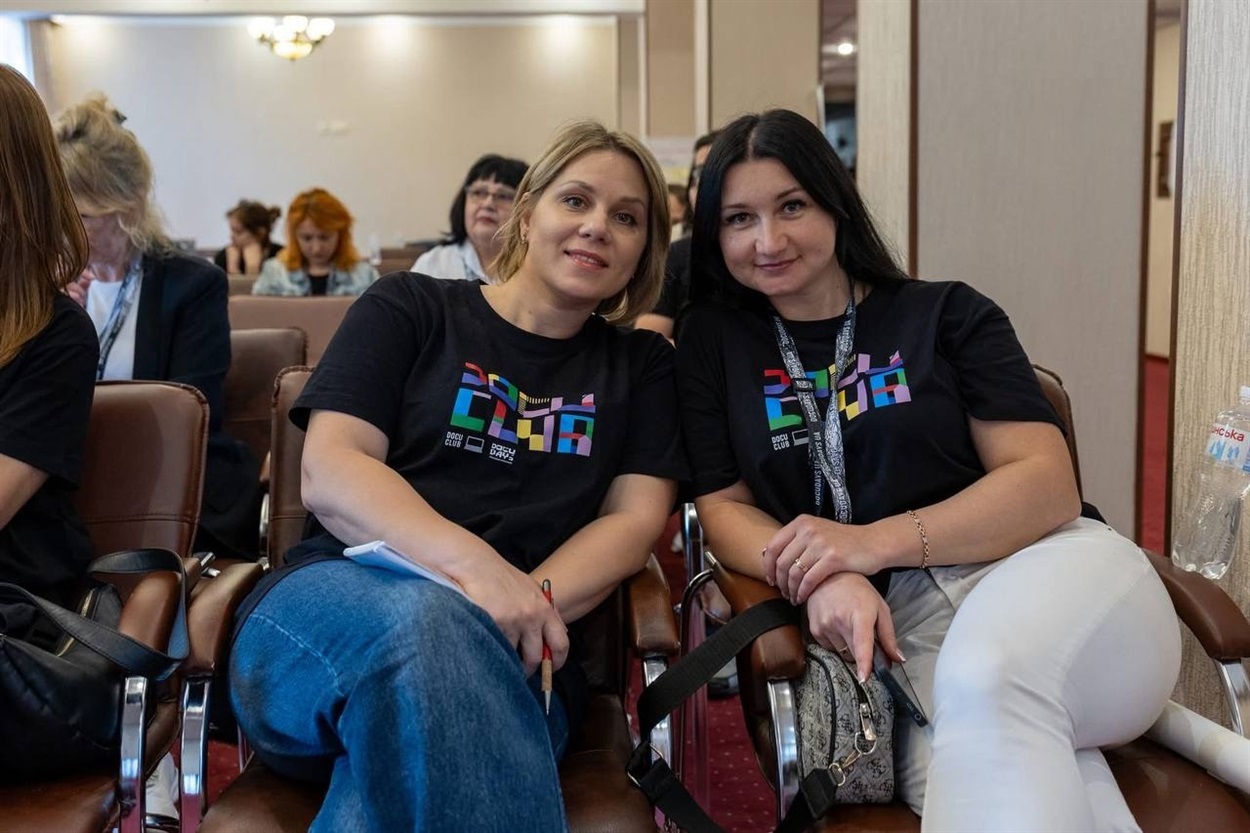
Iryna Storozhenko and Maryna Koval
The 23rd Docudays UA International Human Rights Documentary Film Festival recently took place in Ukraine’s capital, during which the traditional conference for moderators of the film club network was held. Among the 40 invited clubs from across Ukraine was the “Bari” film club, which was also named one of the best community clubs.
Having returned from Kyiv, we spoke with the club’s founder and moderator, Iryna Storozhenko, about the community of like-minded people that has formed around documentary films in Bari over the past six months, the reasons why the audience stays for another two hours after screenings, and the impact that these discussions already have on members of the club and the community.
From six people to a crowded audience
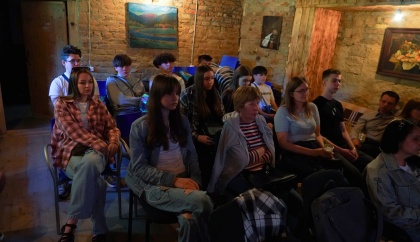
The only guests of the first screening were the film club organizers and one viewer.
“Just six people came. These were Roman Mocharnyi, director of the “Bari” Community Foundation, with whom we partnered to launch the club; his wife, Iryna; my co-moderator, Maryna, who also brought her friend; and journalist Daria. Even though there were announcements all over the city. All we could do was sit through that awkwardness,” Iryna recalls.
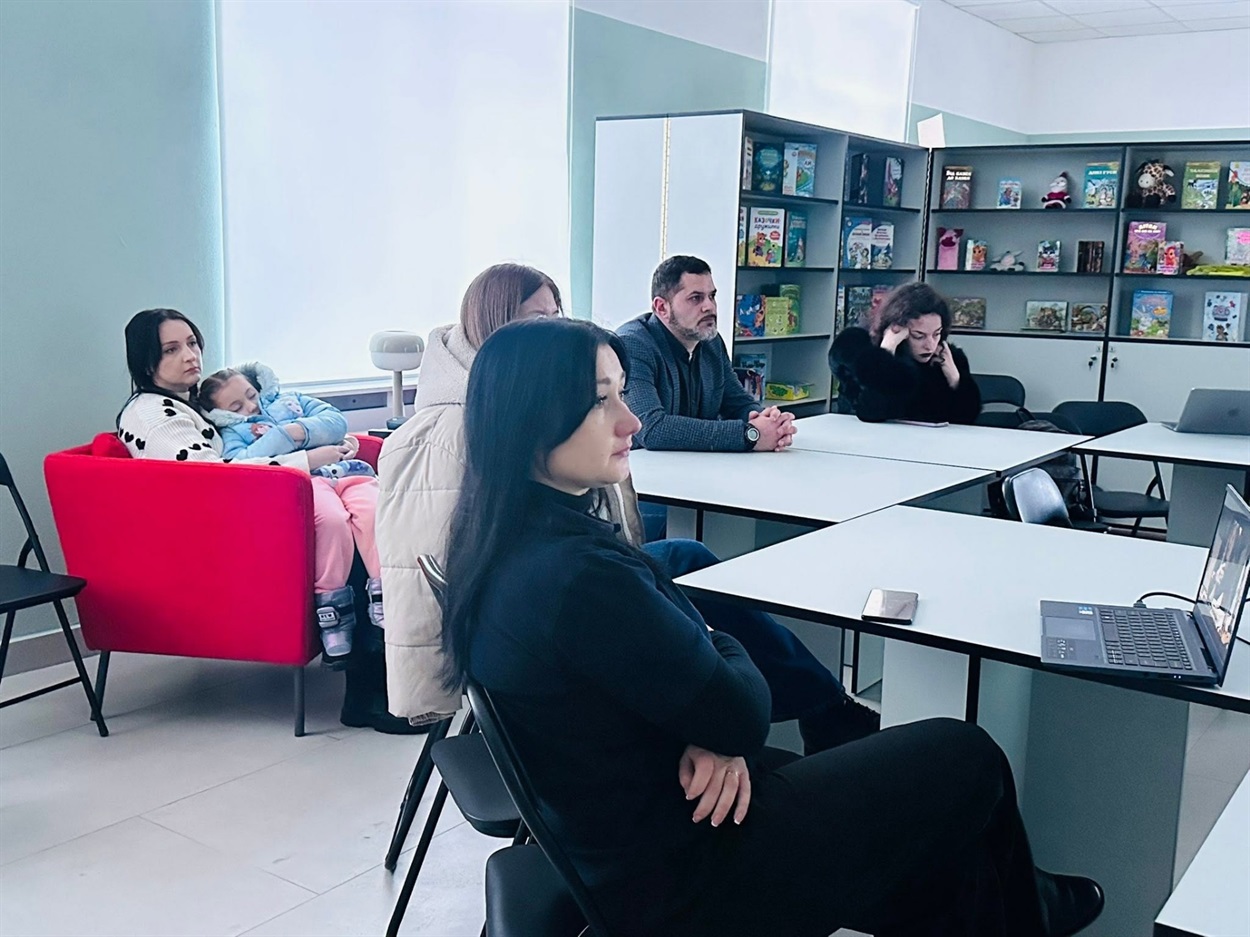
Photo from the screening
At the time, she told herself and her colleagues that she’d be happy if 20 people showed up to the screenings six months from then.
The last three events she conducted have attracted at least two dozen participants. Sometimes, the organizers even jokingly discuss the necessity to limit the number of seats.
However, Iryna considers her greatest victory something other than numbers.
“I am proud that we have a loyal circle of people who come to the meetings not only for celebrity guests or specific topics. They come because they appreciate the format and consider it meaningful.”
Conversations that don’t end with the screening
At first, the organizers tried to keep the discussion to one hour. But over time, the participants themselves asked not to rush them.
Today, the post-screening discussions often last between an hour and a half and two and a half hours. People can leave early if they want to.
“I’m told that people continue to discuss our topics at home, with friends, colleagues, at schools, gyms, and even at birthday parties. It turns out that the actual number of people reached by these conversations is significantly greater than the 15-25 viewers who attend the screenings.”
Discussions at the club concern gender equality, domestic violence, corruption, war, losses, human rights, and difficult experiences.
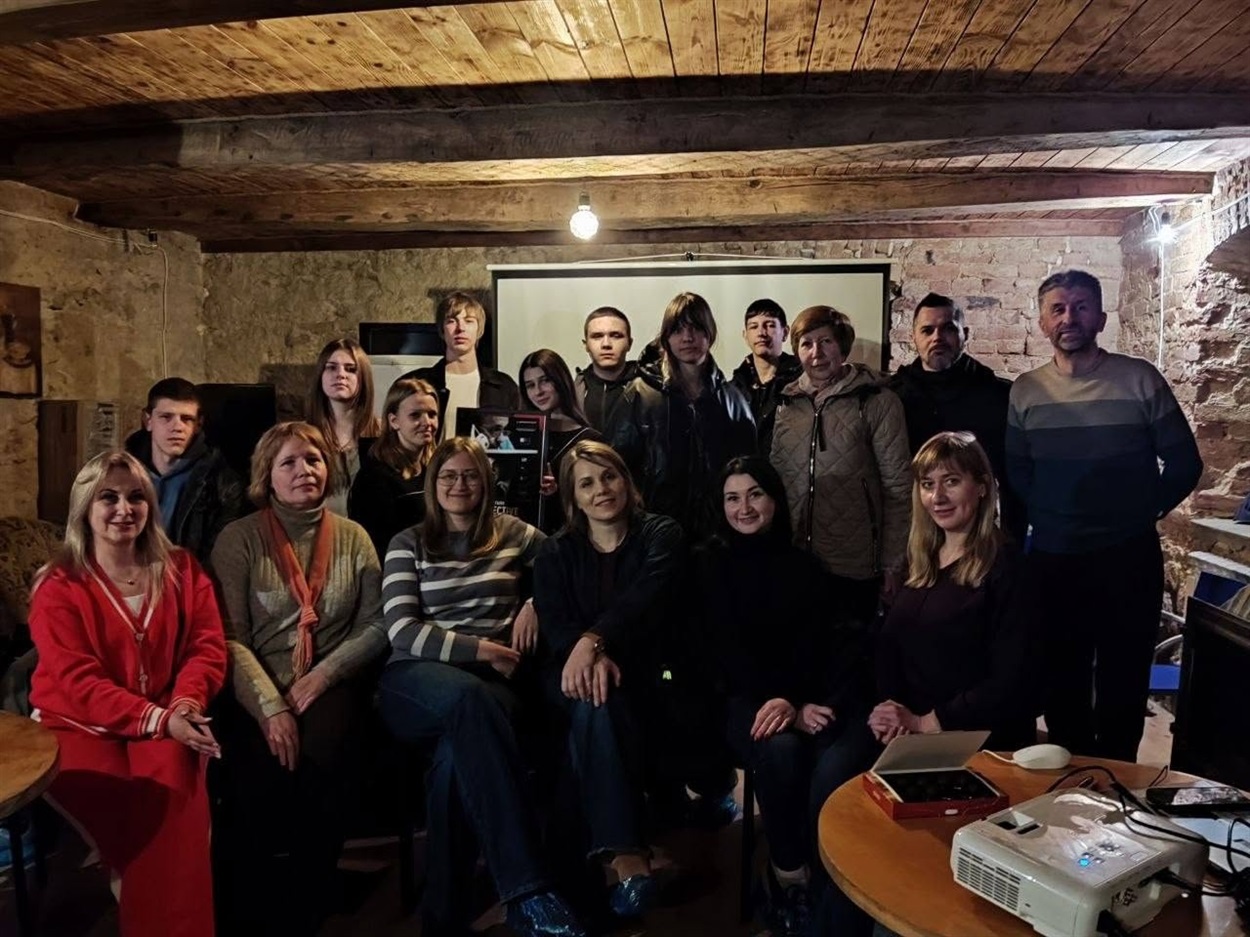
Meeting at the Docudays UA film club
“The impact is real, and I’m proud of it. People come, reflect, engage into disputes, explore their inner worlds, and try to better understand the world around them.”
“I want to read Ukrainian literature”
Iryna Storozhenko says that one of her greatest achievements isn’t statistics or awards, but the transformations she sees in people.
She often mentions her colleague and co-moderator, Maryna Koval, with whom she develops both the film club and the book club in Bar.
When the book club first started, Maryna admitted she had four jobs and wasn’t at all sure she’d find time to read. But after one of the meetings, with tears in her eyes, she said: “I want to read Ukrainian literature.”
Since then, she has been regularly reading books by Ukrainian authors and participating in discussions.
Yana Zhylinska, a history professor at the Bar Professional College for Transport and Construction, was deeply impressed by the screening of the film Caught in the Net about online sexual abuse, which she watched together with her students. After the screening, the students were silent and couldn’t discuss what they’ve just seen. But eventually, that conversation did take place — and the topic they’d previously been too shy or afraid to discuss was no longer taboo between the teacher and her students. According to Yana, it is precisely these candid conversations that help young people better recognize danger and protect themselves.
Iryna notices similar changes after many of the film club meetings. After the screening of Lisa, Go Home!, which deals with domestic violence, 10th-grader Veronika Panasyuk said she realized how much her parents love her and what a wonderful relationship they have; moreover, she started noticing more problems in her peers’ families and became more sensitive to them.
During a screening of the film Giovanni and the Water Ballet for a group of aspiring auto mechanics, many of the boys were convinced at the start of the discussion that there were “male” and “female” sports; after the screening, the conversation had shifted to any individual’s right to choose one’s own path, regardless of the expectations of those around them.
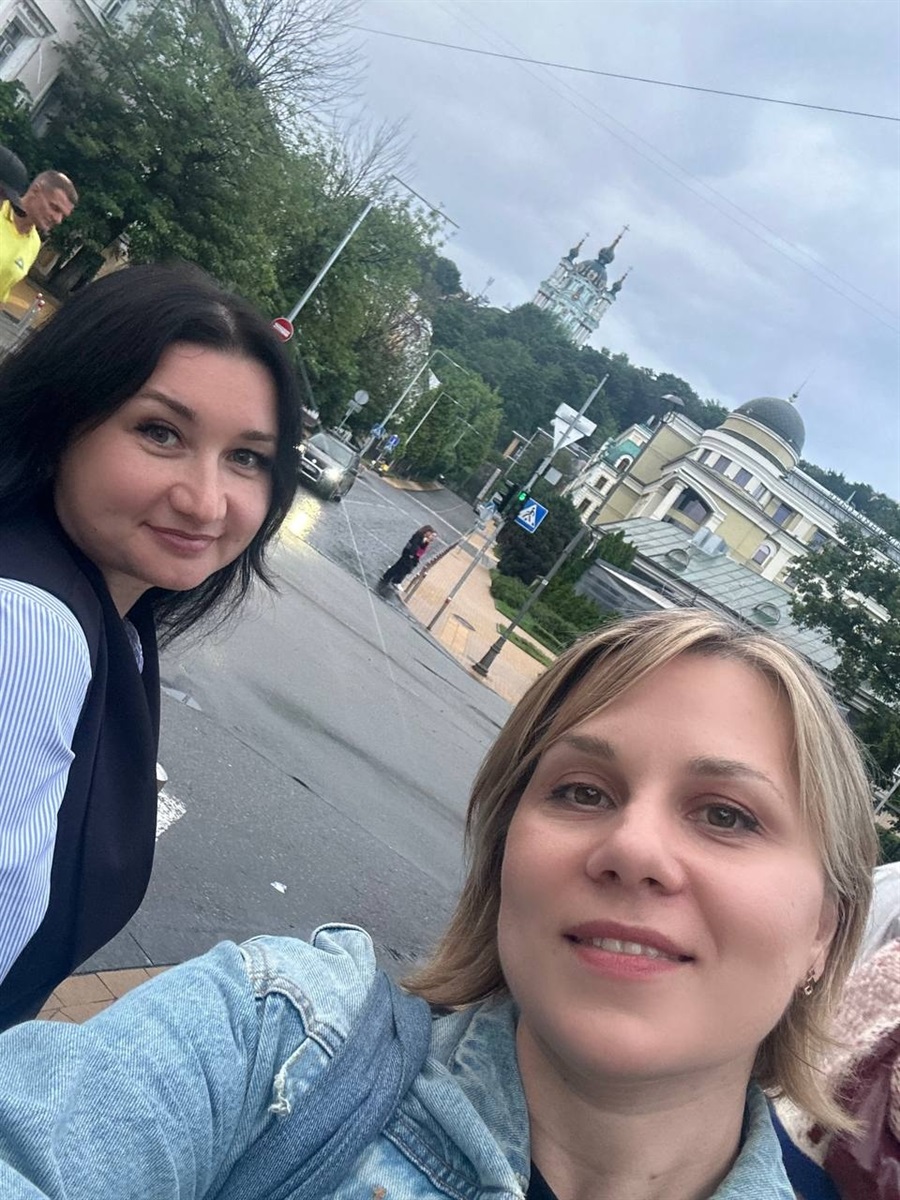
Iryna and Maryna
Changes are also taking place on a personal level. After watching the abovementioned film, coach Olha Hromova discussed gender roles with her dance troupe and her own children, while Maryna Koval allowed her nine-year-old son to get a perm and dye his hair burgundy.
“For me, the most valuable thing is when people are willing to reevaluate their attitudes. Maryna is one of the most striking examples. I truly admire her and tell her this all the time. She is a very sensitive, empathetic person. She doesn’t just listen or watch. She reflects on things and takes action,” says Iryna.
The club helped her find her community
When Iryna Storozhenko moved from Kyiv to Bar at the beginning of the full-scale invasion, she barely knew anyone in the city. It was the film club that helped her find like-minded people.
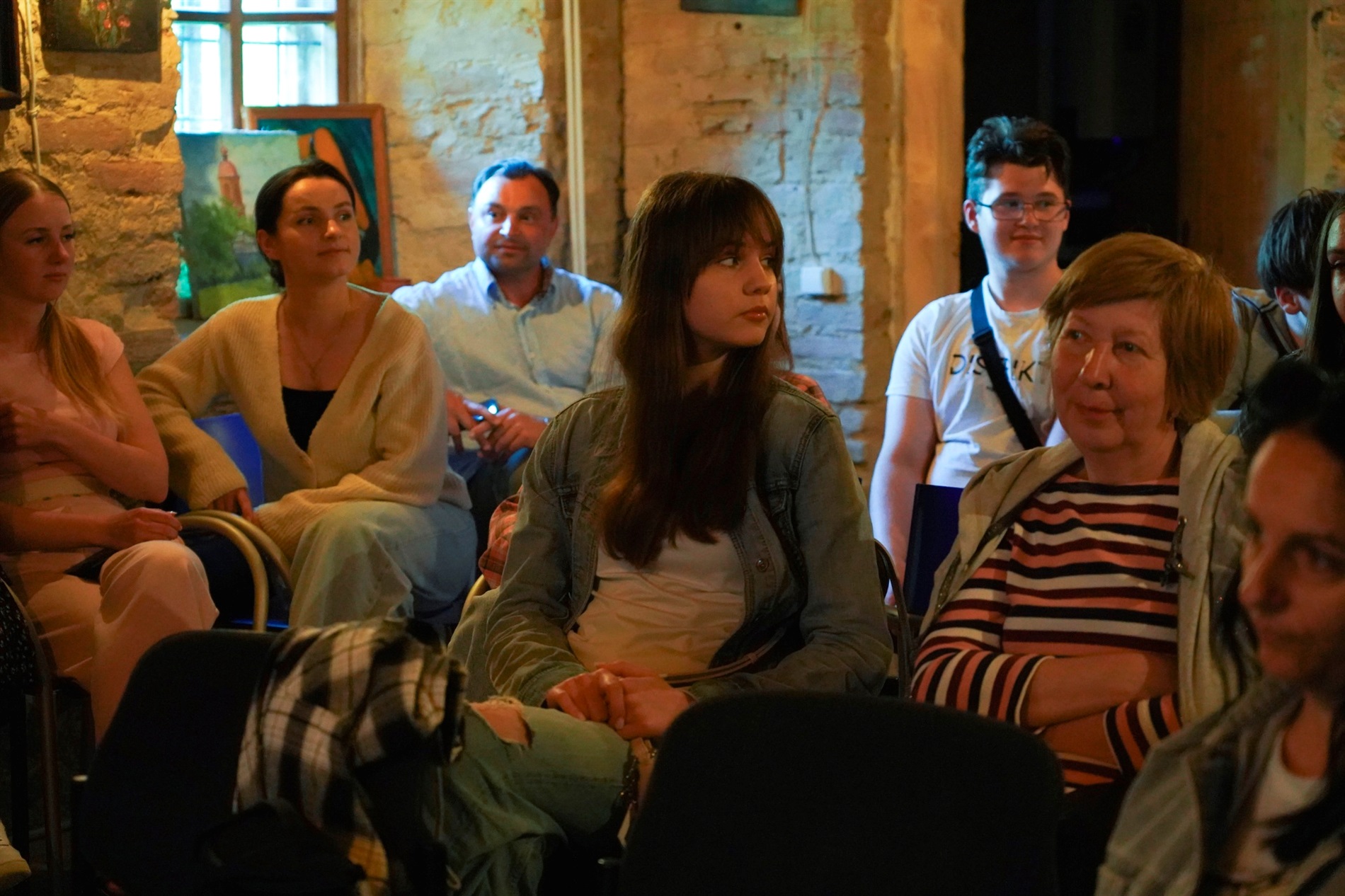
Photo from a film club screening
“The club gave me a community. But it’s no longer just a leisure activity. It is now a distinctive of my life. It takes a lot of time to organize everything, read, invite speakers, and moderate the meeting. In fact, it’s become another job — an unpaid yet very exciting one.
At the same time, my life has enriched with more people, meetings, shared ideas, and new connections.
Apparently, being a moderator is a profession
Despite her many years of journalistic experience, Iryna admits that the role of moderator was completely new to her.
“At first, I thought it would resemble interviewing, except with several dozen people instead of one. But in reality, the moderator’s presence should be hardly noticeable. He should help people speak and reflect on their own. This is very difficult.”
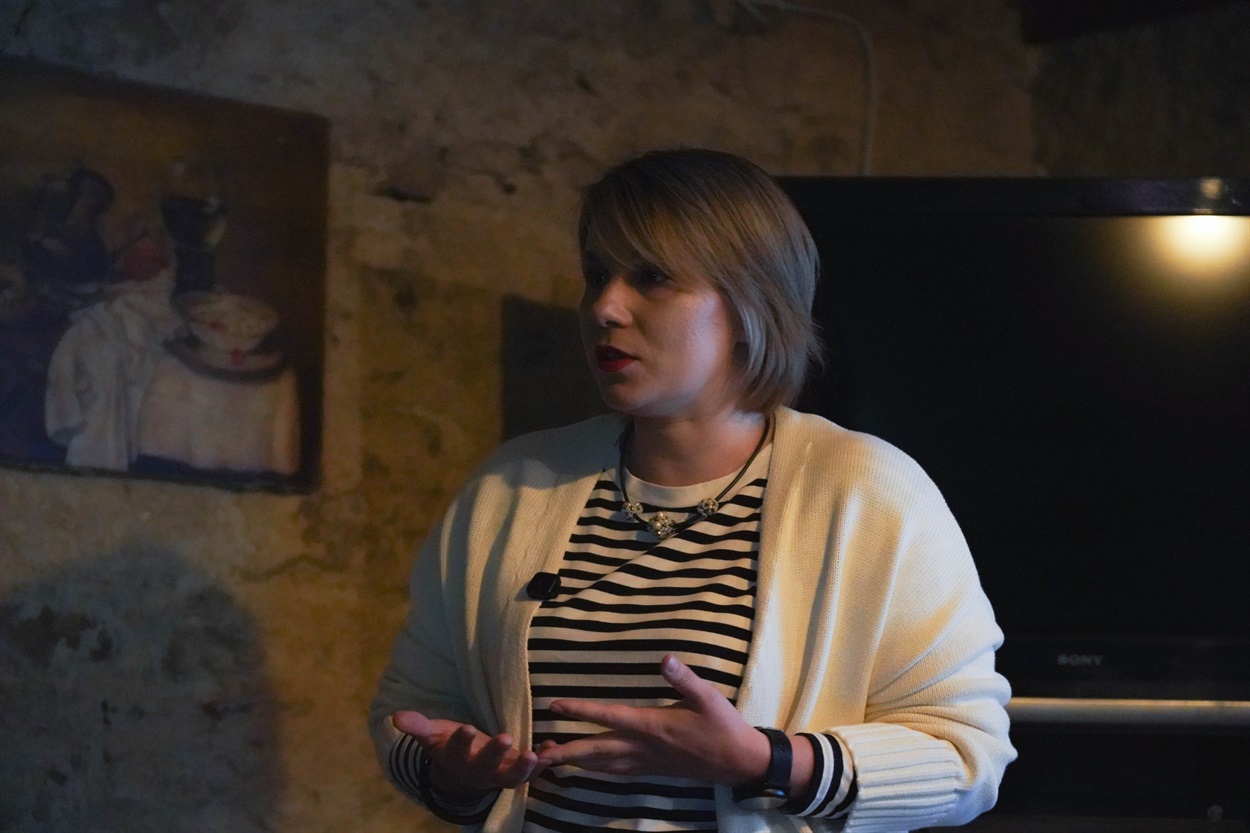
Iryna moderating a screening
At one point, she even felt lonely in this role.
“As a journalist, you see the results of your work. There’s an impact here as well, but it’s very hard to measure.”
That’s exactly why the trip to Kyiv, where moderators from all over Ukraine gathered, was especially valuable for her.
The little film club from Bar gained recognition all over Ukraine
In June, the film club’s moderators, Iryna Storozhenko and Maryna Koval, took part in the annual conference of the Docudays UA film club network, which was held as part of the 23rd International Human Rights Documentary Film Festival.
Only 40 of the 600 film clubs that comprise the Network were invited to the conference. The “Bari” club was also recognized as one of the best community clubs — and it was one of the youngest to receive this honor.
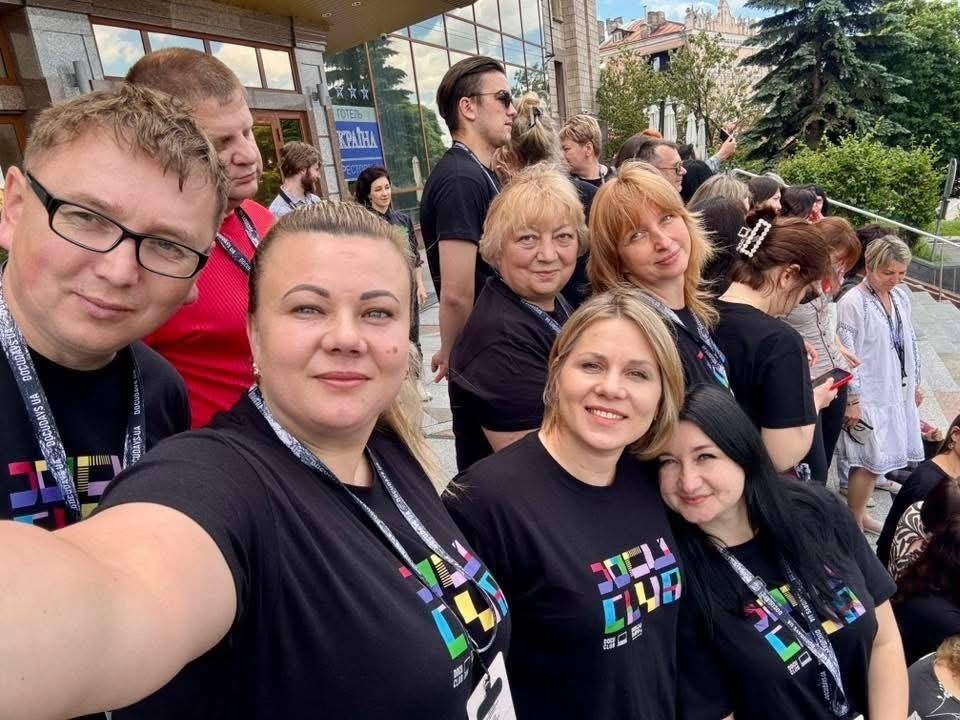
Photo from the Docudays UA Film Clubs Conference
According to Iryna, the organizers evaluated various metrics: the number of screenings, the ways the issues were addressed, the reports, the social media pages, the audience growth, the diversity of participants, and the engagement with invited guests.
“They told us, ‘We can’t get enough of your reports.’”
What sets the Bar club apart is that it doesn’t have an established audience.
“Many clubs operate at schools, libraries, or probation centers. They already have an audience by default. What makes us unique is that we bring people together starting from scratch; these are open screenings that people attend voluntarily. These people are from 15 to 70 years old, coming from various professions and walks of life.”
Three days of learning and complex conversations
Film club moderators from all over Ukraine gathered in Kyiv for the conference. Over the course of three days, they learned how to address sensitive topics, analyzed real-life situations that might arise during discussions, and explored ways to maintain a safe space for conversation.
Iryna was particularly impressed with the meeting with psychologist Kateryna Holtsberg.
“She talked a lot about the challenges of moderating sensitive topics, about strong emotions, and about how to react when someone is crying, angry, or going through something very personal. We analyzed specific situations and learned how to handle them in practice.”
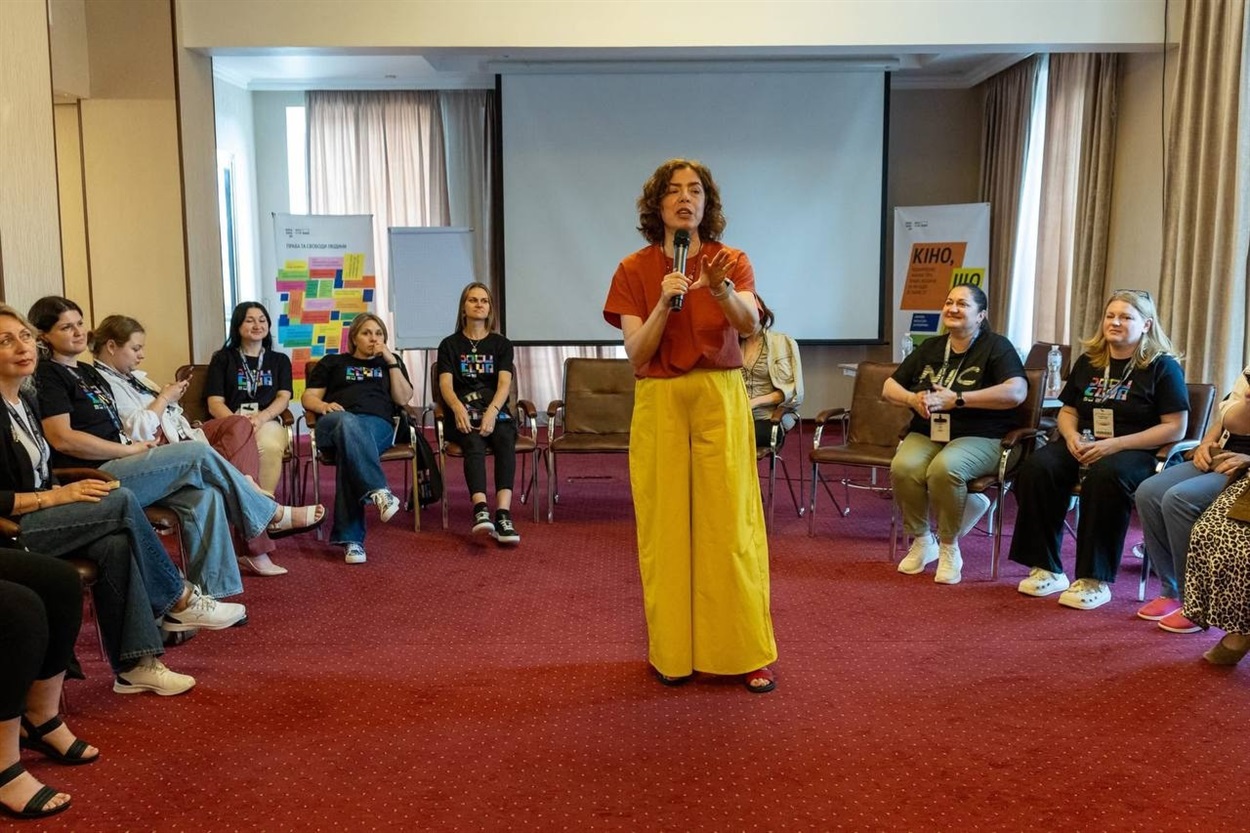
Session by Olha Babchuk
While the training prior to opening their own film clubs was primarily theoretical and focused on human rights topics, this time, the participants practiced their skills in small groups.
“We divided into teams and simulated conflict situations. We had to find ways to resolve conflicts, work with different perspectives, and keep the discussion on a constructive track.”
According to Iryna, it was after these sessions that she completely realized just how complex the work of a moderator is.
“I realized there’s a whole professional community of people facing the same challenges. This was very encouraging.”
After the conference, Iryna received another unexpected offer. The organizers of Docudays UA invited her to moderate a nationwide online screening of a documentary film.
Viewers from any place in Ukraine will be able to join the screening and discussion. For the moderator of the film club in Bar, this will be the first experience working with an audience of this scale.
“They want to practice this format of mutual learning and support. I’ll be moderating the online screening, and my colleagues from the Network will be able to watch me working and provide professional feedback,” says Iryna.
According to her, this offer was not only an opportunity to put her new knowledge into practice but also a confirmation that the work of the film club from Bar has been noticed and appreciated within the nationwide network.
The experience from Bar interests colleagues from all over Ukraine
One of the topics that generated the most questions at the conference was engagement of guests.
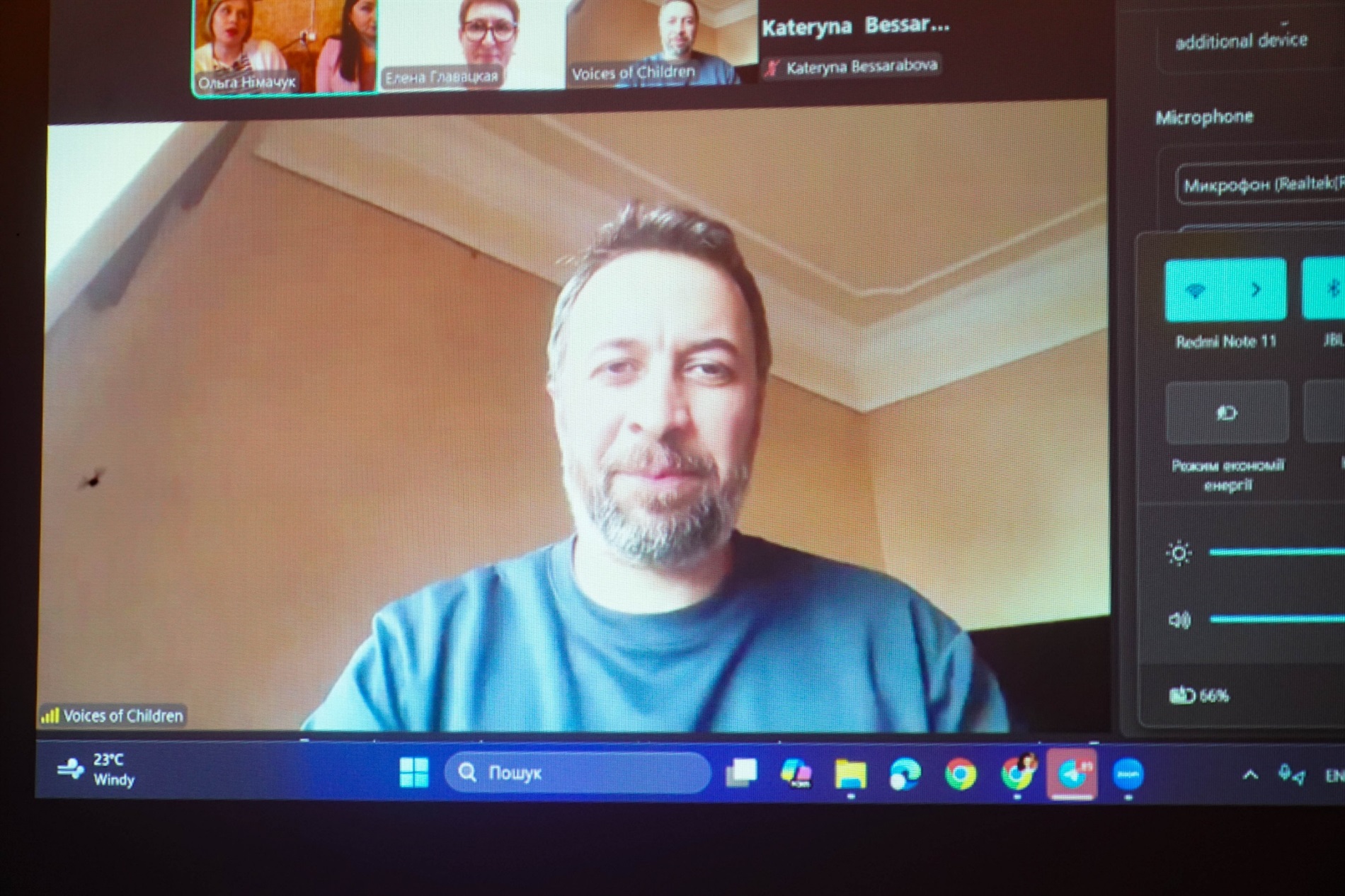
Screenshot from an online screening in Bar
Participants were surprised that a small club in Bar regularly invites filmmakers, cinematographers, and film protagonists.
“Many people thought that I personally knew all these directors, actors, and cinematographers. In reality, I didn’t know a single one of them. I simply explain to people why this is important. I tell them that, in a small town, there’s a lack of cultural events, and that we bring together people who want to watch documentary films. People in Bar deserve the same access to quality films and discussions as residents of the capital. And I’m asking for help to make this a reality.”
That’s exactly how the club hosted meetings with director Serhiy Bukovsky, cinematographer Kristina Sereikaitė, journalist and documentary filmmaker Azad Safarov, and other guests.
“I used to work at the STB television channel, where the slogan was ‘Anything is Possible.’ If we ever need to invite Brad Pitt or Angelina Jolie, I’ll write them a letter as well,” Iryna laughs.
“There is no correct opinion”
Another important point the moderator emphasizes is that the club shouldn’t be a place with only one “correct” viewpoint that is accepted.
“If someone tells you, ‘Read about the correct opinion,’ that’s manipulation. There’s no such thing as a ‘correct’ opinion. There are different opinions. And it’s precisely through them that people draw their own conclusions.”
She hopes to see even more people with different professions and perspectives at the meetings.
“I’d like to see doctors, military personnel, entrepreneurs, utility workers, auto repair shop employees, waiters, farmers, and others. Everyone brings their own experience to the conversation, which helps us better understand one another and the life of our community.”
This fall, Bar will host the Traveling Docudays UA
Having returned from Kyiv, the club organizers are already contemplating new projects.
This fall, the city plans to host the Docudays UA Traveling Festival, which will screen the best films from this year’s festival.
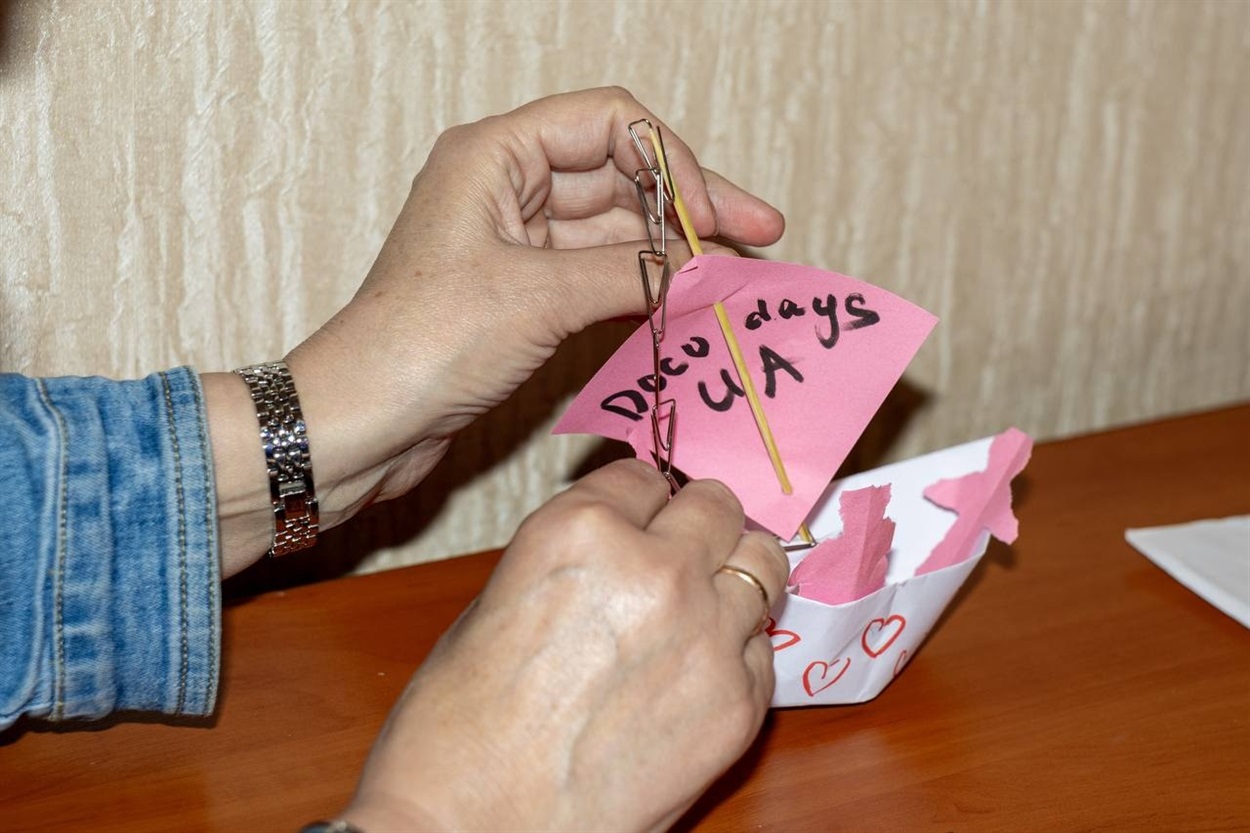
Photo from the Film Clubs’ Conference
The club also wants to expand its charitable efforts, launch advocacy campaigns, and explore inclusive screenings for people with visual and hearing impairments. Iryna also hopes to see similar venues pop up in other places.
“I really want people to get inspired and start their own film clubs. These could operate at schools, libraries, hospitals, or any kind of organization. I’m ready to help and share my experience. The more platforms for dialogue exist, the stronger and more united our communities will become.”
Six months ago, the first screening only attracted six people. Today, Bar has a really active cultural community that is willing to come together to watch documentaries and discuss complex topics.
What once seemed like just a good idea has, in a matter of months, become much more than a film club. It is a place where people learn to listen, debate, think critically, and better understand one another. Perhaps it is precisely these small conversations that spark major changes in the community.
The project is implemented with the support of the DOCU/CLUB Network, funded by the Embassy of Sweden in Ukraine, Fondation de France, and the German Marshall Fund of the United States of America.
The opinions, conclusions, or recommendations are those of the authors and compilers of this publication and do not necessarily reflect the views of the governments or charitable organizations of these countries. The authors and compilers are solely responsible for the content of this publication.
All news