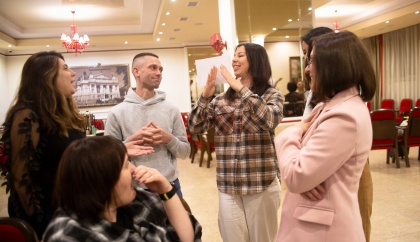
“The main goal of the Advocacy School is to provide its participants with applicable tools for development, realisation, and support of their own advocacy campaigns within their communities. For moderators of the Docudays UA film clubs, this means reaching a new level of interaction with the broader society. We are convinced that the knowledge they’ve gained will help them shift from informing community members about urgent issues and discussing them to direct participation in making management decisions,” says Nina Khoma, Head of the Docudays UA Film Clubs Network.
Today’s challenges require civic activists to have a profound knowledge of legal tools, the mechanisms by which local authorities operate, and strategic communication. The combination of these three components laid the conceptual foundation of the intense training.
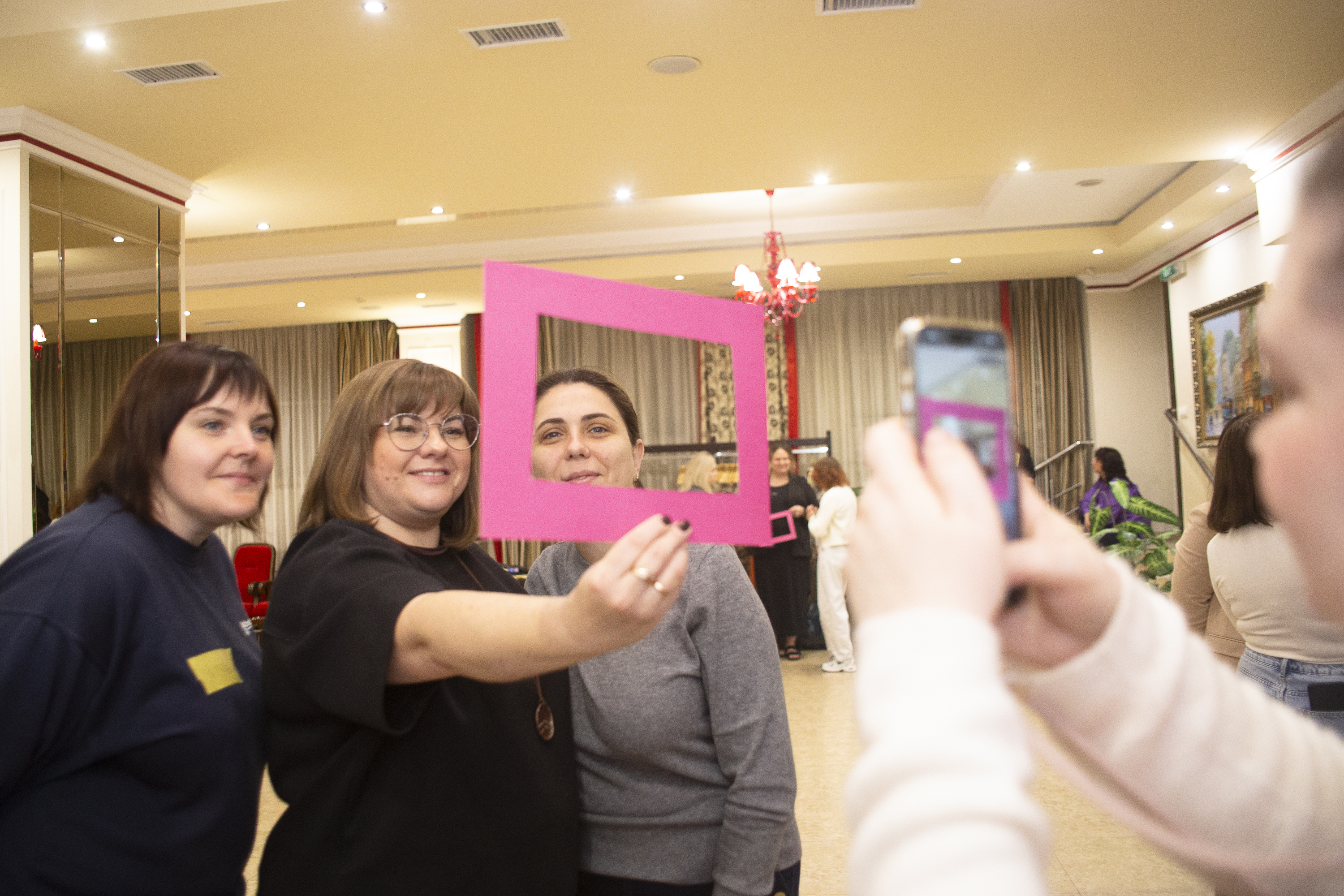
Smiles, jokes, and informal conversations are an important part of learning together and building connections within the Docudays UA Film Club Network
The School’s program was structured around a principle of progressive immersion in the subject matter, with each session logically building on the previous one.
The training began with a series of lectures on the structure and stages of advocacy campaigns. Oleksandr Solontay, a local self-government expert, provided participants with a detailed analysis of the structure of local authorities and the nuances of consulting with the “target audience” of advocacy efforts. This helped the moderators clearly understand which jurisdiction the issue they had chosen fell under and how to engage in fruitful dialogue with officials.
The bloc by attorney Oleg Ilnitsky focused on practical tools for achieving advocacy goals. School participants examined the procedures for submitting official appeals and requests, as well as ways to apply legal provisions to protect the community’s interests.

The training combined practical exercises, experience-sharing, and collaborative brainstorming to develop ideas for advocacy work in local communities
Another crucial component of the training process was the session of Tetyana Husar, the Network’s SMM manager, which included the screening and discussion of the documentary Illusions at the Bottom by Leonid Yezhurov. In the course of this session, the School’s participants, especially those who have just begun their path as moderators of film clubs, have learned how to use films as tools for advocacy and change.
The final day of the training was dedicated entirely to communicating about advocacy campaigns. Together with communications expert Olha Babchuk, the participants examined specific features of communicating advocacy initiatives to various audiences and drafted their own communication plans.
The main outcome of the School was that every participant left with a clearly structured vision for their own advocacy initiatives. The feedback survey showed high ratings for the training process: 84% of participants are entirely satisfied with participation in the School, while 16% are mostly satisfied. At the same time, 88% of participants gave the highest marks to the applicability of knowledge and experience they gained. The same percentage of the Advocacy School participants have noted that, having completed the training, they feel confident in their ability to plan and implement the key stages of an advocacy campaign in their communities.
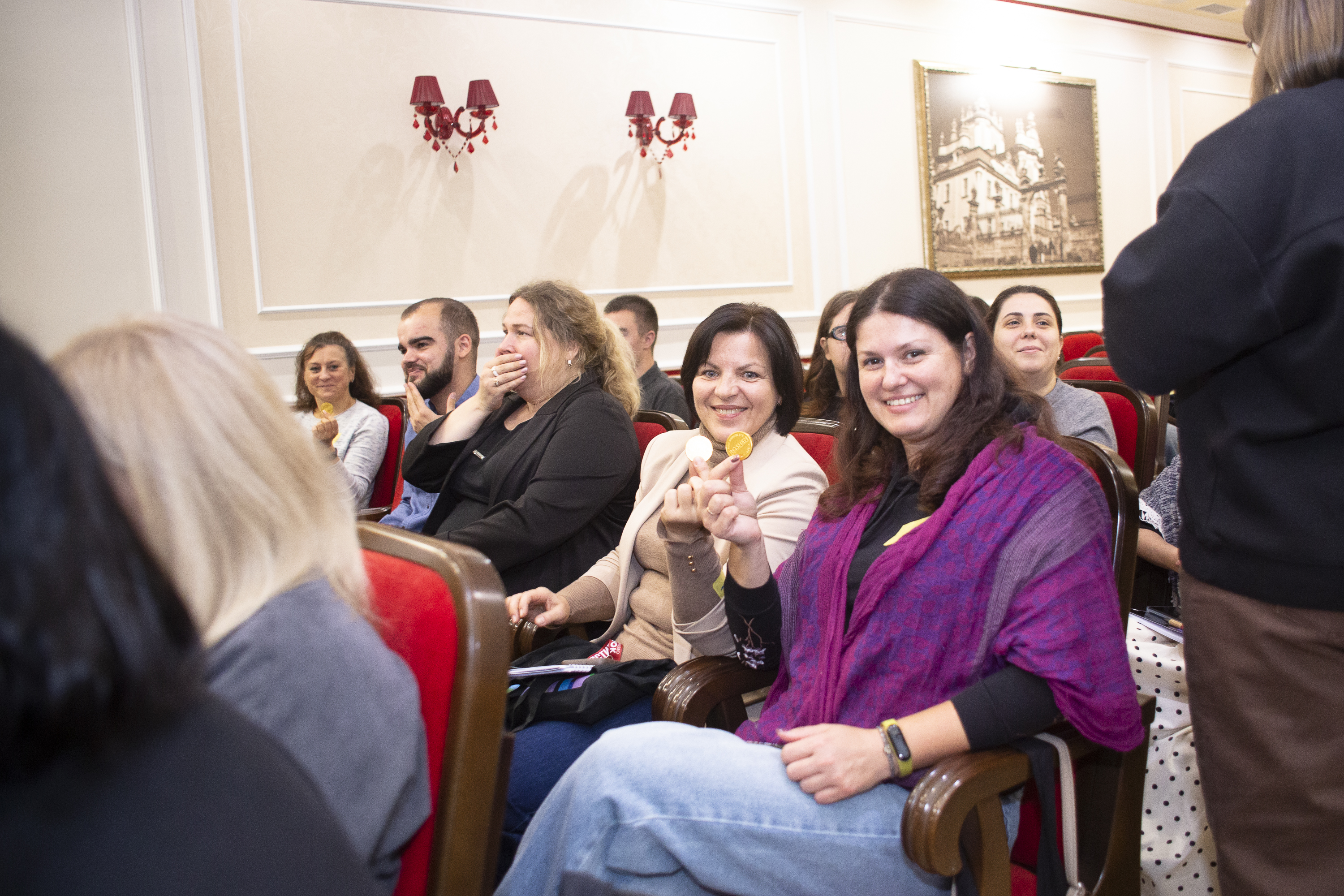
Through interactive exercises, film club moderators explored new approaches to teamwork and advocacy
The anonymous survey results also confirm the program’s applied focus and friendly working environment:
“What I liked most was that the training was very practical and gave me the opportunity to immediately apply advocacy tools to my own future campaign. Working with real-life cases, sharing experiences, and combining legal, communication, and strategic approaches were all valuable. I’d like to highlight the atmosphere of openness and partnership, which really motivated us not only to listen but also to take action.”
“First and foremost, my understanding of the concept of advocacy was completely transformed. The training helped me understand what steps are necessary to implement it; moreover, all these efforts only work in combination with a clear definition of the problem, goals, steps, and specific details. Now I have a clear plan of action.”
“The optimal balance and coherence of the selected theoretical material, its alignment with practical tasks, the relaxed atmosphere, and the professionalism combined with the friendliness of the organizing team laid a wonderful foundation for our future work.”
The Advocacy School of the Docudays UA Film Club Network helped participants combine legal knowledge, communication skills, and the potential of documentary films, which they can confidently use to bring about systemic change at the local level.
The development of the DOCU/CLUB Network is funded by the Embassy of Sweden in Ukraine, Fondation de France, and the Czech organization People in Need within the framework of the SOS Ukraine initiative.
The opinions, conclusions, or recommendations are those of the authors and compilers of this publication and do not necessarily reflect the views of the governments or charitable organizations of the respective countries. The authors and compilers are solely responsible for the content of this publication.
All news