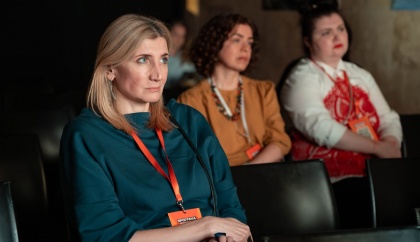
Documentary films help tell viewers about the war, discuss human rights, unite communities, collect testimonies, and call people to action. All of this was discussed during the events of the Donbas Media Forum, which took place in Kyiv on October 8-10.
For the second time now, the Network has joined the Forum to foster dialogue with the journalist community and search for new opportunities for cooperation between the media, documentary filmmakers, and active communities. The program of this year’s Forum included screenings of two documentaries and a discussion about media literacy, legal education, and advocacy organized by the Network.
Witnesses. Place of Birth: Preserving war testimonies for the future
Witnesses. Place of Birth is a documentary by Maryna Kronglevska, created with the support of the War Archive project. It tells the story of the maternity hospital of Chernihiv during the 37 days of the city siege by the Russian troops in the beginning of the full-scale invasion. Despite shellings and lack of water, food, and medicine, the doctors continued assisting women at childbirth. Through personal memories, the film shows people who tried to save life and dignity in extraordinary circumstances.
The screening prompted a discussion on the methods of documenting human experiences of the war, collecting eyewitnesses’ testimonies, and ensuring their subsequent use in journalism and documentary filmmaking. Tetiana Symon, the film’s producer and the head of the interviewing department of the War Archive, joined the discussion.

Photo: Tetiana Symon
Researching history and shaping collective memory by documenting the consequences of Russian aggression is crucial for journalists, human rights defenders, and activists. The media are accumulating interviews, videos, photos, and other materials that could be useful not solely for current publications. Tetiana Symon explained how established collaboration with archival initiatives helps preserve these materials and opens up prospects for their responsible use in the future.
“Eyewitness accounts are part of the memory of what people and communities experienced during the war. It is important to ensure the preservation, context, and responsible use of these stories. Collaboration between journalists and archival initiatives helps prevent the loss of valuable materials and opens up opportunities for subsequent work with them,” Tetiana emphasized.
Genie in the Air: How to tell about the war while focusing on human beings
Genie in the Air, a documentary by Serhiy Lysenko, teleports its viewers into the daily routine of three FPV drone pilots carrying out combat missions in the Donetsk region. This is a story not only about working on the front lines, danger, and responsibility, but also about fatigue, mutual support, brotherhood, and humanity that endure even in the most stressful circumstances.
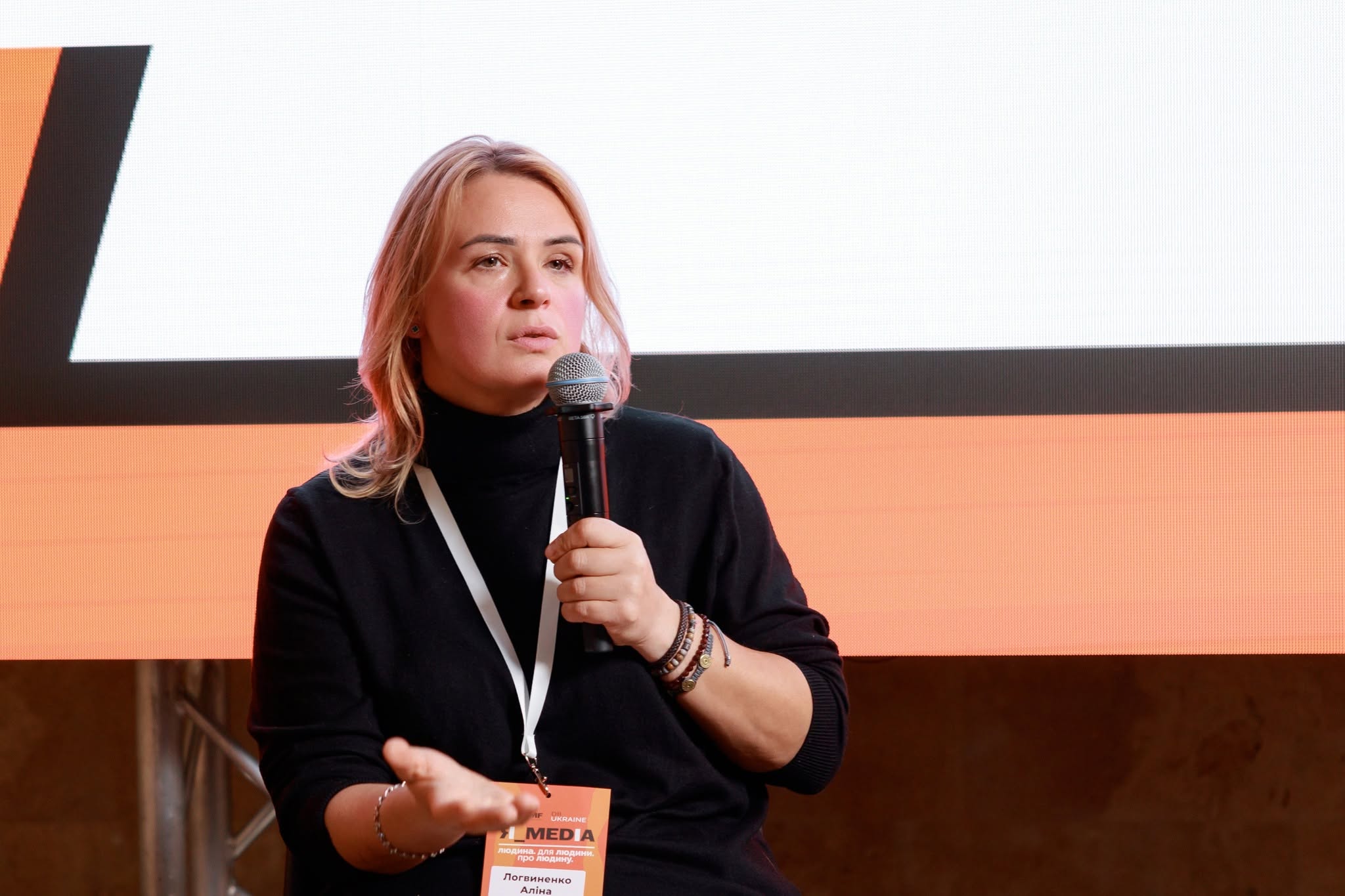
Photo: Alina Lohvynenko
After the screening, the audience discussed how journalists and documentary filmmakers should work with the military, find balance between the public interest and the safety of their subjects, and report on the war without unnecessary glorification. Alina Lohvynenko, Serhiy Lysenko’s colleague and sister-in-arms, journalist, and member of the Ukrainian Army Media Center, joined the discussion.
Participants discussed how working alongside the military changes a journalist’s perspective. They paid special attention to safety: a subject’s consent to be filmed does not always mean it is safe to publish the material. The conversation also touched on how to hold the audience’s attention when the war drags on for years and many people perceive news from the front lines as nothing more than background noise.
Alina Lohvynenko emphasized that careful observation, human stories, and details of everyday life help viewers see the war as a sequence of events and, importantly, as the experience of specific individuals: “When working with the military, it’s important to remember that behind every story there is a person, their experience, and their responsibility for those around them. A journalist must not only find an impressive angle or story but also understand how it will affect the subjects and whether it will create additional risks for them. Our task is to find ways to talk about the war so that the audience understands its cost.”
From media literacy to advocacy: How documentaries contribute to transformations within communities
Documentary film can spark a conversation about an issue that a community has long overlooked or been reluctant to discuss. However, can this conversation lead to tangible solutions? This very question was central to the discussion titled “Media literacy, legal education, advocacy: How documentaries strengthen communities.”
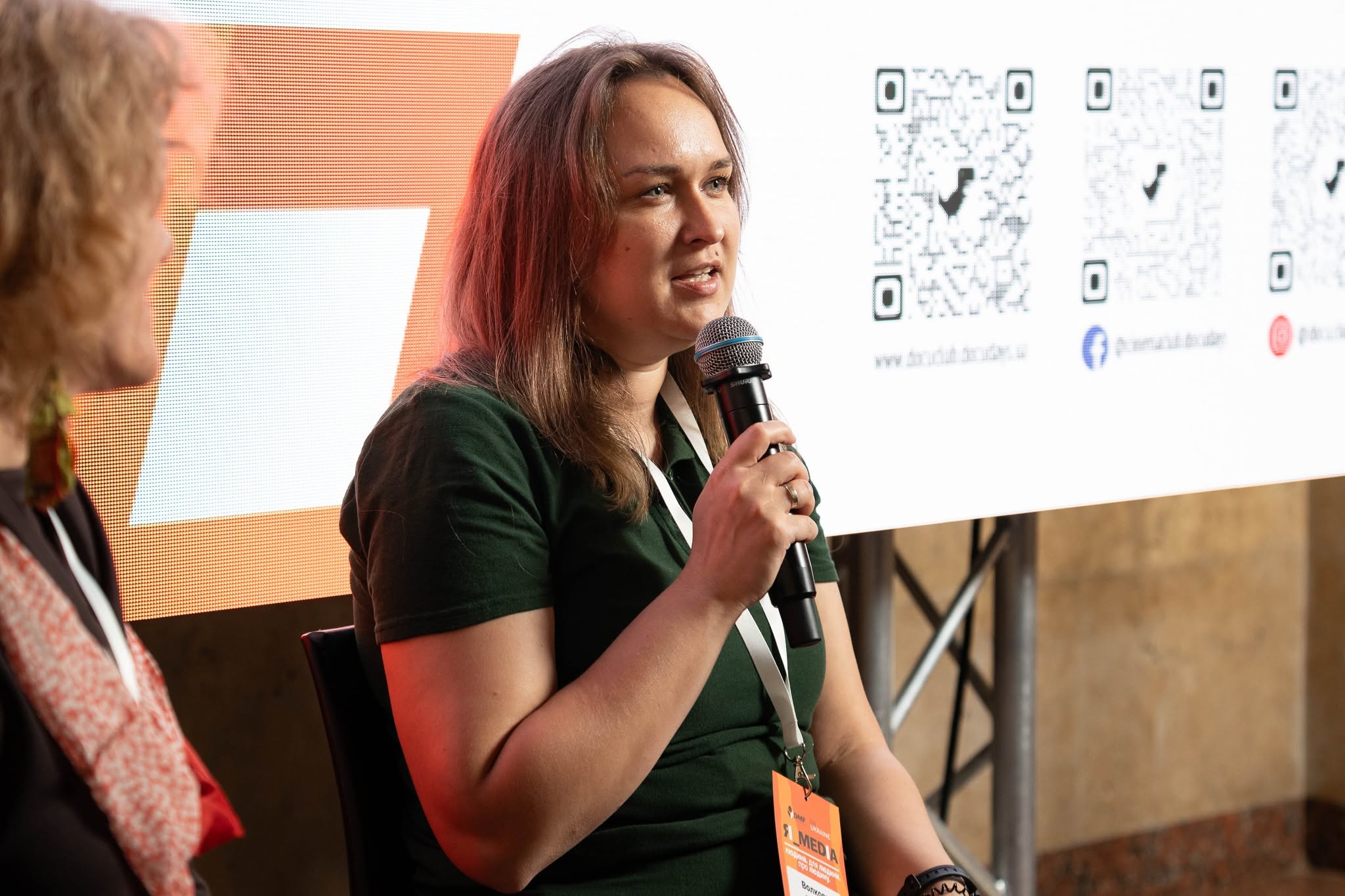
Photo: Tetiana Volkova
The discussion featured Tetiana Volkova, editor-in-chief of “STEP — Media about Western Donbas” and moderator of the Docudays UA film club at the NGO “MediaLab,” and Olha Babchuk, a journalist and communications manager for the Docudays UA Film Club Network. The discussion was moderated by Yaryna Skurativska, a journalist for Ukrinform and host of the “Truth or Myth” podcast.
The participants discussed their experiences with advocacy campaigns that began with watching a documentary and discussing it, subsequently leading to tangible transformations in their communities. This approach helps shift the focus from simply identifying a problem to jointly seeking a solution: framing a request, bringing together enthusiasts, identifying those responsible for the decision, and initiating a dialogue with those who can influence the situation to ensure that appropriate decisions are made.
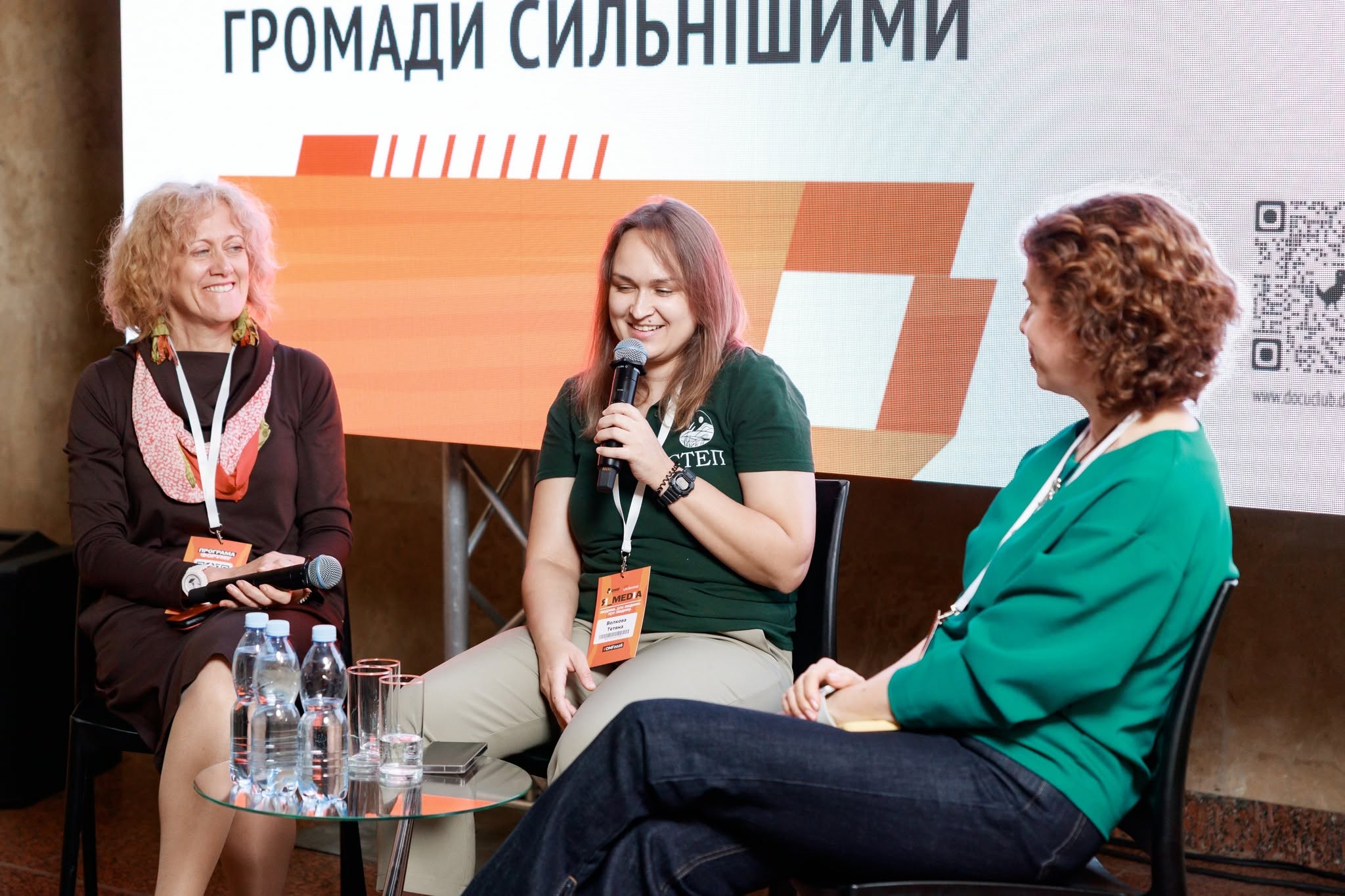
Photo: Panel discussion after the screening
For local media, this is also an opportunity to expand their role. Documentaries help newsrooms create a space for discussing community issues, engage residents, explain how to influence decisions, and monitor the results. A documentary film becomes a catalyst for conversation, and the media serves as one of the platforms where this conversation can turn into social action.
Tetiana Volkova, whose film club successfully carried out an advocacy campaign in Pavlohrad, emphasized: “Local media are familiar with the context of their community and can help people see that a common problem requires a joint solution. Documentaries provide an opportunity to start a difficult conversation, and further work with their community brings people together to frame demands and push for change. It’s important not to stop after a discussion, but to revisit the issue and show what has been achieved.”
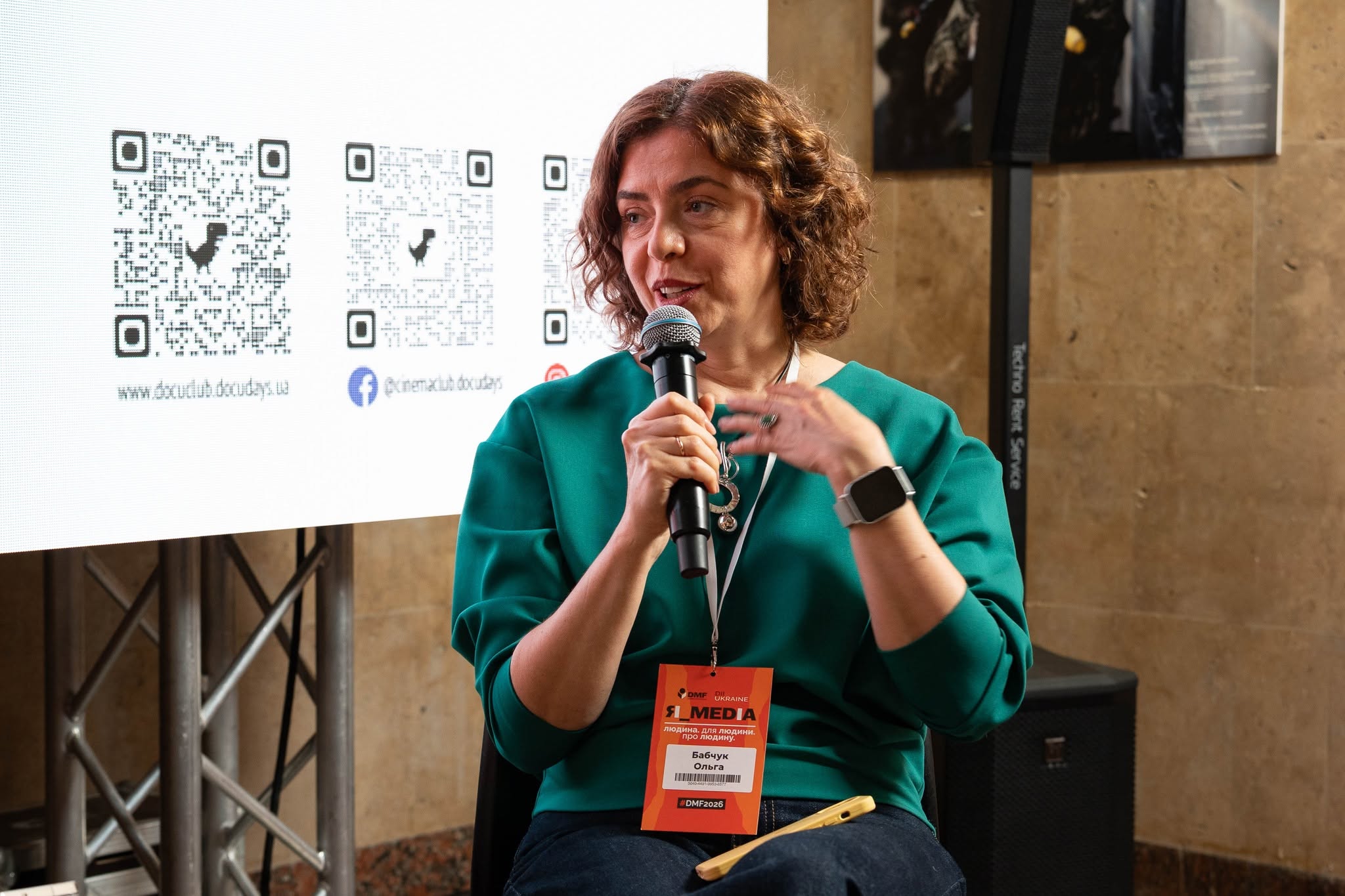
Photo: Olha Babchuk
Olha Babchuk emphasized the importance of collaboration between community members, civic activists, and media professionals: “The Docudays UA Film Club Network creates a space where documentary films serve as catalysts for discussions about human rights, social issues, and responsibility. It’s important to us that, after watching a film, people don’t remain mere spectators, but seek solutions and drive change in their communities. Collaboration with the media helps make these stories visible, engage a wider audience, and share experiences that can inspire other communities.”
Participating in the Donbas Media Forum for the second year in a row enables the Docudays UA Film Club Network to strengthen ties with the journalism community and explore new formats for collaboration. Documentary film and the media have much in common: they help society make sense of complex events, bring people’s experiences under the spotlight, and raise issues that demand attention.
For regional media, this can be a way to engage audiences in meaningful dialogue, discover new topics and partners, and showcase how local initiatives impact people’s lives. For the Network, it is an opportunity to raise awareness about documentary films and support communities working on issues of human rights, critical thinking, and social change.
The development of the DOCU/CLUB Network is funded by the Embassy of Sweden in Ukraine, Fondation de France, and the Czech organization People in Need within the framework of the SOS Ukraine initiative.
The opinions, conclusions, or recommendations are those of the authors and compilers of this publication and do not necessarily reflect the views of the governments or charitable organizations of the respective countries. The authors and compilers are solely responsible for the content of this publication.
All news