
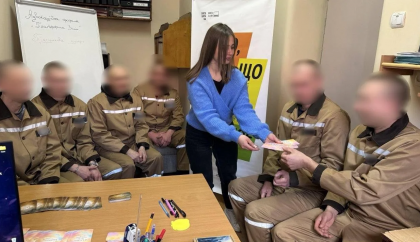
Society often shuns people who have committed crimes, believing that their isolation automatically solves the problem: they face heavy, locked doors, corridors resounding with footsteps, and a view through iron bars. However, every punishment has its limit. Sooner or later, the doors will open, and the convicts will be released.
Reprinted from News of Ternopil Region.
What will they bring back – bitterness toward the whole world and profound psychological traumas, or a conscious desire to start life from scratch? The answer to this question depends on whether a person receives support while deprived of freedom. Isolation without rehabilitation merely prolongs the pain and leads to repeated offence.
To break this vicious cycle, Viktoriya Symchak, the leading psychologist at the social, educational, and psychological department at the Chortkiv Correctional Facility № 26 and moderator of the “Light Through the Bars” documentary film club, initiated a unique advocacy project “Platform for Change: Reintegration of Inmates into Society” to break down the wall of alienation and prepare convicted individuals for reintegration into society through legal education, documentary films, and genuine psychological support.
Apart from simply following job instructions, working at the correctional facility involves daily encounters with immense human suffering and crisis situations.
The responsibilities of Viktoriya Symchak and her colleagues comprise the most challenging aspects of psychology: “We conduct initial assessments of newly arrived inmates, diagnose them, and work with people who are at risk — that is, those prone to self-harm or suicide. We give lectures, organize training, and hold therapeutic sessions. I also screen documentaries for them.”
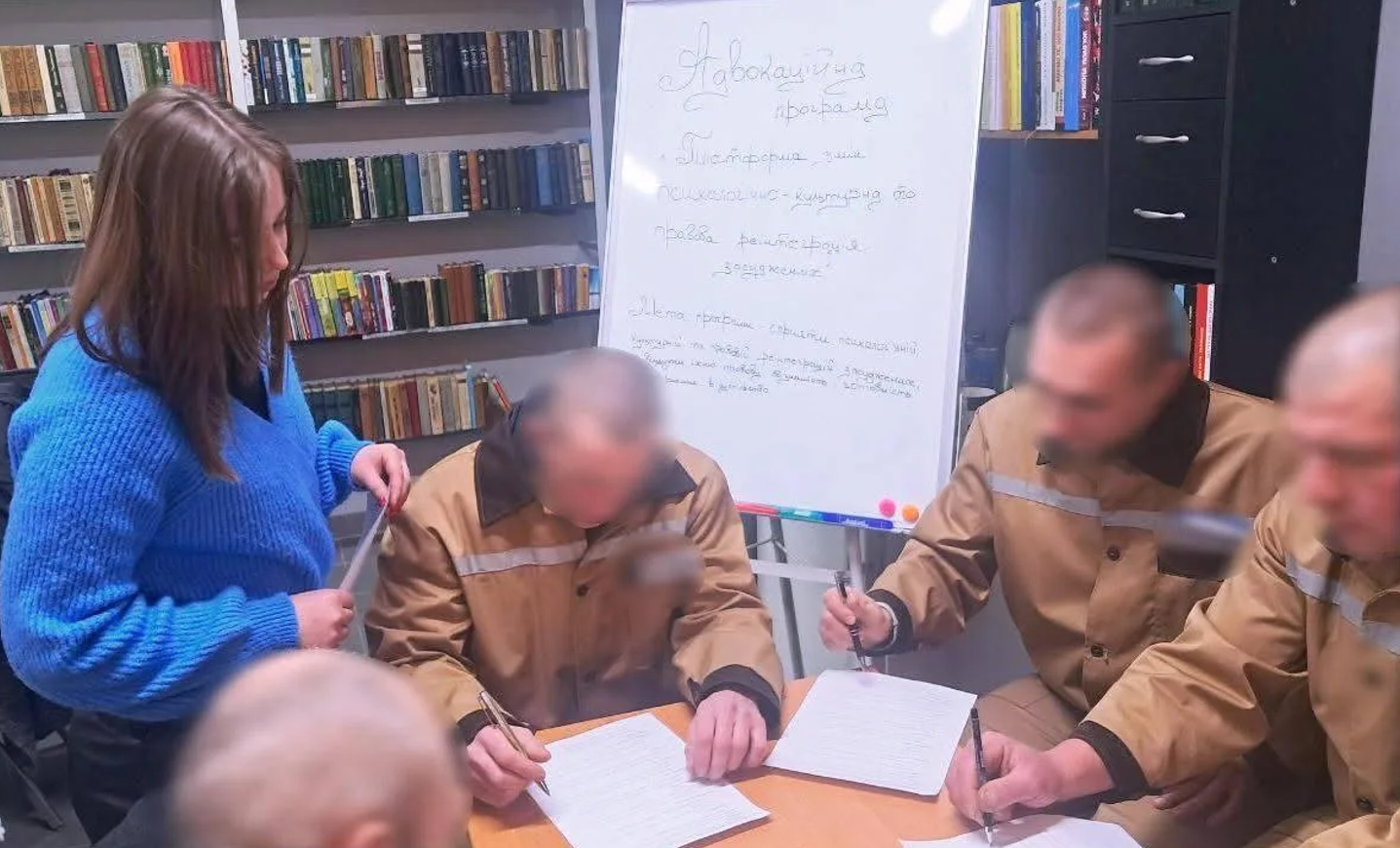
Participation in the “Platform for Change” involves active self-development
According to Viktoriya, the film club meetings and discussions of human rights documentaries from the DOCU/CLUB Network’s collection inspired her to think about her own advocacy project.
The main reason the moderator created the “Platform for Change” is the tangible lack of modern, non-coercive, and effective tools for the resocialization of convicts. They often perceive traditional lectures and training sessions as a formality or as part of the system’s pressure.
People who are under investigation or serving sentences tend to be extremely withdrawn, distrust the facility’s staff, and defend themselves with psychological armor. To help them understand the causes of their offenses and prepare them for a return to civilian life, entirely new formats that are capable of building trust and stimulating transformation from within are required.
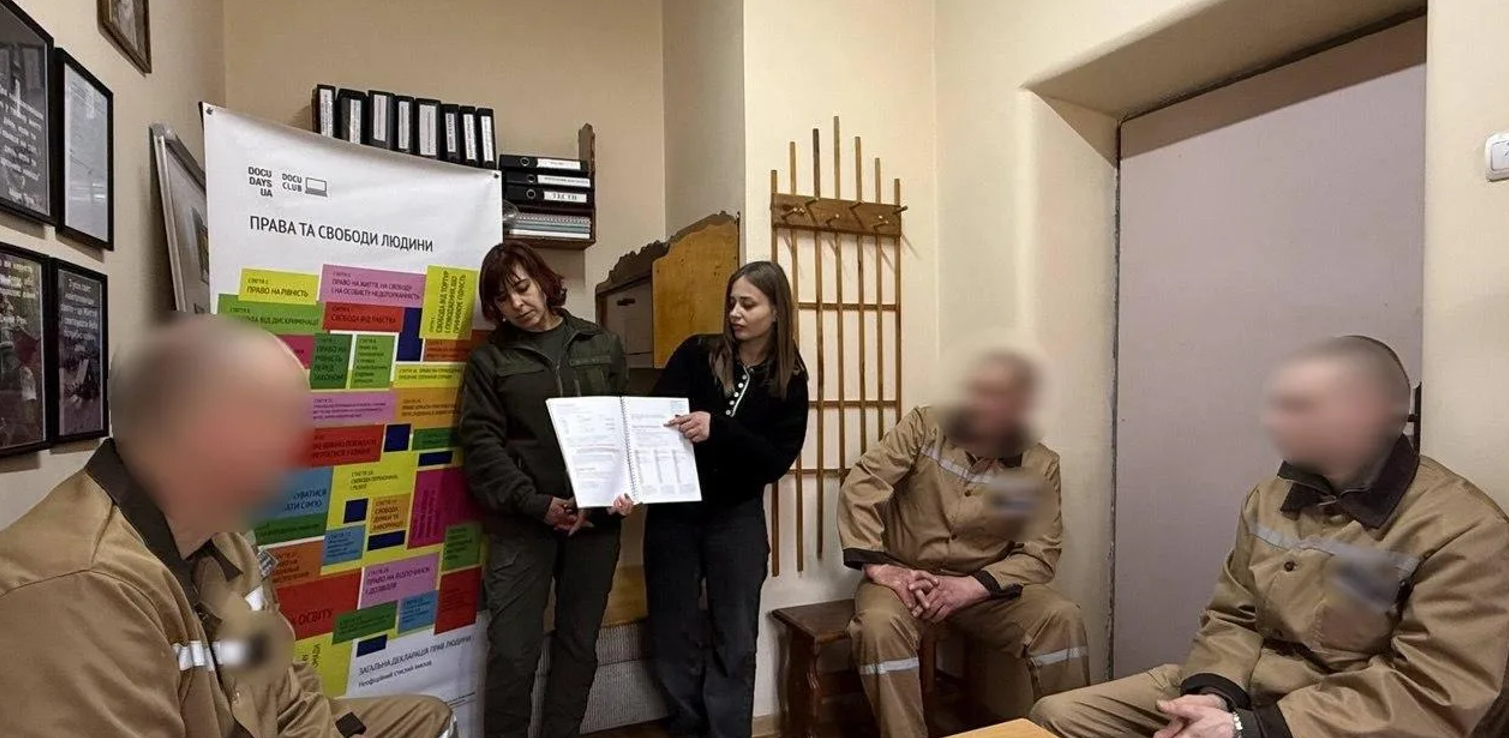
A meeting dedicated to working on the advocacy project
The Docudays UA media literacy film club, with the evocative title “Light Through the Bars,” part of the nationwide DOCU/CLUB Network of film clubs, helped build a bridge of trust with the inmates. Viktoriya Symchak explains that human rights documentaries, without unnecessary didactic lectures, prompt viewers to reflect on life. When convicts see real-life stories on screen of people facing difficult challenges, making choices, and defending their rights, it triggers a powerful process of self-reflection. Discussion of films at the film club creates a judgment-free space where everyone is heard and treated as an equal.
However, the project team went even further by combining film screenings with the most up-to-date psychological practices. Viktoriya Symchak incorporated strategic integrated games, metaphorical cards, and special transformational games into the “Platform for Change” program. These tools are actively used by psychologists in the civilian world, but they are rarely employed in correctional facilities. “For inmates, this is an unusual and interesting way of working; such methods encourage them to engage in communication, which is the key to success,” says the expert.
The combination of film screenings, legal education, and transformational games has had an incredible effect. Inmates gradually began to open up, speak about their hidden fears regarding their return to freedom, analyze their own legal mistakes, and learn basic tools for conflict-free communication. The program helps them regain lost social skills, understand their rights and responsibilities, and, most importantly, believe that society will not reject them if they change. Importantly, the “Platform for Change” is designed for both adults and minors, as it takes into account the age-specific needs of participants.
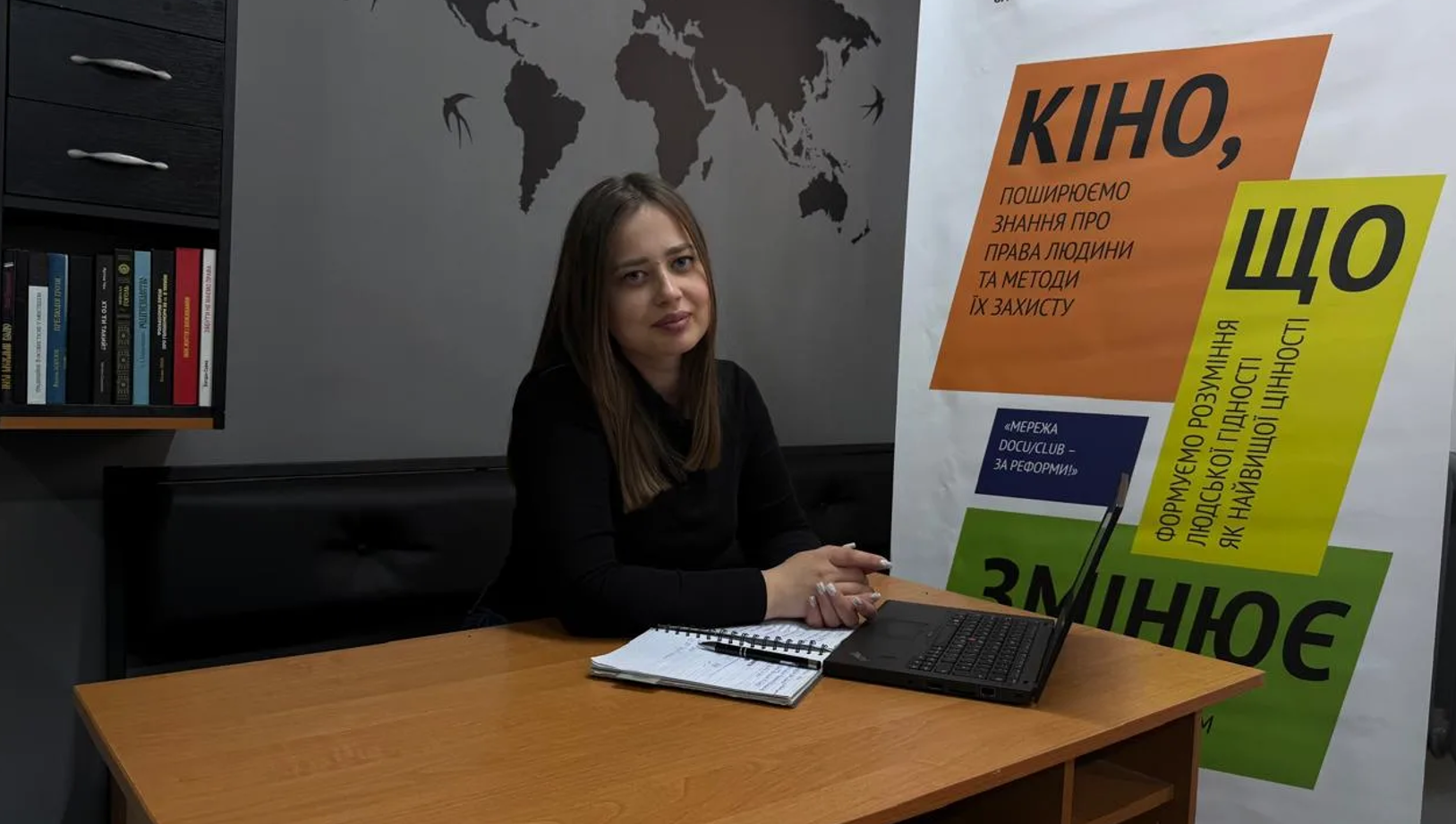
Viktoriya Symchak, psychologist and creator of the “Platform for Change”
“I am confident that the implementation of the ‘Platform for Change’ project is beneficial not only for prisoners and convicts,” the program’s creator asserts. “The repeated offense rate in Ukraine remains high precisely because former convicts are released into a complete vacuum: without a job, without housing, and without the psychological readiness to live within the framework of law.”
Viktoriya Symchak’s psychological, cultural, and legal program prepares individuals for these challenges in advance, reducing the risk of repeated offense.
For correctional facilities in Ukraine, the experience of Chortkiv Correctional Facility № 26 exemplifies a modern approach to resocialization, in which legal education, psychological support, and documentary films form a humane and effective model for working with inmates.
The introduction of film clubs and interactive games into the daily operations of correctional facilities enables staff to more effectively identify inmates at risk, prevent incidents of physical harm, and significantly reduce overall aggression among inmates.
Viktoriya hopes that, when her colleagues from other institutions adopt this approach, work with inmates will reach a new qualitative level, and the correctional system will be able to bring safe, responsible, and reintegrated citizens back to society.
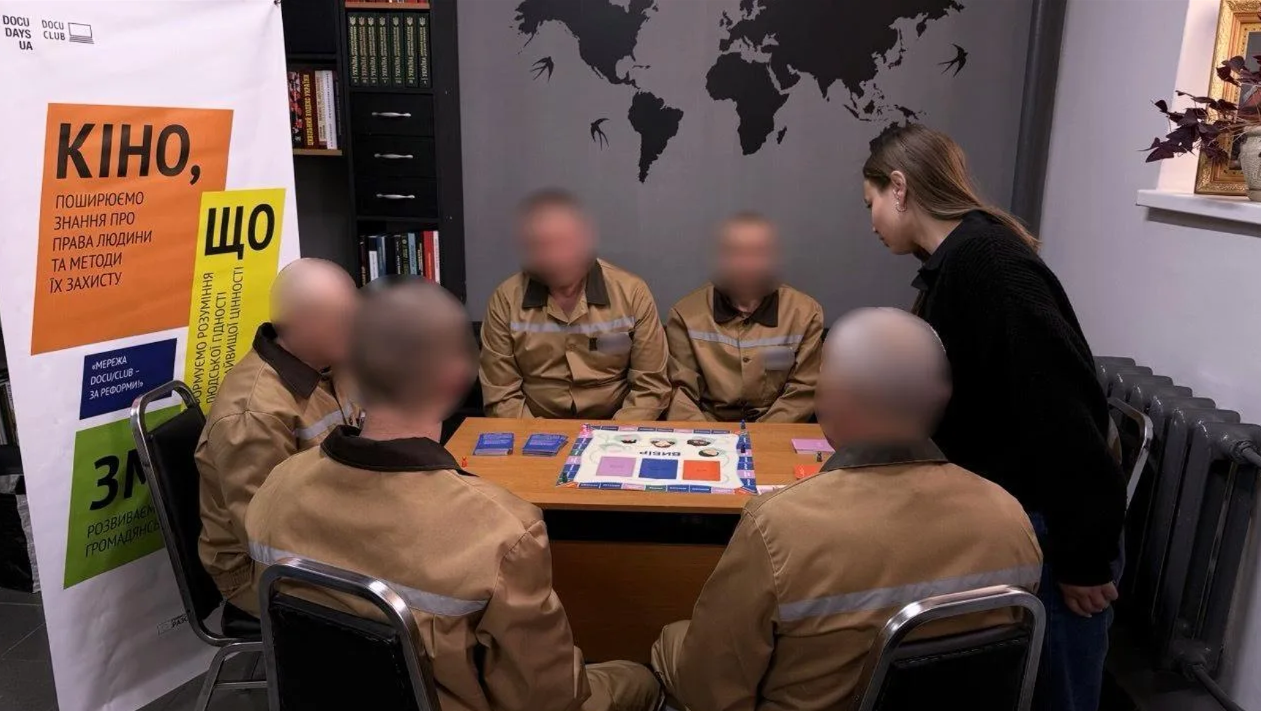 Starting from 2026, the “Platform for Change” will be implemented in correctional facilities in the west of Ukraine
Day-to-day work at a correctional facility, witnessing so many difficult human stories and moments of crisis, is an enormous emotional burden. Indeed, one could choose a much easier and more financially rewarding path.
When asked what exactly keeps her in this challenging line of work, Viktoriya Symchak answers with remarkable sincerity: “What keeps me in this job is the opportunity to help change the lives of people who cannot deal with it on their own. While an ordinary person on the outside understands their own problems and can find a way to look at them from a broader perspective, there is no such opportunity in a confined environment. For inmates, a lot depends on access to specialists who are ready to provide support and assistance.”
The “Platform for Change: Reintegration of Inmates into Society” project was created to make more space for humanity, legal education, and increased opportunities for inmates to start a new life within the correctional system, behind thick walls and iron locks. This year, it will be launched at all the correctional facilities in western Ukraine. This is crucial because real public safety involves not only with punishment but also opportunities for people to change and return to a fulfilling life.
The project is implemented with the support of the DOCU/CLUB Network, funded by the Embassy of Sweden in Ukraine, Fondation de France, and the German Marshall Fund of the United States of America.
The opinions, conclusions, or recommendations are those of the authors and compilers of this publication and do not necessarily reflect the views of the governments or charitable organizations of these countries. The authors and compilers are solely responsible for the content of this publication.
All news