Everyone in Kherson knows Zarina Zabrisky. She is the only foreign journalist permanently residing in the city. Day by day, for more than three years now, she has been telling audiences abroad about Russian crimes.
Reprinted from Rayon.Media.
For many years, the woman with an American passport and Ukrainian roots was a writer, until she realized that a film could reach a broader audience more quickly and internationally. This was the beginning of the documentary project Kherson: Human Safari about Russian occupiers hunting down the city’s residents who cling to life amid Russian terror.
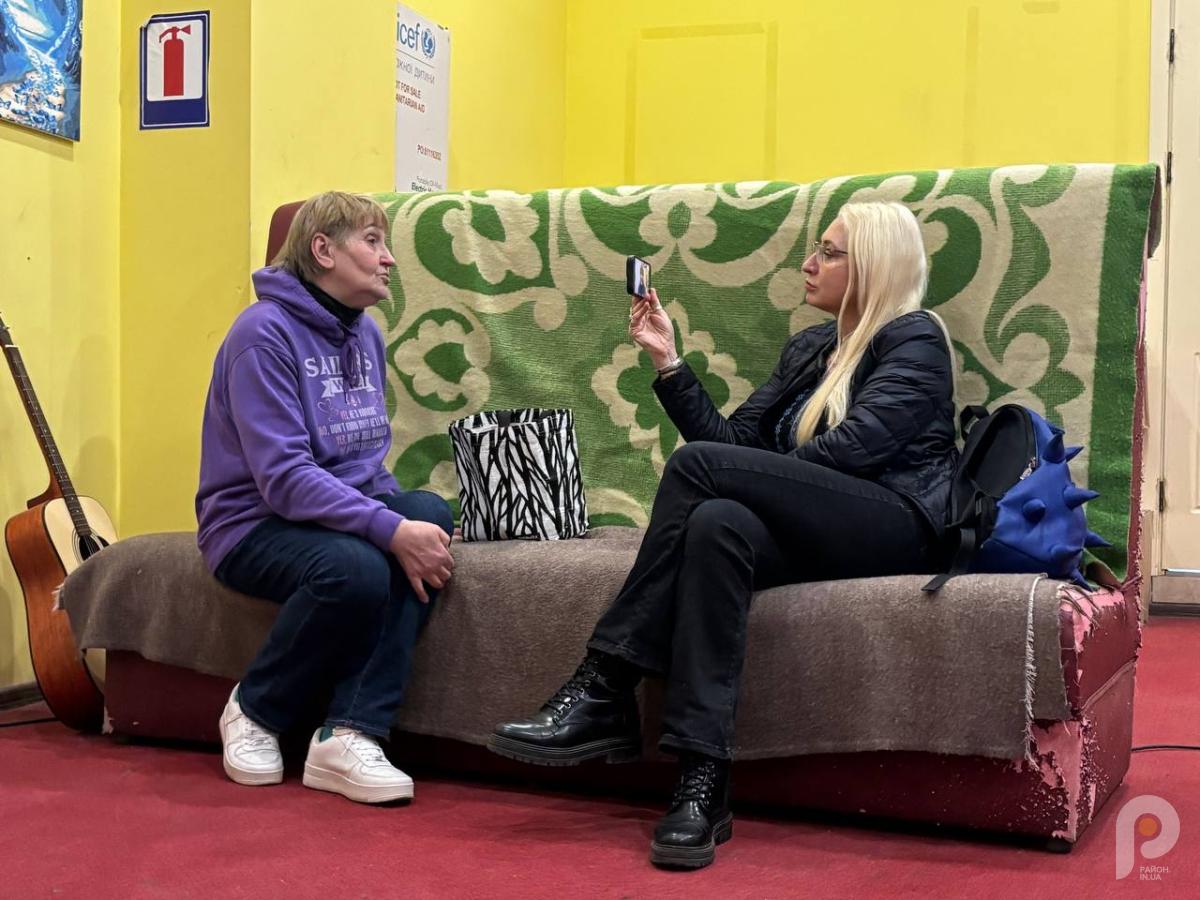
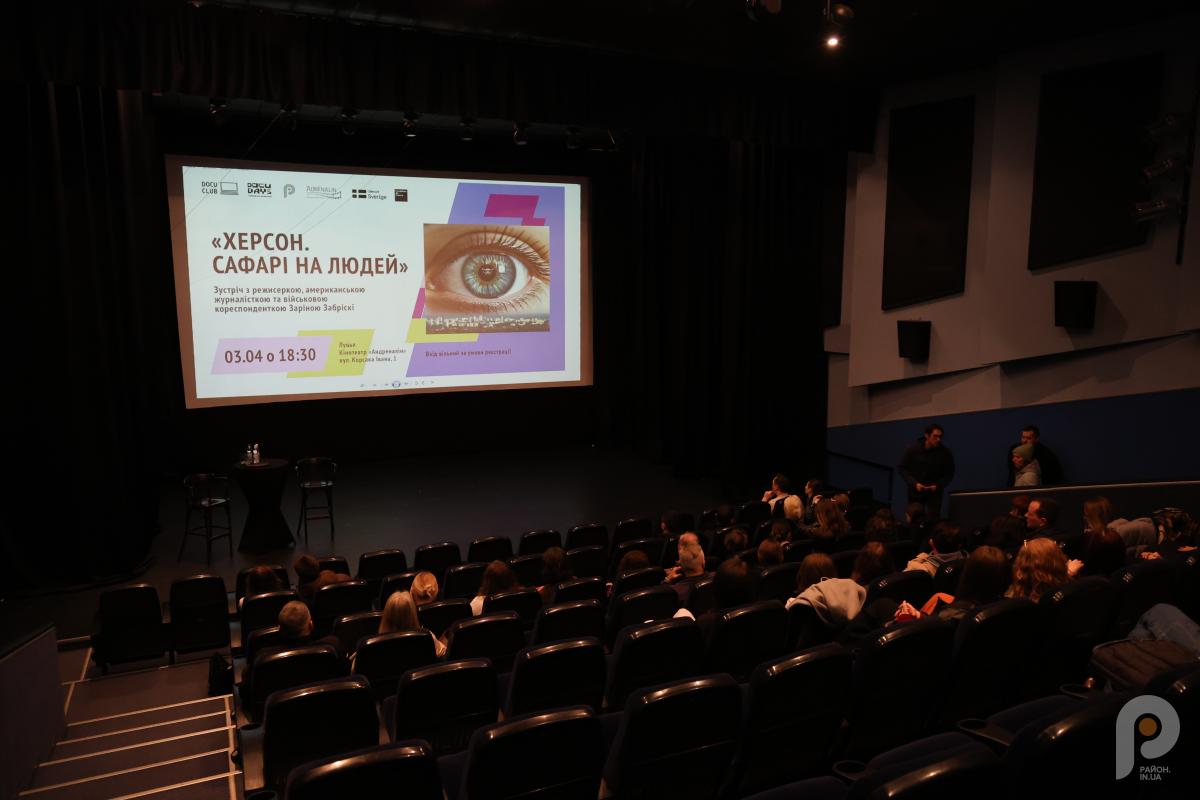
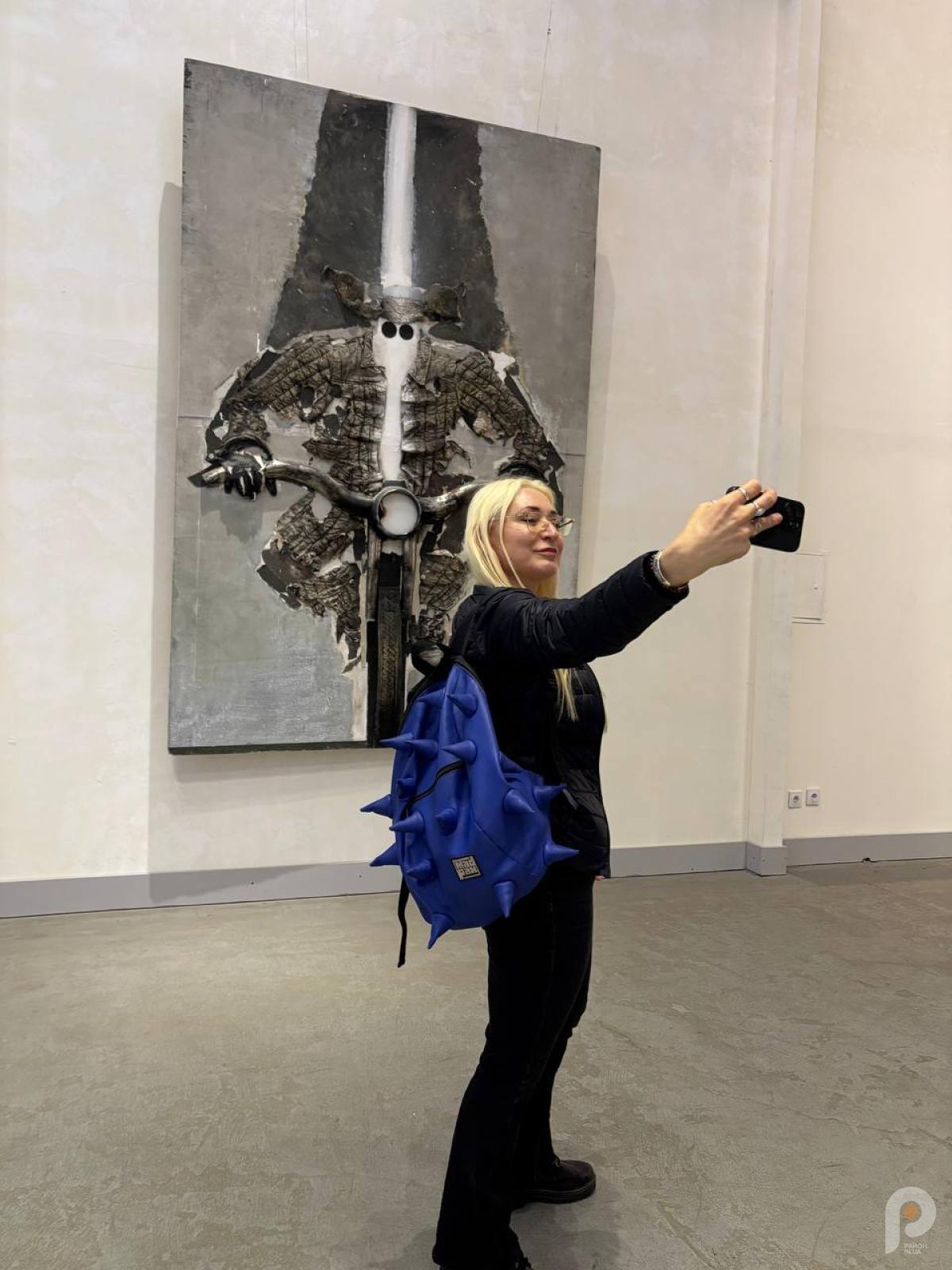
“All kinds of missiles and shells are flying to Kherson,” Zarina describes her daily life. In her film, she urges people from all over the world not to remain silent and to help Ukraine. In her interview with journalist Natalia Pakhaychuk for the Rayon.Kherson media, Zarina Zabrisky, tells how she ended up under Russian sanctions, which she considers her own Oscar, what fascinates her about Kherson, and how she sees Ukraine – united or divided. We’ve recorded this interview on the day of the screening of Zarina’s film Kherson: Human Safari in Lutsk, organized by Rayon.in.ua in cooperation with the DOCU/CLUB Network of documentary film clubs of the NGO Docudays. – You’ve come a long way from Kherson to Lutsk. What is the current situation in the city? – This is my first time in Lutsk. I’ve never been to the Volyn region before, so I’m genuinely curious. I have only seen a bit of the city center and the castle, because I was tired after 18 hours on the bus. Unfortunately, the situation in Kherson is critical. It has only gotten worse between the making of my first and my second films. These Russian crimes are infamously called “human safari”: tiny drones are hunting down civilians, vehicles, animals – everything that moves around the city streets. Hiding from them is difficult, but one can see them approaching. This has been going on since the summer of 2024. This morning, as almost every day, they attacked a city bus, which resulted in eight people being injured. Afterward, five aerial-guided bombs followed. There is also close-range artillery, which is only present in the frontline cities – Kherson, Nikopol, the Sumy and Chernihiv regions, Donbas, and so on. – You have seen the city right after its deoccupation and have been observing the situation for the course of three years. How do you ensure your security and organize your daily routine in Kherson? – Every moment can be your last. We used to have drone detectors that made a squeaking sound when drones were approaching. However, they do not react to optical fiber drones. This is why you have to look under your feet as you walk, because Russians use various types of long-distance mines (formerly “petals,” now “gingerbreads”). At the same time, you have to look up at the sky. Moreover, don’t forget to look left and right, because cars are going at 100 km/h to escape the drones. If you hear an incoming shell with its characteristic whooshing that even children can recognize, you drop to the ground. There is no time to run away. There are bomb shelters at some bus stops or near the stores, but not everywhere. For instance, there are no shelters in my district, so I just go to the first floor during shelling. Backstage of Natalia Pakhaychuk’s video interview with Zarina Zabrisky – For those residents of Kherson who remain in the city, leaving their homes is emotionally complex. You, on the other hand, have come to Kherson, deliberately living there and sharing this misfortune with the locals. What motivates you to risk showing your current life in the city? – I would like to emphasize that most locals are not leaving Kherson because it is their home. They don’t want Russians to occupy it once again. However, there are more practical problems: not everyone has the money for housing and food that would allow them to leave. As for me, I used to be a writer; 10 years ago, I became a journalist covering hybrid war. You know that Russians have launched an information war even before 2014. I’ve been fighting against them for a long time. After the full-scale invasion started, going to the “hot war” zone seemed a logical step: I understand Ukrainian and can even speak it, albeit poorly. I can also speak Russian, even though I prefer not to. This gives me freedom of movement: I don’t need a fixer, producer, interpreter, driver, or bodyguard. I can go to places that are unavailable to my foreign colleagues. Besides, I’m a freelancer, and it’s important for me to make decisions independently. I decided to cover the topics that are not exposed. Unfortunately, Kherson is one of such stories, since I’m the only foreign journalist in the city. However, I don’t feel like a foreigner anymore. I know everyone, and everyone, including dogs, cats, and pigeons, knows me. Zarina Zabrisky recording the interview in Lutsk – You speak Ukrainian very confidently. Do you have Ukrainian roots? – Both my paternal and maternal grandparents came from Ukraine. In the Soviet times, some of the family members who were Jews from Odesa or Uman were killed. Others went to the Far East – many Ukrainians would go to Khabarovsk and Vladivostok, as there were Ukrainian villages in those areas. My grandfather from Odesa went to Leningrad, and part of my family resided there before immigrating to the US. I used to visit Odesa as a child, when my relatives were still alive. This is why Ukrainian South is very dear to my heart. – Do you identify as American, Ukrainian, or Jewish? – There is an amazing film, Casablanca. One of the protagonists, Rick, is being asked, “Who are you?” “I’m an alcoholic,” he replies. Well, I’m not an alcoholic, but I’m a writer. Writers have multiple identities. I’m an American, a US citizen. This is my country, and I love it; however, things are very bad nowadays, including the government crisis. Screening of the film Kherson: Human Safari in Lutsk – You have recently presented your film at the Munich Security Conference. How did the audience react? Do foreigners know about the situation in Kherson, including the human safari? Do your journalistic or creative products help people realize they need to continue helping Ukraine? – I had no experience in filmmaking, but I became a film director because cinema proved to be the most effective way to reach global, international audiences. Nowadays, not everyone can dedicate time to reading a book, but people do watch films. As a producer, I’d worked on the documentary Under Deadly Skies: Ukraine’s Eastern Front together with my colleagues from Great Britain. Subsequently, I realized that a film about Kherson had to be made as well. I did not expect it to become so popular: screenings take place all over the world, and volunteers translate the film into various languages (there are already ten translations). I did not initiate this – I simply published the film in open access, and people started messaging and calling me with requests for screenings. There were weekly screenings in the US, Europe, Australia, and Japan. This is when I started organizing screenings for governments across various countries to influence politicians and call for action to stop this human safari. Does the West know about the situation? Even Ukraine is not aware of it. I received a message from Zhytomyr: “Let us organize a screening, because no one here has heard about human safari.” Other cities are no different. This is why other activists and I organized the global action Stop Human Safari / Save Kherson, which took place in more than 50 countries on six continents. – How can you explain this wave of phenomenal popularity? – It is due to the film, the information it contains, and mere humanity. Viewers watch the film and realize it tells the truth. Foreigners see that people on the screen are no different from them. This leads to the realization that something must be done, as this situation cannot be taken for granted. Many people are empathetic and want to help, but not everyone can donate money. However, everyone can go outside with a banner or post something on social media. It was very touching, because we did not expect such a global scope. Viewers of the film Kherson: Human Safari in Lutsk – Was there any reaction on behalf of the target audience, e.g., politicians whom people in European cities addressed? Maybe some decisions were made, help has been provided, or public opinion has changed? – Unlike in Ukraine, in Europe, nothing happens quickly. However, I am now trying to “pass” the LORA Act. It is something similar to the Magnitsky Act (the legislation act in the USA and some other countries containing a list of Russian officials implicated in fraud, persecution, and human rights violations, particularly those related to the Hermitage Capital Management case and the death of Russian lawyer Sergei Magnitsky, – ed.). The LORA Act will comprise sanctions against Russians, from drone operators to the Kremlin officials and Putin himself. Unfortunately, this is not the main priority in the USA nowadays. We have also conducted the screening and panel discussions at the Munich Conference in cooperation with Kherson Regional Military Administration and the military from the 34th brigade, who explained current events to European officials. For the latter, this information was new, and they needed time to ‘digest’ it. I will be visiting Brussels again at the end of April. We are also working on a European sanctions package and discussing financial aid and support for our militaries with various foundations. – You have mentioned several times the sanctions that need to be imposed on Russia; meanwhile, you’ve been sanctioned yourself. Why did Russia impose sanctions on you? What do they mean, and what risks do they pose? – I am proud of this. As soon as it became known, my phone literally exploded with calls and congratulations. It was comparable to winning an Oscar or the Nobel Prize. Practically, this means I cannot enter the territory of the Russian Federation, Belarus, or their satellites. This is totally okay, as I wasn’t really planning a vacation in Siberia anyway. Byline Times, the newspaper I collaborate with most, has the most sanctions in all of Great Britain, even more than The Telegraph and The Guardian, despite being just 10 years old. I am proud to be writing for this newspaper. Our editor in chief even visited Kherson and stayed close to the frontline – not everyone dares to do this. I ended up on the sanctions list because I’ve done and continue to do a lot of damage to Russians. I have written many materials about Russian propaganda. One example is ‘doppelgangers,’ or copied websites. For instance, they replace one letter in the New York Times, turning it into the New York Timez. No one notices this. They fill the fake website with real articles, add their own narrative to one of the materials, and start pushing it. The material ends up in the information space, where, for instance, Indian media start spreading it to the West. This campaign was huge. In Kherson, you cannot leave home after 4 PM: first of all, there are drones, and second of all, there are stray dogs that attack people. This is why I had a lot of spare time to write this article. I thought no one would read it because it’s quite complicated. However, people in the Kremlin saw it, translated it into Russian, and brought it to their president’s administration. Subsequently, someone leaked their documents, which ended up with the US Department of Justice, which then passed them on to the FBI. This happened back when Biden was in office; a court case followed, and sanctions were imposed on 12 websites. – This is an example of the real impact of the journalistic, fact-checking work. As journalists in Ukraine, we are often underappreciated: “Well, your writing doesn’t really change anything.” – This is not true. All my colleagues in Kherson are heroes, real professionals doing their journalistic work. For instance, Russians can throw explosives on a city bus, injuring and killing its passengers, and then write that it was a “dual-purpose transport.” My colleagues and I, on the other hand, arrive at the place of the accident, make a report, photograph fragments of Russian drones with Russian inscriptions, as well as carrots, potatoes, and everything passengers carried on that city bus. This ensures people that it was a Russian fake: it was just an ordinary city bus on its route from the market, taking older women or medical personnel home. – How do you take care of yourself in these circumstances to continue doing what you consider right? – I am not alone. About 10–15 journalists work in Kherson, and we all help each other. I have many friends among the locals, and we spend time together. I often say that Kherson is an athletic city: everyone here loves sports. I do yoga in a studio and go to the sauna with my girls. Of course, we have to get there under artillery shelling, but life still goes on. There is a theater in the city, which has already had seven premieres since the beginning of this year. The cultural life is vibrant: people are embroidering, painting, writing poems, and congratulating each other on their birthdays. All of this is exciting. – The resilience of Kherson residents is amazing, and all of this seems unbelievable. It hardly even sounds like truth… – I’m aware of that, and this is why I make films that prove it’s true. One cannot keep faking something like this for two years straight. My protagonists are not actors, and the viewers see that. For instance, today was horrible, real hell – buzzing drones, aerial guided bombs, vehicles on fire, as if in a Hollywood film. I called my friends and messaged my yoga teacher: “How are you?” She has been wounded, and I showed this in my film. A drone severed off a fragment of her palm; she had it stitched up, and now she’s back to teaching. Her reply was, “What’s the matter? Everything OK, I was in a class.” Then, she sent me a video of some girls doing nice yoga positions in a bomb shelter. Zarina Zabrisky at the Korsak Family Museum in Lutsk – There is hope that justice will prevail, but we see the world taking a step back, with the US president rolling out the red carpet for Putin. Nevertheless, Ukrainians are waiting for trial and punishment, real sanctions, reparations, and prison sentences for those culpable in this tragedy and the deaths of Ukrainians. Will the world ever deliver justice regarding Russia? – I am no clairvoyant, and I cannot predict the future. However, as history shows, justice is ultimately achieved in most cases. I hope for a future Nuremberg trial of our own – a tribunal in Kherson that will prosecute all the perpetrators of these crimes. I also hope that my reports, as well as those by my colleagues, will serve as evidence for these tribunals. I have gathered a large amount of information about torture, not only in Kherson but throughout the occupied territories. Right now, I am working on a difficult story about Oleshky, Hola Prystan, Nova Kakhovka, and Zburyivka. These towns and villages along the Dnipro River are currently under blockade. They lack food, water, electricity, gas, and communications. The entire area is mined, and Russian drones hover overhead, hunting people down. This horrific, insane situation receives scarce coverage because the information is hard to obtain due to poor connectivity. Two of these interviews are already available as podcasts, and I will continue working to show that Russians are preventing people from burying the dead. They don’t bury their own, and they don’t let locals do it, either. The situation is quite similar to that at the World War II concentration camps. – As you’ve mentioned several times, the situation in the USA has changed. We want to believe that it’s only true about the political elite, and that the support of the American people is unwavering. How are the Ukrainian issue and the US support of Ukraine perceived within American society? – I wish I could say everything is wonderful, we enjoy broad support, and only the political elite resist it. However, this wouldn’t be true. There are the US South and West, and these regions have significant ideological differences. In New York, Boston, and San Francisco, there are many universities and academics. People there tend to be more interested in politics and the news in general. Since the beginning of Russia’s full-scale invasion, I have only been to the USA three times. I traveled across the country and talked with people in various states. People in Oklahoma don’t know where Ukraine is located. They hardly know anything about other countries; for them, it’s quite challenging. Natalia Pakhaychuk and Zarina Zabrisky at the presentation of the film Kherson: Human Safari in LutskExposing the unseen
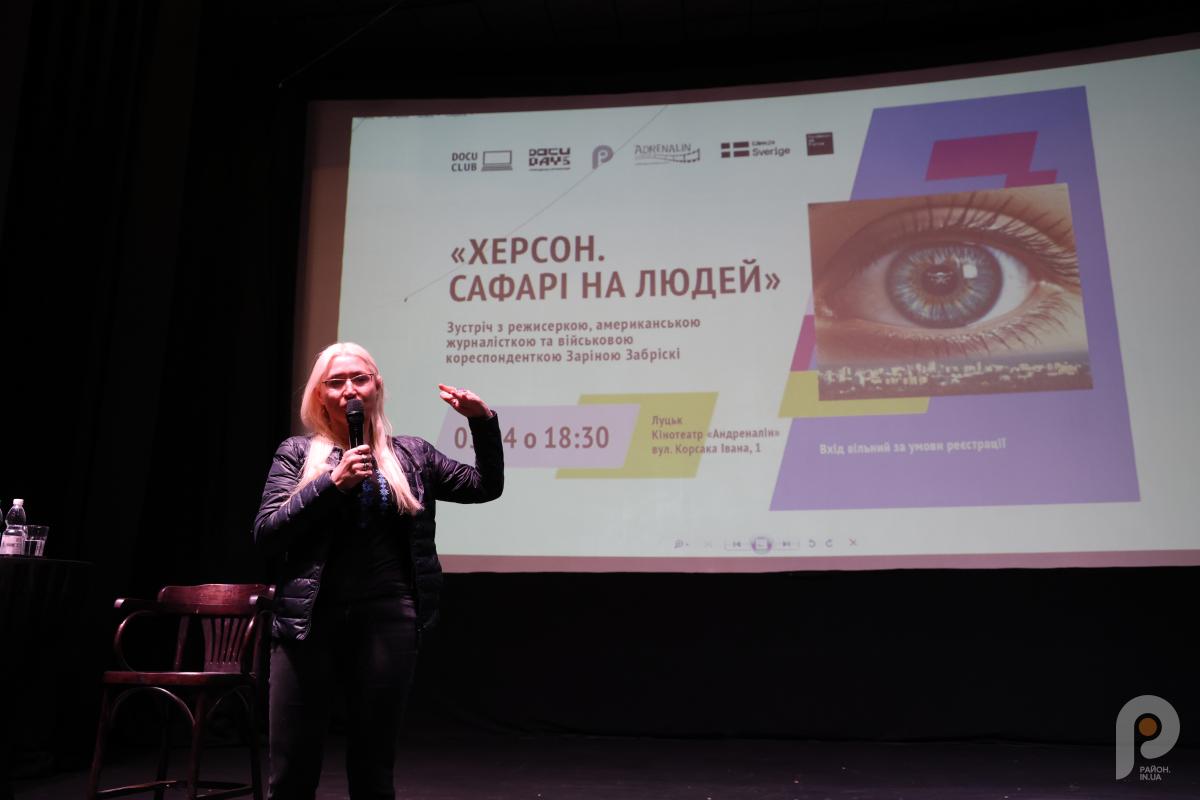 Zarina Zabrisky presents her film Kherson: Human Safari in Lutsk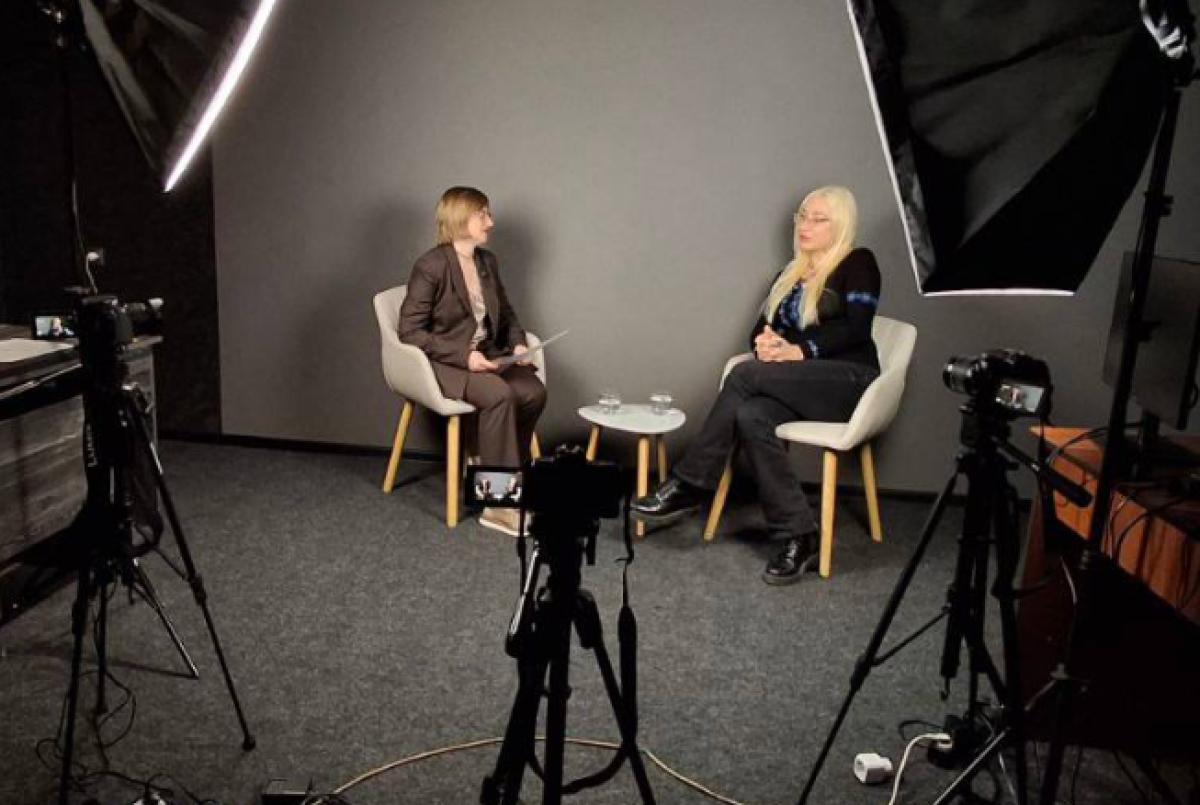
I did not expect the film to become popular
We’ve tried to organize a similar action in Kherson, but it’s impossible due to all the drones. We couldn't do it on social networks either because people were too scared.
Globally, though, we created a spark that started the fire. It was extremely powerful. 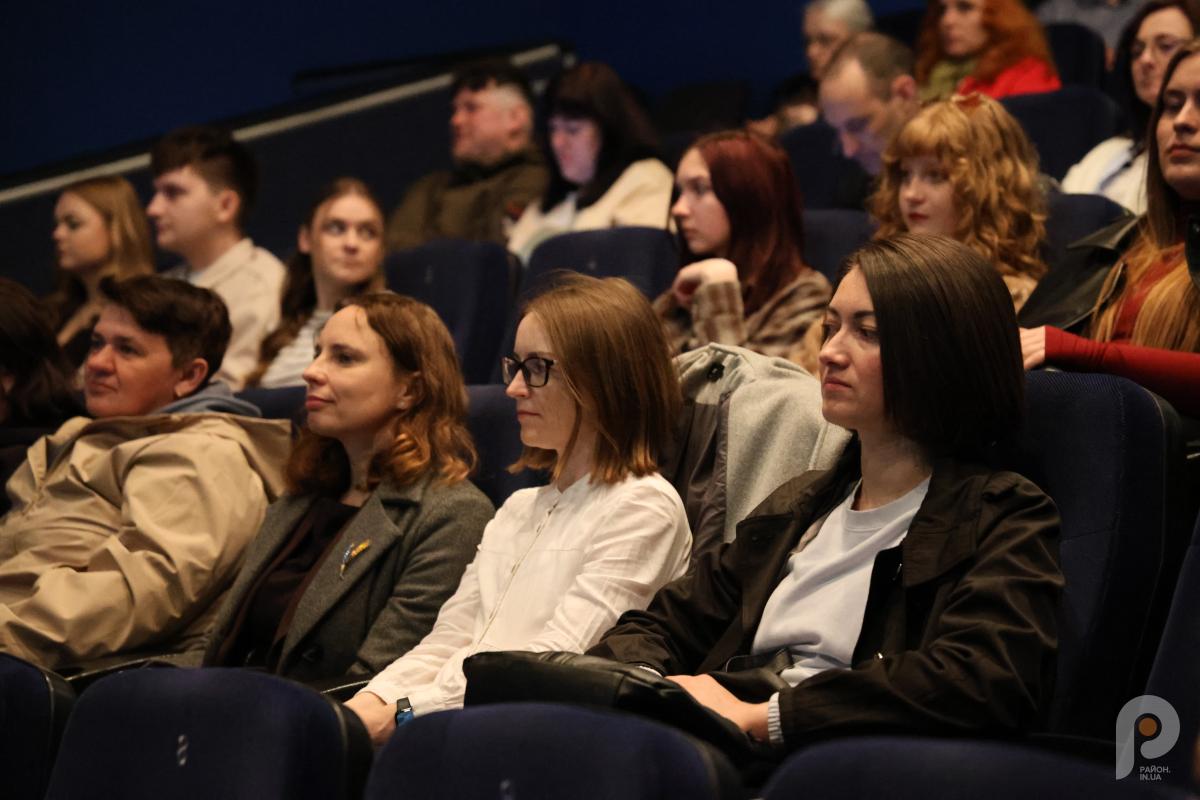
I’ve done and continue to do a lot of damage to Russians
Then there are small-town states like North Dakota, South Carolina, and Arkansas, where people hardly ever travel and are unaware of world events outside their states.
Those who do know mostly support Ukraine. There is no support for Russia, except from ethnic Russians, of whom there are plenty. You can see their flags; they can be aggressive and even conduct their Bessmertnyi polk (Immortal Regiment – transl.) demos.
Americans are a diverse bunch, though. There are many Iranians, Mexicans, etc, and everyone has their own problems. Society is sharply divided between pro-Jewish and pro-Palestinian camps, and there are constant disputes. This is why Ukraine is not their top priority.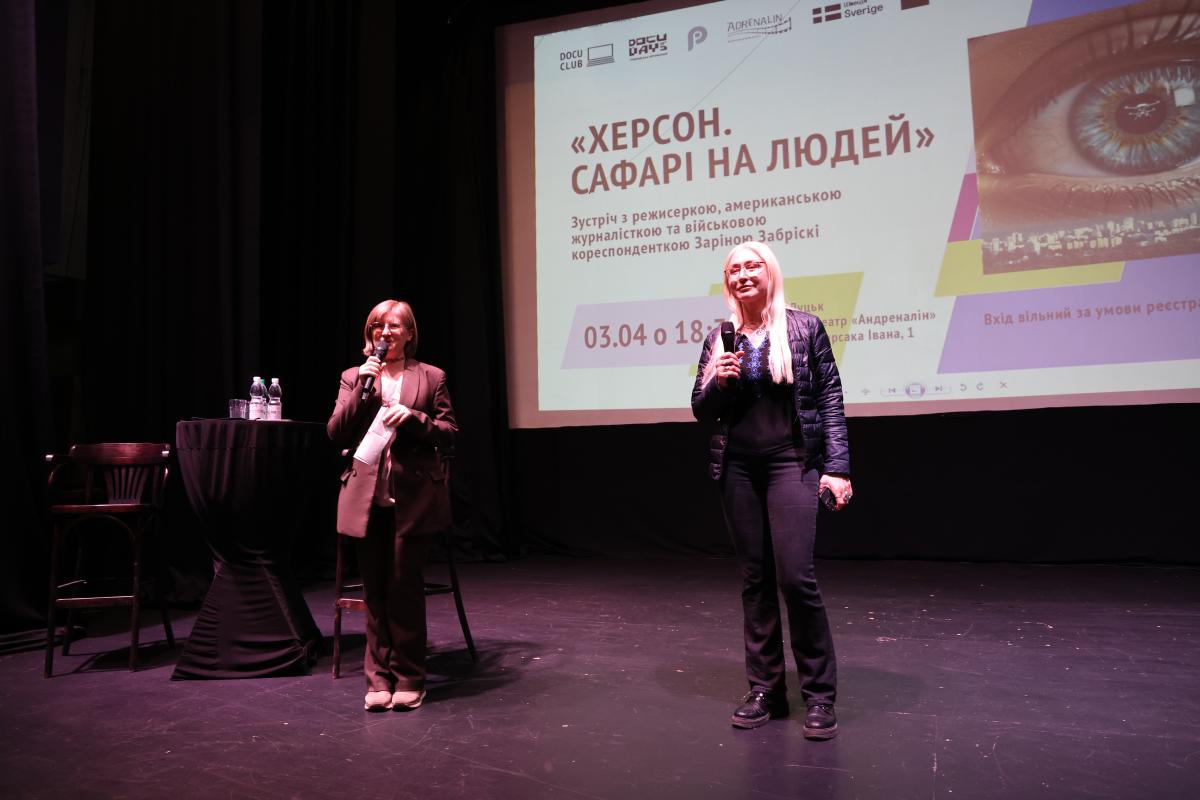
It’s wonderful that you are all different
– You’ve mentioned the low level of mobility of Americans. This problem is familiar to Ukrainians as well: most people have never left their district, let alone their region. For example, I’ve never been to Kherson. What are your observations regarding Ukrainians and Ukrainian regions? Are we different or divided?
– I don’t think this is about regional differences. I can see the division and the way Russians are trying to co-opt it and push it via social media. In accordance with the “divide and conquer” principle, they instrumentalize language and national issues.
I have mostly traveled through the frontline regions, but I’ve also been to the Carpathian Mountains in the Transcarpathian region, in Truskavets and Lviv, and now I’m finally in Lutsk.
Maybe you won’t like these words, but I’m a foreigner, so I’ll risk telling this. After the full-scale invasion, as I’ve been waiting for my accreditation, I could not eat, drink, or read anything. I could only translate stuff from Ukrainian and Russian Telegram channels for Twitter.
The only thing I could watch in San Francisco back then was Servant of the People on Netflix to learn the language. At the end of that series, there is an episode where everything falls into place like a puzzle: the country can choose one path and fall apart, or choose another and become a single nation, a unified community.
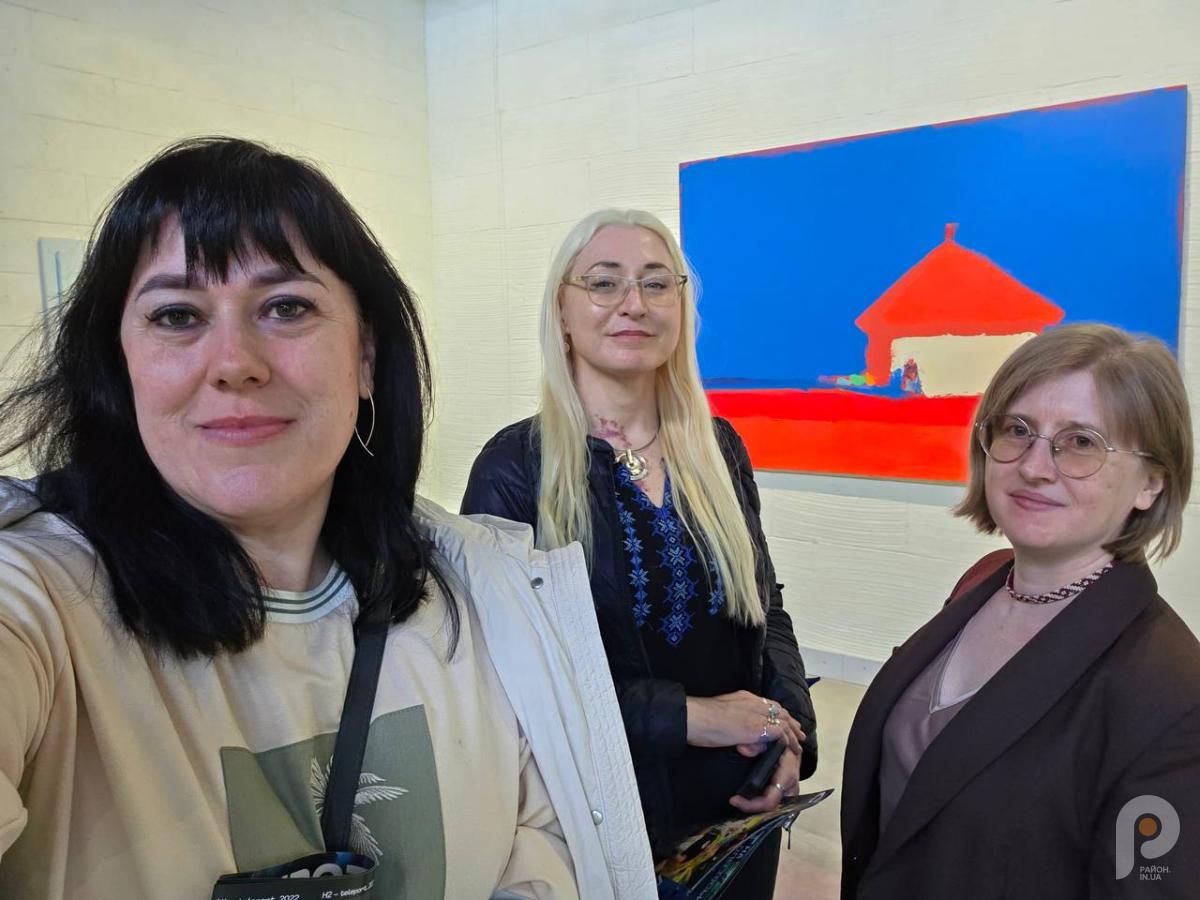
Olha Bulkovska and Natalia Pakhaychuk, journalists of Rayon.in.ua, with Zarina Zabrisky at the Korsak Family Museum in Lutsk
You share the same culture and language. As for dialects, they exist in many countries – take Germany, which has nearly a hundred of them, or Belgium, which has three official languages. In contrast, every village in Flanders alone has its own dialect. It’s wonderful that you are all different. I have seen a beautiful medieval castle and amazing architecture in Lutsk. In Odesa or Uman, the city of my ancestors, architecture is completely different. This is really interesting.
– In October 2022, during the exchange program for Ukrainian journalists organized by the IRE, American journalists asked me the same question. At the time, I explained it similarly: Ukraine is huge and therefore diverse. However, they linked this to the Russian and Ukrainian languages. They argued that Russian-speaking Ukrainians should be incorporated into Russia and saved; therefore, waging this war is acceptable.
– I can give you a great answer to this. In the USA, we mostly speak English, which does not mean we should be annexed to Great Britain. The same is true for Mexico and Spain, or Brazil and Portugal. This is absurd.
– Are you going to present your film everywhere personally?
– I am always happy to tell something in person rather than via Zoom, because I know how helpful this can be. Leaving Kherson is emotionally hard for me, though. All hell broke loose in the city now, while I’m not there. Thus, everything will depend on the situation in Kherson.
– What message would you like to deliver to the audience?
– Do not remain silent about Kherson and Ukraine. This is an information war. Everything we say, everything we think about is a weapon. The enemy is very powerful and cunning. They cannot wait for us to grow tired and unconcerned and go back to our mundane lives.
Kherson is Ukraine. About 60,000 residents remain in the city, of whom 5,000 are children. Every day, they go to work and continue walking the streets of their city, which is now almost impossible. They need support. They need people to know about them. This depends not only on journalists, but on every person. Tell your neighbor, friend, or relative about this. Every person can do something.
The project is implemented with the support of the DOCU/CLUB Network, funded by the Embassy of Sweden in Ukraine and Fondation de France.