
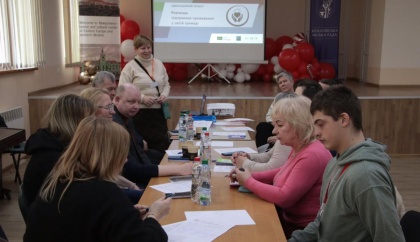
Imagine that, day by day, other people decide for you when you wake up, what you eat for breakfast, where you go for a walk, and who to communicate with.
Reprinted from Rayon.IN.UA.
For most of us, this sounds like a plot of an anti-utopian novel; however, this is everyday reality for thousands of Ukrainians with mental impairments or disabilities, living in confined facilities. From the viewpoint of human rights, these huge post-Soviet facilities are often considered places of deprivation of freedom, because their patients are entirely deprived of a chance to control their own lives.
The state deinstitutionalization strategy requires gradual closure of these isolated institutions. What about people who need help around the clock, though? The alternative is the social service of assisted living, which was officially included into the registry of the basic social services in Ukraine in 2022. However, in practice, few people know about this service, and local communities are absolutely not ready to provide it.
In order to resolve this impasse, the Docudays UA documentary film club at the NGO “Center for Cultural Initiatives ‘Fortress Ung’” in Uzhhorod initiated the advocacy project “Implement Assisted Living in Your Community. Introducing Assisted Living Services for People with Disabilities and IDPs in the communities of Zakarpattya.” Larysa Shuvalova, the film club moderator, is convinced that this civic initiative will teach the community to be more compassionate.
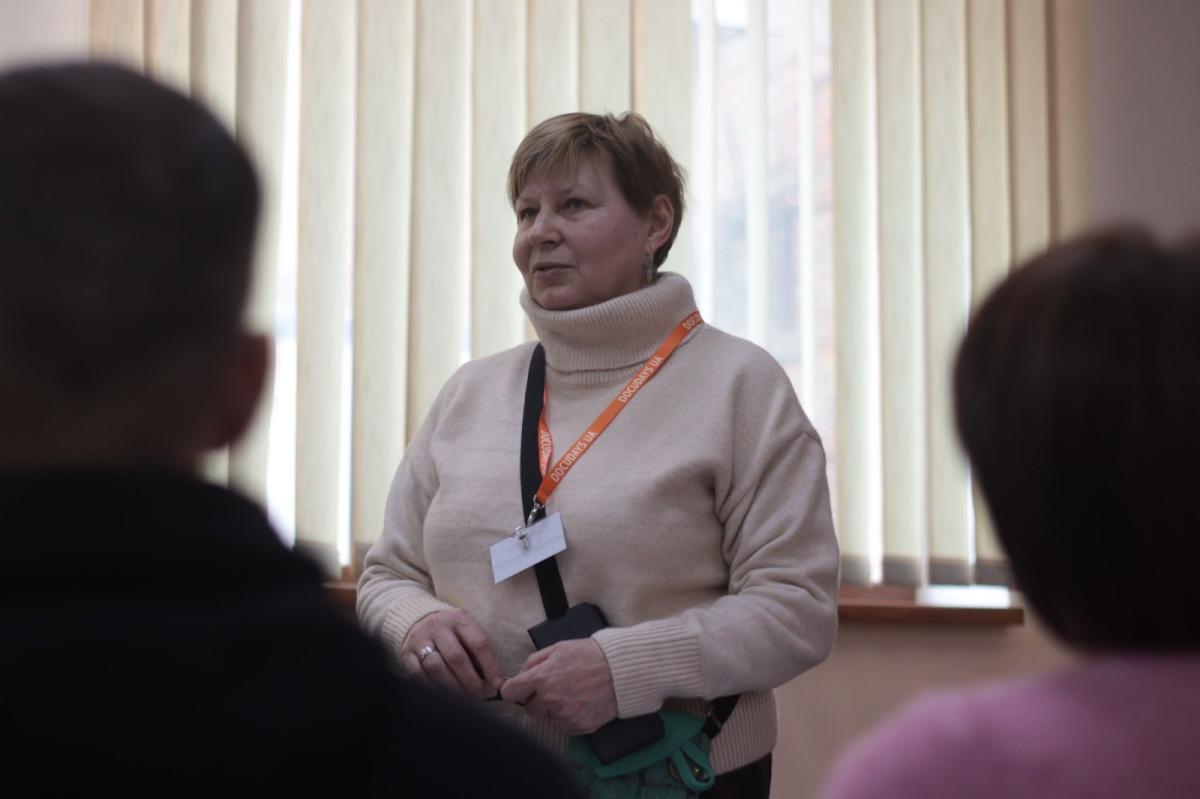
Larysa Shuvalova
The idea of this project emerged from authentic fear and love. For several years now, Larysa Shyvalova has been cooperating with the “Caritas Uzhhorod” Charitable Foundation and the “Nadiya” Association for the Protection of People with Disabilities in Uzhhorod. These organizations were created by parents of children with mental impairment.
“These parents are very concerned about their children’s future. How will they live when their parents are gone? That’s why the parents would like to create a home where their grown-up children could live with support from the community,” says Larysa.
Although assisted living practices are common and widespread in Europe, Ukraine is still making the first steps in this direction. There is already a case in Zakarpattya where, due to support from international sponsors and religious communities, a former parish house has been repurposed for these services. However, community efforts are just a drop in the bucket. The service must operate at the systemic, nationwide level. The key role in implementing assisted living services is played by the communities.
What are the state standards for assisted living? According to them, a person with disability or an elderly person should either live in a small house designed for 6–8 people or in their own home. Most importantly, they are assigned a social worker who acts as an assistant. This comprehensive assistance involves not only social services but also medical professionals, psychologists, and lawyers. A person continues living in the community, going to the store, and having their own space, while receiving necessary guidance and support.
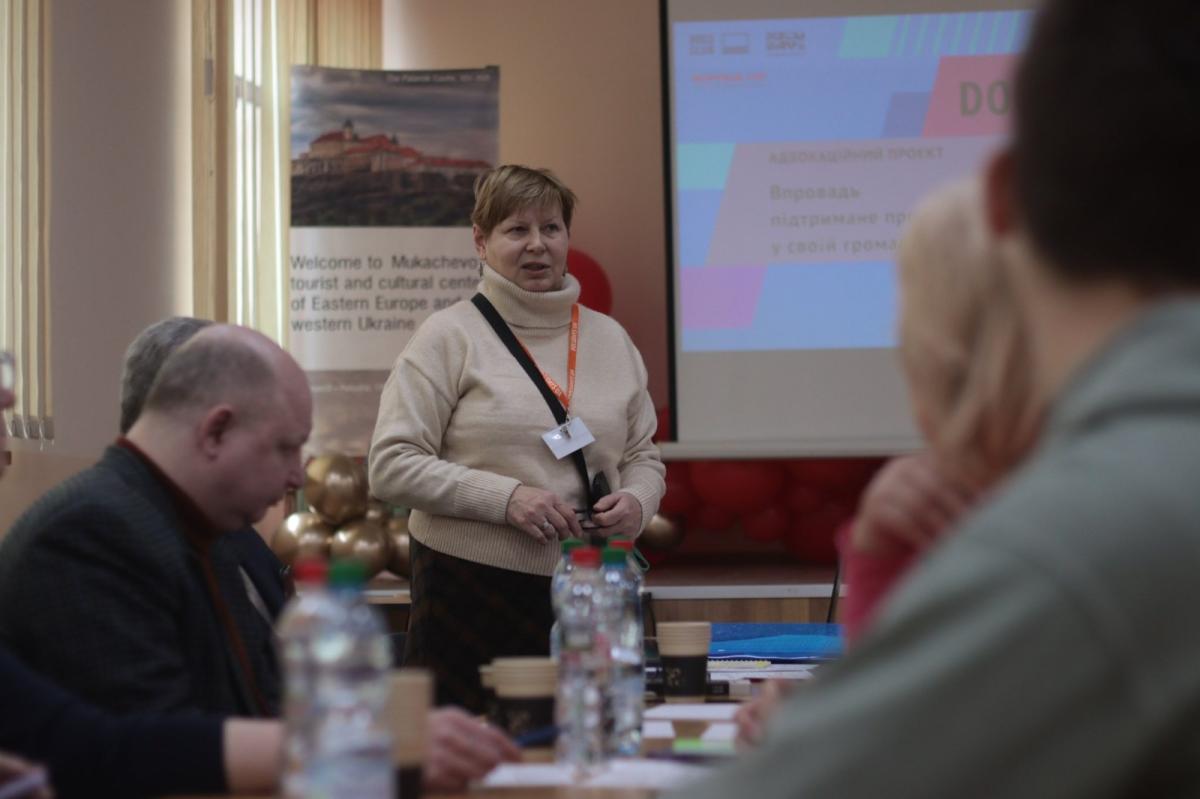
Discussion of the implementation of assisted living services
The main paradox the project team encountered during its implementation was the “invisibility” of potential clients. Officials in government departments often shrug their shoulders and say, “No one has approached us for this service.”
However, the reality is quite different. People simply lack information, not knowing they have a legal right to demand support from the city. Among the clients of Uzhhorod’s “Caritas” and the nonprofit organization “Nadiya,” with whom the advocacy project team collaborates, there are more than 30 adults with mental disabilities who already need assisted housing. The actual number within the region is significantly higher, since the service is also intended for elderly people living alone who require more extensive care than simply having groceries delivered to their door.
Why are local communities impeding this process, then? In their statements and during round-table discussions in Mukachevo and Uzhhorod within the project “Implement Assisted Living in Your Community,” social welfare representatives expressed their full readiness to develop the assisted living service. However, in practice, everything comes down to financial costs and staff shortages. Larysa Shuvalova notes that it’s easier for communities to repave their roads than invest in a comprehensive social service that requires coordination among the departments of health, education, culture, and social welfare.
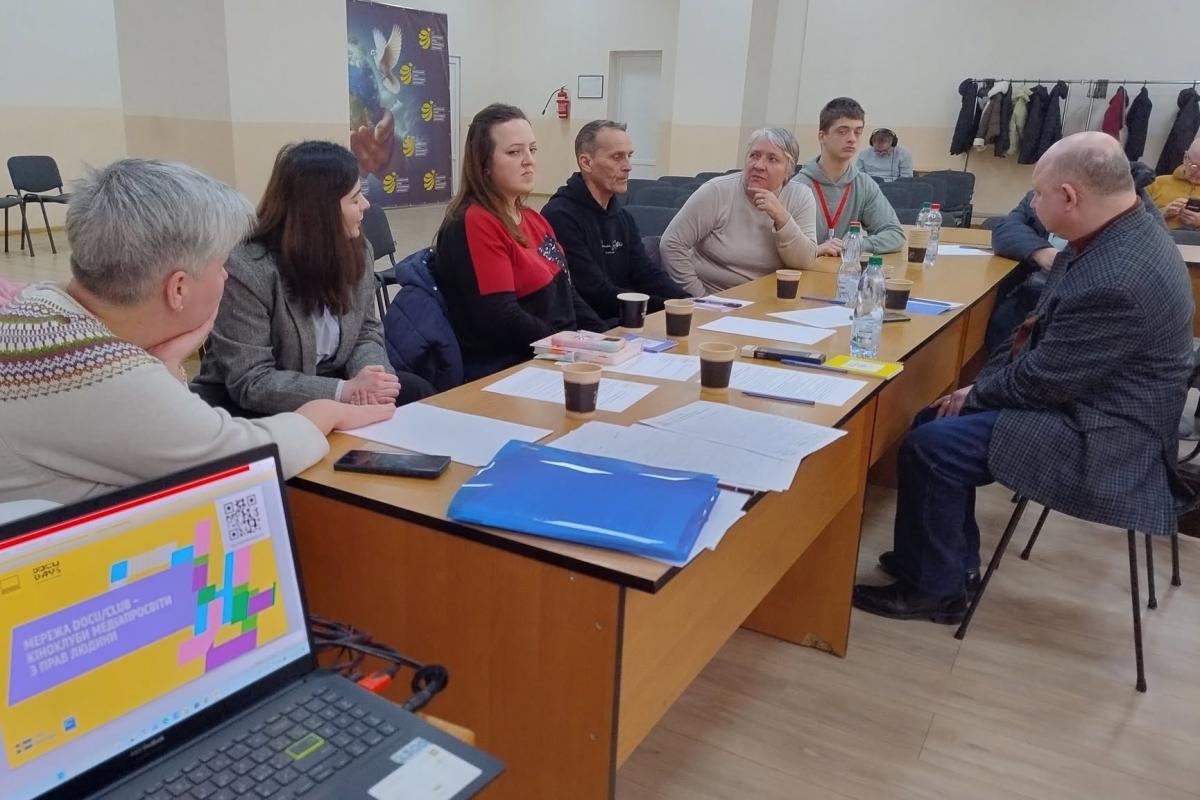
Discussion of the implementation of assisted living services in Mukachevo
The state standard also provides for this service to be delivered directly in people’s homes, without relocation. However, government agencies simply “overlook” this option. Across the entire Zakarpattya region, only 21 people receive assisted living services, while 1,700 people live in residential care facilities. There is only one real case in the Uzhhorod community: at the end of 2025, one of the city’s civil society organizations, with the support of international donors, established a supported living facility for eight people. This is catastrophically insufficient.
To break through this wall of silence, Larysa Shuvalova uses powerful tools — human rights documentaries from the DOCU/CLUB Film Club Network’s collection. The Docudays UA film club, as part of the NGO “Center for Cultural Initiatives ‘Fortress Ung,’” became the platform where officials from the Zakarpattya, Uzhhorod, and Mukachevo municipal social protection departments, heads of civil society organizations, and people with disabilities sat at the same table.
The moderator says that every screening of Karla and Nordahl by Norwegian filmmaker Elizabeth Aspelin has sparked heated discussions, since the film addresses the issue of dignity. As for the online screening of In the Corner by Dmytro Tiazhlov, it gave viewers a lesson in protecting their own rights.
“This film does not directly address social policy, but it helps explain how citizens’ requests to the authorities work. We discussed that people need to know their rights, appeal to the authorities if those rights are violated, and learned how to do this in a way that prompts a reaction from the government,” says Larysa Shuvalova.
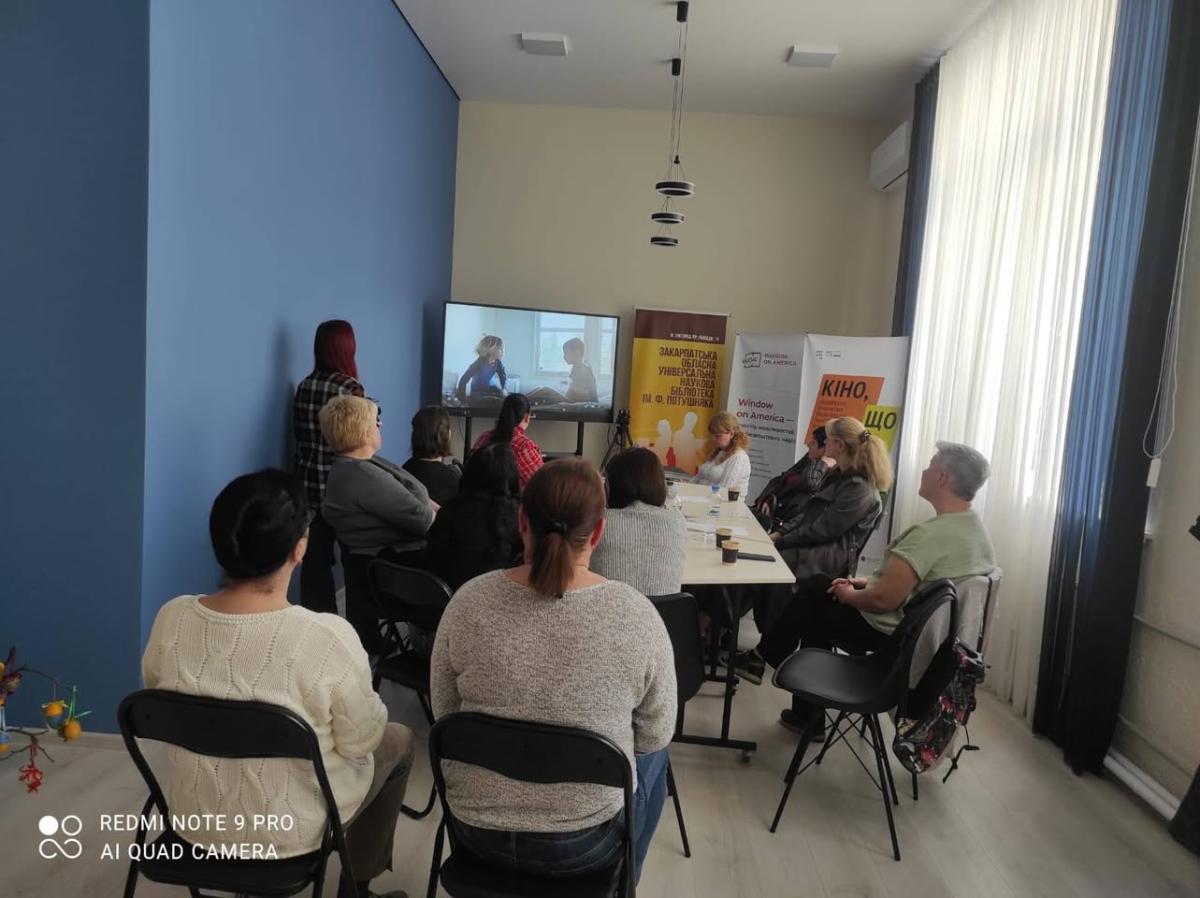
Screening of a documentary film within the framework of the advocacy project
These discussions of documentary films within the framework of the advocacy project have already yielded their first practical results. At one of the screenings, an internally displaced person (IDP) who currently receives only basic care at home, learned about the assisted living service. Currently, the project team is helping her draft a formal application to the Uzhhorod Department of Social Protection.
“It will be our pilot attempt to help a person apply for assisted living services. Hopefully, it will be successful,” the moderator shares her plans.
After analyzing the results of surveys conducted among community residents and roundtable discussions with representatives of various government agencies, the advocacy project team prepared and submitted an official appeal to local authorities. The main demand is the development and adoption of a detailed municipal program for the development of assisted living services. Without this document, which specifies funding and the areas of responsibility for each organization, the strategic development of the service is impossible. At the same time, the team has developed and is distributing informational brochures to address the lack of information among the population.
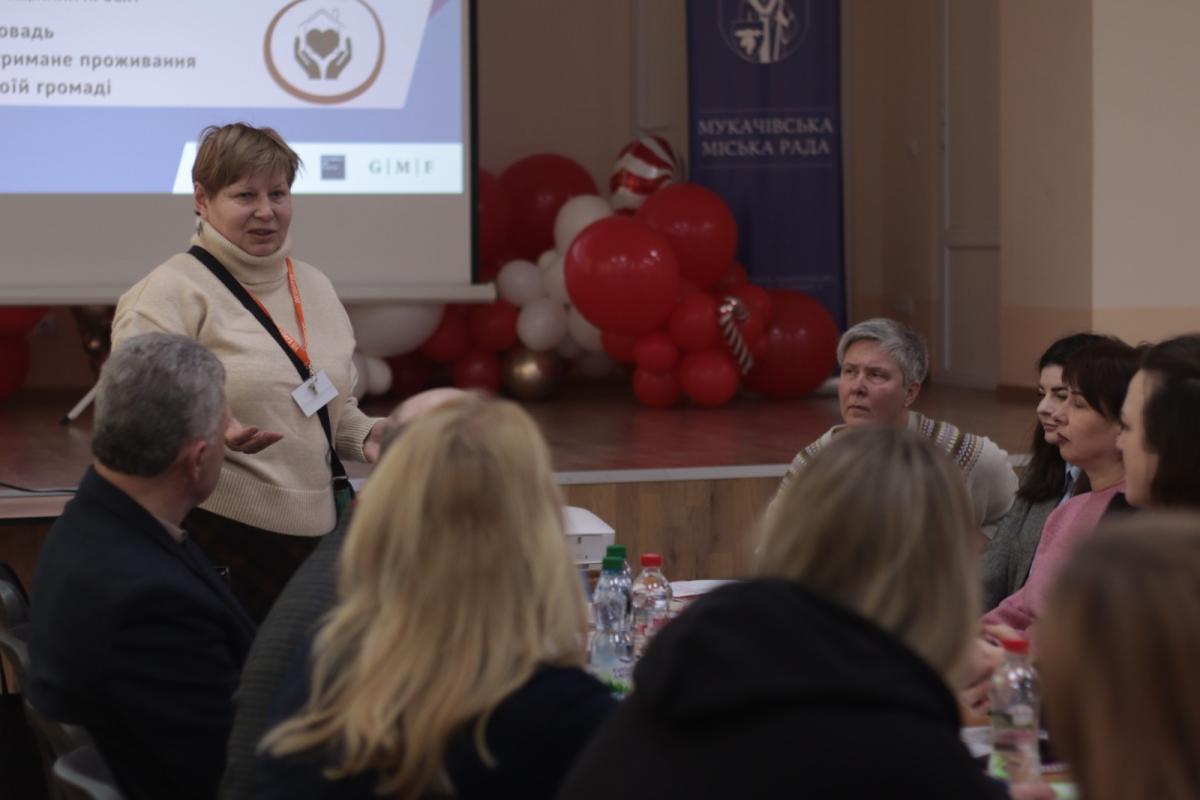
Larysa Shuvalova at a meeting with representatives of the government and civic sector
The advocacy journey in Zakarpattya has just begun, and Larysa Shuvalova acknowledges that a lot of work lies ahead, as the system is resistant and slow to respond. However, this experience is important. It’s always difficult to be a trailblazer. However, if nothing is done, people in wheelchairs and those with mental disabilities, as well as lonely older adults, will remain confined within the four walls of residential care facilities or their own apartments. The project “Implement Assisted Living in Your Community” emphasizes that the right to a dignified and independent life is worth fighting for.
Round table “Assisted Living is a Step towards Independent Life and Social Integration”
The project is implemented with the support of the DOCU/CLUB Network, funded by the Embassy of Sweden in Ukraine, Fondation de France, and the German Marshall Fund of the United States of America.
The opinions, conclusions, or recommendations are those of the authors and compilers of this publication and do not necessarily reflect the views of the governments or charitable organizations of these countries. The authors and compilers are solely responsible for the content of this publication.
All news