
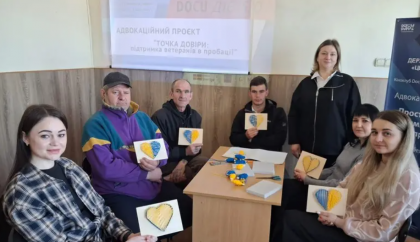
For many veterans, returning to civilian life after the front line is no less challenging than the combat experience itself. Instead of support, some of the veterans who return to civilian life after being wounded or discharged from military service face further difficulties, such as a lack of understanding from their surroundings, psychological isolation, and personal conflicts.
Reprinted from Dzerkalo tyzhnia.
A person with combat experience who has committed an offense may be placed under the supervision of the State Institution “Probation Center.” Probation gives a person a chance to correct their behavior without being isolated from society. At the same time, working with veterans requires a specialized approach: standard methods do not always take into account the aftermath of combat experience, psychological trauma, and the unique challenges of returning to civilian life.
Natalia Mosentsova, Head of the Berestyn District Sector №2 of the Probation Center in the Kharkiv region and moderator of a Docudays UA film club, decided to address this challenge by launching a comprehensive advocacy project “Space of Trust: Supporting Veterans In Probation,” which intends to combine legal education, documentary films, and practical experience of probation specialists.
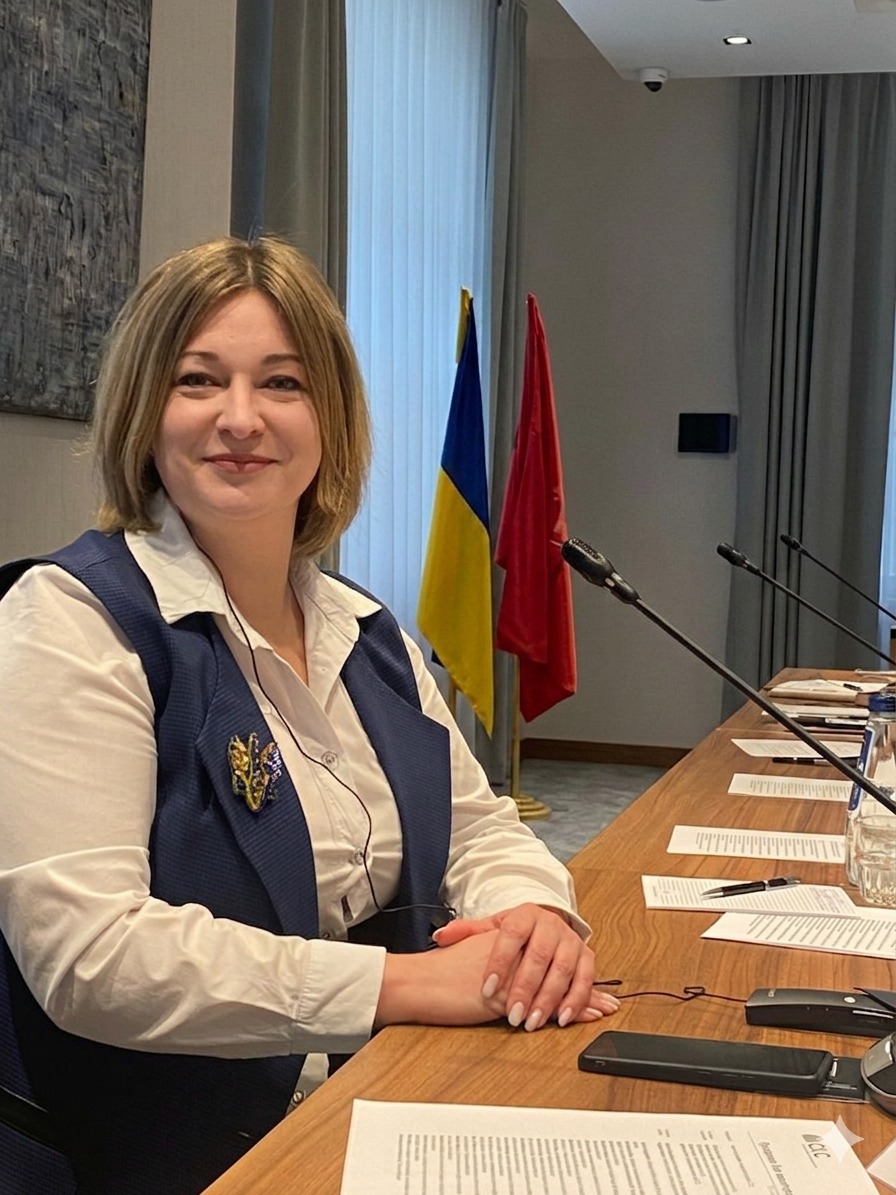
Natalia Mosentsova
For Natalia Mosentsova, working with people who have combat experience began back in 2014. At that time, veterans were just beginning to become visible to the probation system, but after the start of the full-scale invasion, the situation changed significantly.
According to the project team, the number of veterans registered with probation services is growing. As of 2026, there are about 1,500 such individuals in Ukraine. In total, approximately 4,700 people with combat experience have gone through the probation system during the full-scale war.
“Our specialists had the appropriate education, proper training, and practical experience, but they lacked an understanding of how to work with veterans. There were no protocols, skills, or clear procedures for working with this group of people,” says Natalia Mosentsova.
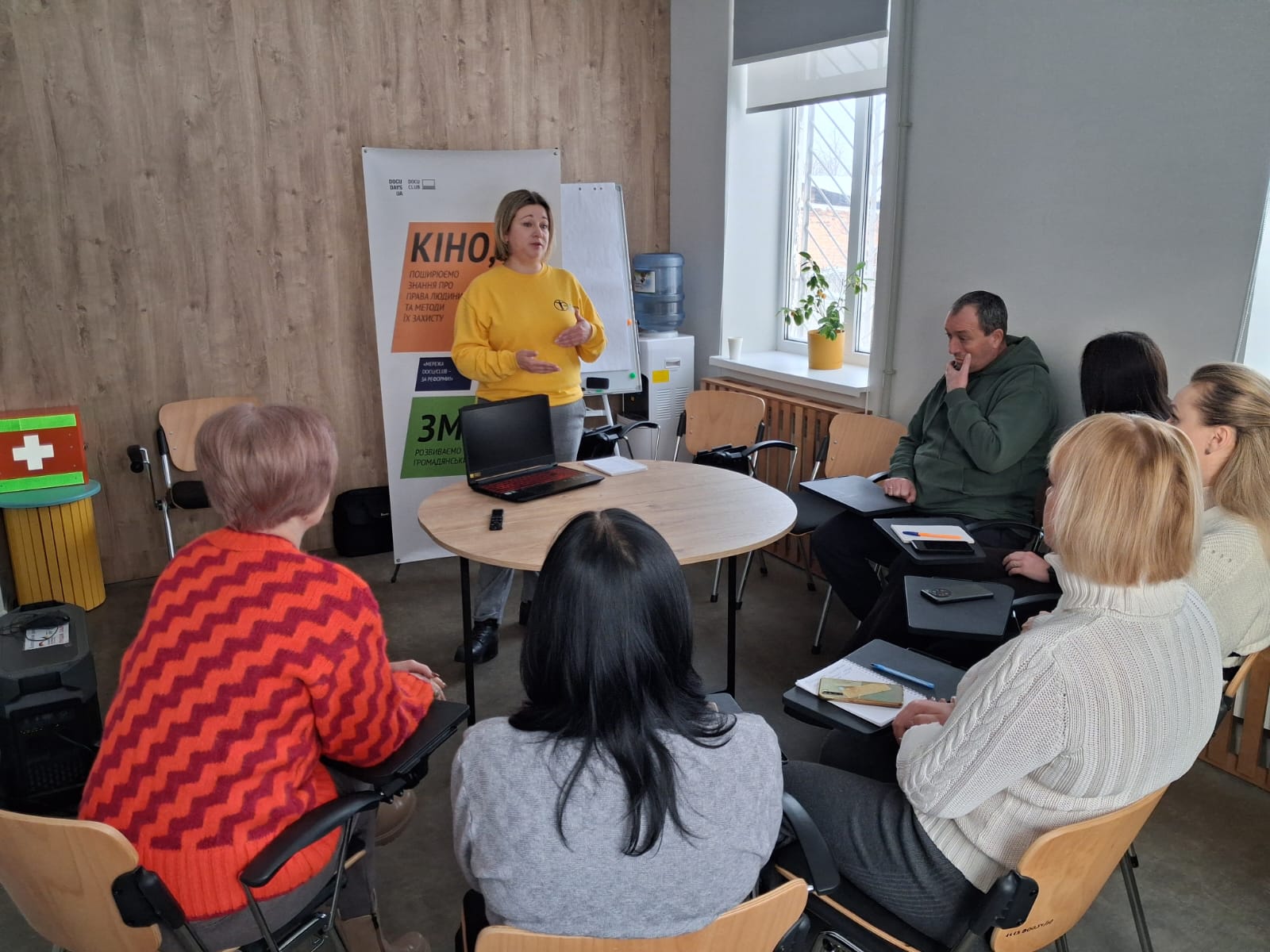
Training for specialists in veteran support as part of an advocacy project
Veterans on probation have specific needs that differ from those of other individuals under supervision. Specifically, these needs are related to the effects of post-traumatic stress disorder, identity crises, and difficulties with employment and social adaptation. As a result, previous approaches proved insufficient, and the system required new operational protocols.
The project launch was sparked by the competition for advocacy initiatives announced by the DOCU/CLUB Network. This is how the idea for “Space of Trust” emerged, designed to help probation specialists better understand veterans and work with them in a more targeted way.
One of the project’s main tools was a Docudays UA media literacy film club, which is part of the DOCU/CLUB Network. Screenings of documentaries about human rights, psychological crises, and the search for oneself after traumatic life events created a non-judgmental space for conversation. According to Natalia Mosentsova, it is precisely in this kind of atmosphere that veterans are more likely to open up and talk about things they’ve previously kept to themselves.
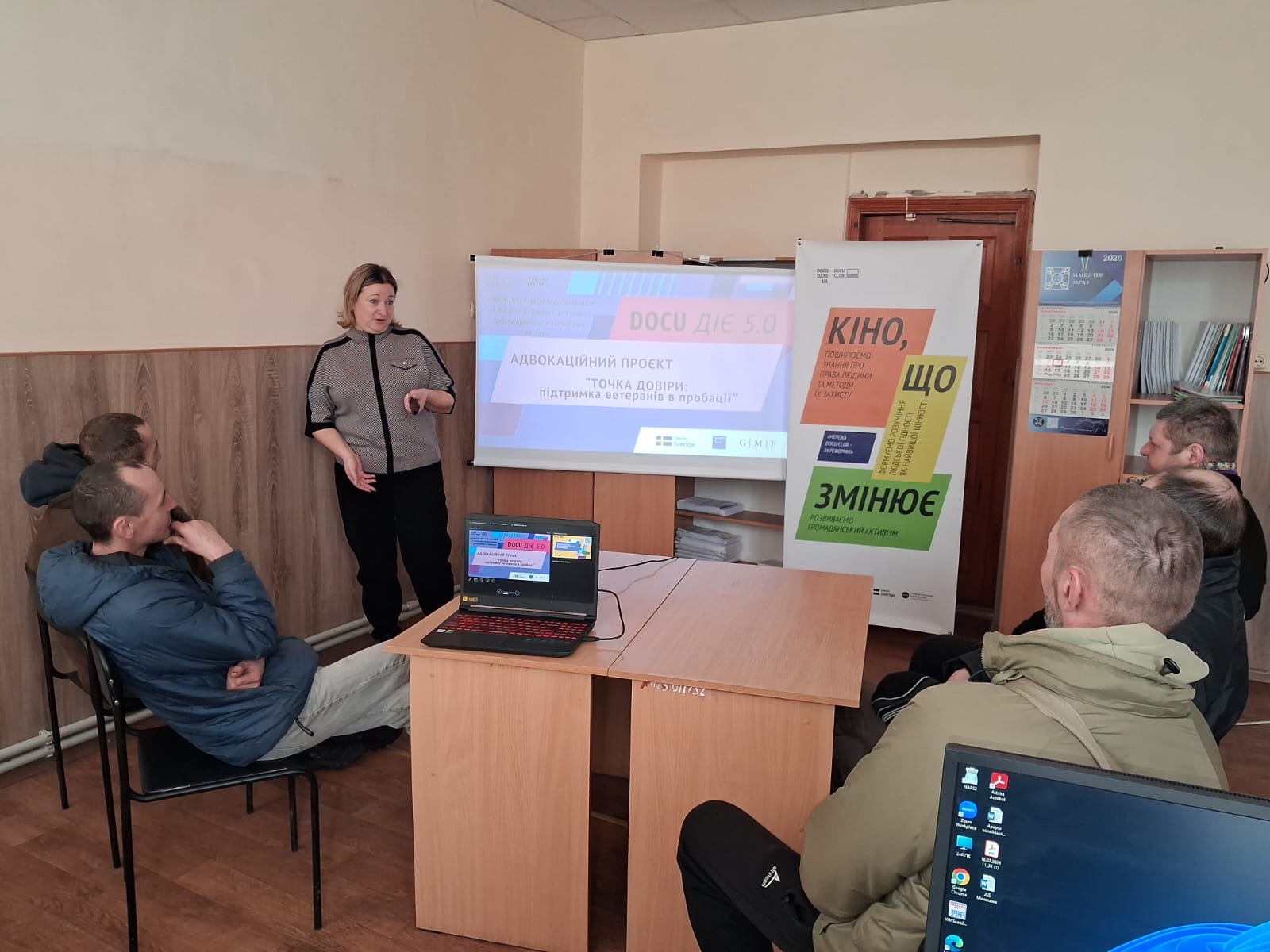
Screening of a documentary film for veterans
At the same time, the project team has prepared a practical guide for probation officers working with veterans. It is a step-by-step resource that explains the nature of combat trauma, communication strategies, and main approaches to psychological and legal support.
The guide also includes a feedback mechanism. Staff who are already using it in their work can share their own case studies, suggest new methods, or report challenging situations that warrant refinements to the protocol.
The Probation Center specialists hope that this approach will help better support the social reintegration of veteran clients. When a probation officer understands a veteran’s psychological state, they can more effectively assist with job search, restoration of documents, and access to psychological support.
This approach significantly reduces the risk of repeated offences among former military personnel.
Natalia Mosentsova emphasizes that veterans sacrificed their health on the front lines, and if they make mistakes in civilian life due to psychological trauma, the state and the community should not reject them and help them return to a normal life.
The experience of the “Space of Trust” project could be useful for other regions as well. Moving forward, its approaches are planned to be adapted for use in various regions of Ukraine, adapting to local characteristics. However, the core principles of trust, respect for human rights, and professional support remain unchanged.
The project is implemented with the support of the DOCU/CLUB Network, funded by the Embassy of Sweden in Ukraine, Fondation de France, and the German Marshall Fund of the United States of America.
The opinions, conclusions, or recommendations are those of the authors and compilers of this publication and do not necessarily reflect the views of the governments or charitable organizations of these countries. The authors and compilers are solely responsible for the content of this publication.